How the Louise O’Keeffe case exposed the State’s response to child sexual abuse victims
Nearly three decades after Leo Hickey’s conviction, survivors say the State continues to resist meaningful accountability and redress
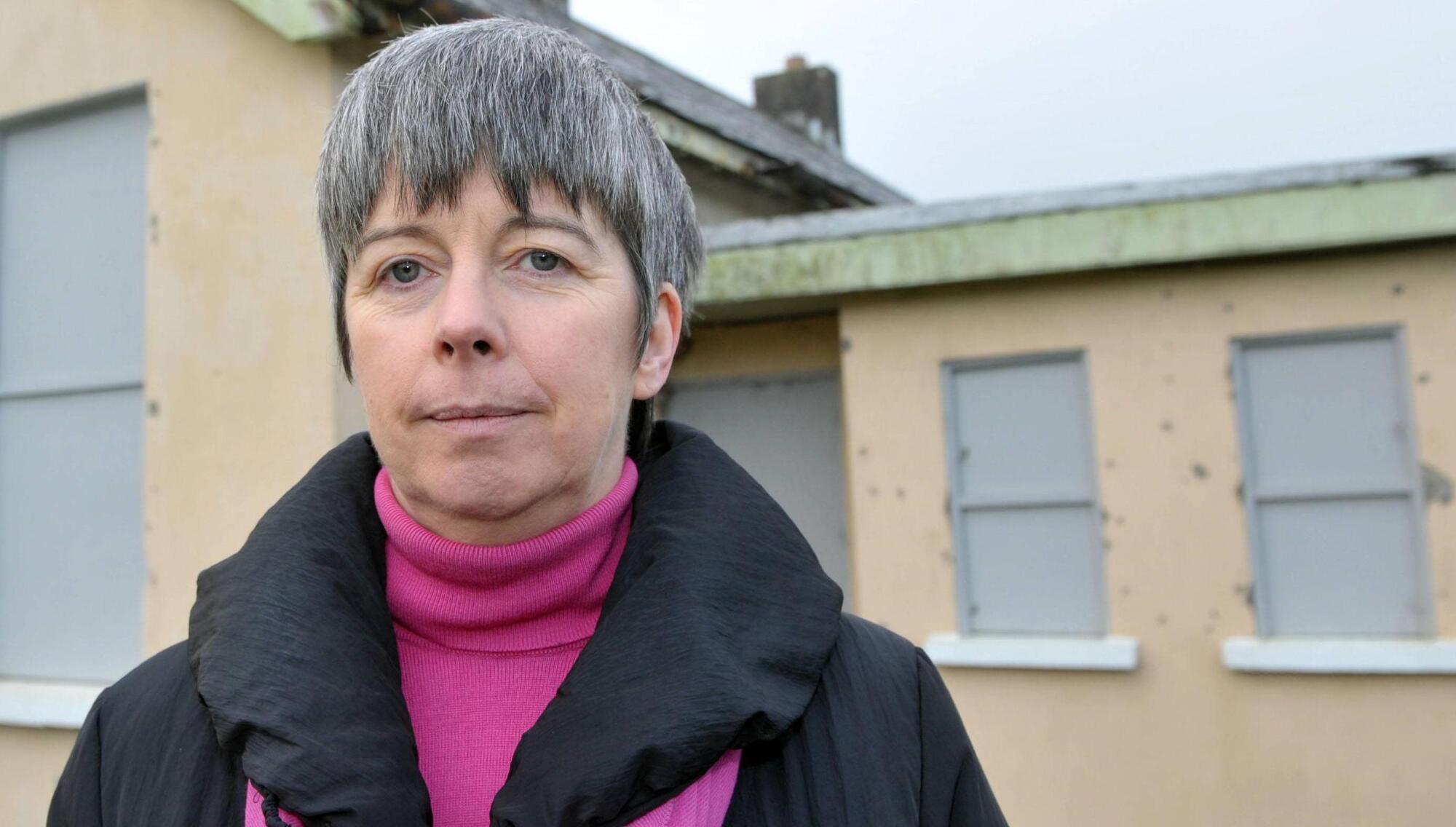
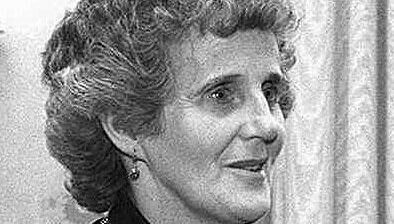
Louise O’Keeffe invested 16 years of her life in the fight for justice after she was the victim of sexual abuse in Dunderrow National School, Cork. Picture: Dan Linehan

Louise O’Keeffe invested 16 years of her life in the fight for justice after she was the victim of sexual abuse in Dunderrow National School, Cork. Picture: Dan Linehan

The State has a long record of treating wronged citizens as the enemy. This usually arises when the State, through one of its agencies, has perpetrated the wrong.

From that point, the citizen, on whose behalf the State is supposed to act, is cast out beyond the care and protection of the State as if she or he were actually the perpetrator.

Thirty years ago, Brigid McCole was subjected to exactly that. She had been poisoned by the State with contaminated blood, condemned to a terminal illness.

As she fought in the courts for reparation so that her children would have some financial assistance when she was gone, the State resisted, prevaricated, and threatened her with financial ruin.

In the end, she accepted a deal because she knew within days she would be dead and her case would terminate with her. McCole was 54 when she died on October 2, 1996.

Two years later, in a totally unrelated case, Louise O’Keeffe began her action against the State that had failed to protect her as a child.

A thread runs from that time all the way to this week, when former classmates of O’Keeffe felt compelled to personally appeal to the State to stop treating them as the enemy.

In 1998, former teacher Leo Hickey pleaded guilty to 21 sample counts of 387 charges of sexually abusing girls while they were attending Dunderrow National School in West Cork.

A total of 21 former pupils at the school gave statements outlining the abuse that occurred between 1964 and 1973.

Typical of the tone and content of the statements were phrases such as:

  • “I thought it was part of the school curriculum”;
  • “He used to abuse two or three girls every day”;
  • “I didn’t think this abuse was wrong, it was as if it was part of the school learning”;
  • “I don’t think any girl in the big room escaped being abused by Master Hickey.”
He was sentenced to three years in prison. Quite obviously, he was a prolific abuser of children.

Catholic Church patronage

If such a case arose today, there would be outrage at the perceived leniency for this volume of crimes. O’Keeffe was one of his victims.

A complaint had first been made in 1971 about Hickey to a member of the clergy as the school was under Catholic Church patronage. Nothing was done.

A number of other complaints were made to the school in 1973, after which Hickey went on sick leave.

In January 1974, Hickey resigned from Dunderrow. On the day after his resignation, he took up a position in Scoil Eoin in Ballincollig.

A court would later hear that, at the time, Hickey realised he had a problem with girls, so he applied for a job in Scoil Eoin, a boys school, in order to address his “problem”.

Forty four years later, in 2017, he was convicted for the second time of child abuse. This time, the victim, a pupil at Scoil Eoin, was a nine-year-old boy.

The abuse occurred in 1992, and there were eight instances recorded in the conviction. Hickey was sentenced to a year in prison.

So went the criminal end of things and the cavalier attitude of the State’s agencies towards a teacher of children about whom there had to have been major suspicions at the very least.

Back in 1998, following Hickey’s first conviction, O’Keeffe took the brave decision to hold the State to account for what she had been subjected to.

Her journey would create history, but it would also be used later by the State as a weapon against her former classmates

She brought a civil action against Hickey and another against the minister for education, the State, and the Attorney General, claiming damages for personal injury.

In 2004, the high court summarily dismissed the claims against the State bodies.

The subsequent judgment stated that “the State was not vicariously liable for the sexual assaults perpetrated by LH [Leo Hickey] given the relationship between the State and the denominational management of national schools”.

In other words, as far as this kind of issue was concerned, the State had subcontracted education out to the churches and, therefore, its hands were clean.

Dundurrow, like well over 90% of national schools at the time, was under the patronage of the Catholic Church.

O’Keeffe’s lawyers had argued that the State should be variously liable, but this was not addressed in the judgment.

Costs were awarded against O’Keeffe. Subsequently, she was aggressively pursued to pay those costs to the State.

Supreme Court appeal

She had more success in a case against Hickey himself. He didn’t contest the action and, in 2006, the court awarded her €303,124 against him.

She appealed the decision against the State bodies to the Supreme Court. Again, she was knocked back. The court denied her appeal by a 4-1 majority.

The written judgment referenced Ireland’s unique education system, its most recent incarnation set out by rules written in 1965.

“The minister laid down rules for national schools, but they were general in nature and did not allow him to govern the detailed activities of any individual teacher,” the judgement written by the late Adrian Hardiman read.

O’Keeffe didn’t stop there. She appealed to the European Court of Human Rights.

In 2014, the court gave a ruling which, in effect, dismissed the State’s defence of “nothing to do with us”.

The court found that there was “an inherent obligation of a government to protect children from ill-treatment, especially in a primary education context”.

“That obligation had not been met.”

The court ordered the State to pay O’Keeffe €84,000 in damages as well as costs. The woman who had risked so much, and invested 16 years of her life in the fight for justice, had won not just a victory for herself but for everybody else who had been denied protection by the State.

At this point, the instinctive reaction of the State kicked in.

Now that there was an obligation to provide redress for all victims, they were to be treated as opponents if not the enemy.

The main thrust of the State’s actions thereafter was to minimise cost.

Bridget McCole had been poisoned by the State with contaminated blood, condemned to a terminal illness.

Within the permanent government, it has been repeatedly seen that there is plenty of tolerance for wasting money.

Within the elected government, there is constant pressure to direct resources to voters — even when this might not be in the common good or rooted in basic morality.

But when it comes to victims of the State, both permanent and elected government suddenly reach for the most parsimonious response possible.

So it was that the initial scheme set up to compensate those who were abused as schoolchildren was made as difficult as possible to access.

Victims had to demonstrate that “their abuse had occurred in the aftermath of a prior complaint of abuse that was not responded to”.

This was not in keeping with the European Court of Human Rights’ judgement.

It was, in effect, the State “trying it on”.

Complaints were made about how difficult it was to access the scheme, and a review was finally ordered.

Judge Iarfhlaith O’Neill conducted the review, concluding that the scheme represented “a fundamental unfairness to applicants” and involved “an inherent inversion of logic”.

A new scheme was then set up.

Again, there were restrictions — including that victims had to have begun to sue the State before July 2021.

Why would anybody sue the State, and risk the kind of reaction O’Keeffe was subjected to when she was initially unsuccessful, particularly if a redress scheme was in the offing?

And beyond that, they had to show how their abuse could have been avoided had State safeguards been in place.

In 2024, another scandal over child sexual abuse in schools led to the establishment of a commission of inquiry.

Through it all, the women who were in Dunderrow, now in their sixties and seventies, have been left to wait for redress.

Many of these women had provided the statements on which Hickey was convicted of child abuse in 1998.

Yet, 28 years later, they are still waiting for the State to come clean on its responsibilities, still waiting for a small measure of justice and corresponding redress.

This week, the Department of Education issued a statement saying that the Government was very conscious of the ongoing impact of the trauma experienced by survivors of abuse.

It could not, however, comment on individual or specific cases which may be the subject of potential litigation.

In the Dáil on Tuesday, Taoiseach Micheál Martin said the Government would “enter into mediation [with the women’s legal representatives] in good faith, and we will engage constructively”.

So far, over the course of 28 years, there has been a complete absence of “good faith” in all dealings with a group of women who were abused so viciously as schoolchildren.

More in this section

Lunchtime News

Newsletter

Get a lunch briefing straight to your inbox at noon daily. Also be the first to know with our occasional Breaking News emails.

Cookie Policy Privacy Policy Brand Safety FAQ Help Contact Us Terms and Conditions

© Examiner Echo Group Limited