Salmon in crisis: 'There is nothing left in the river'
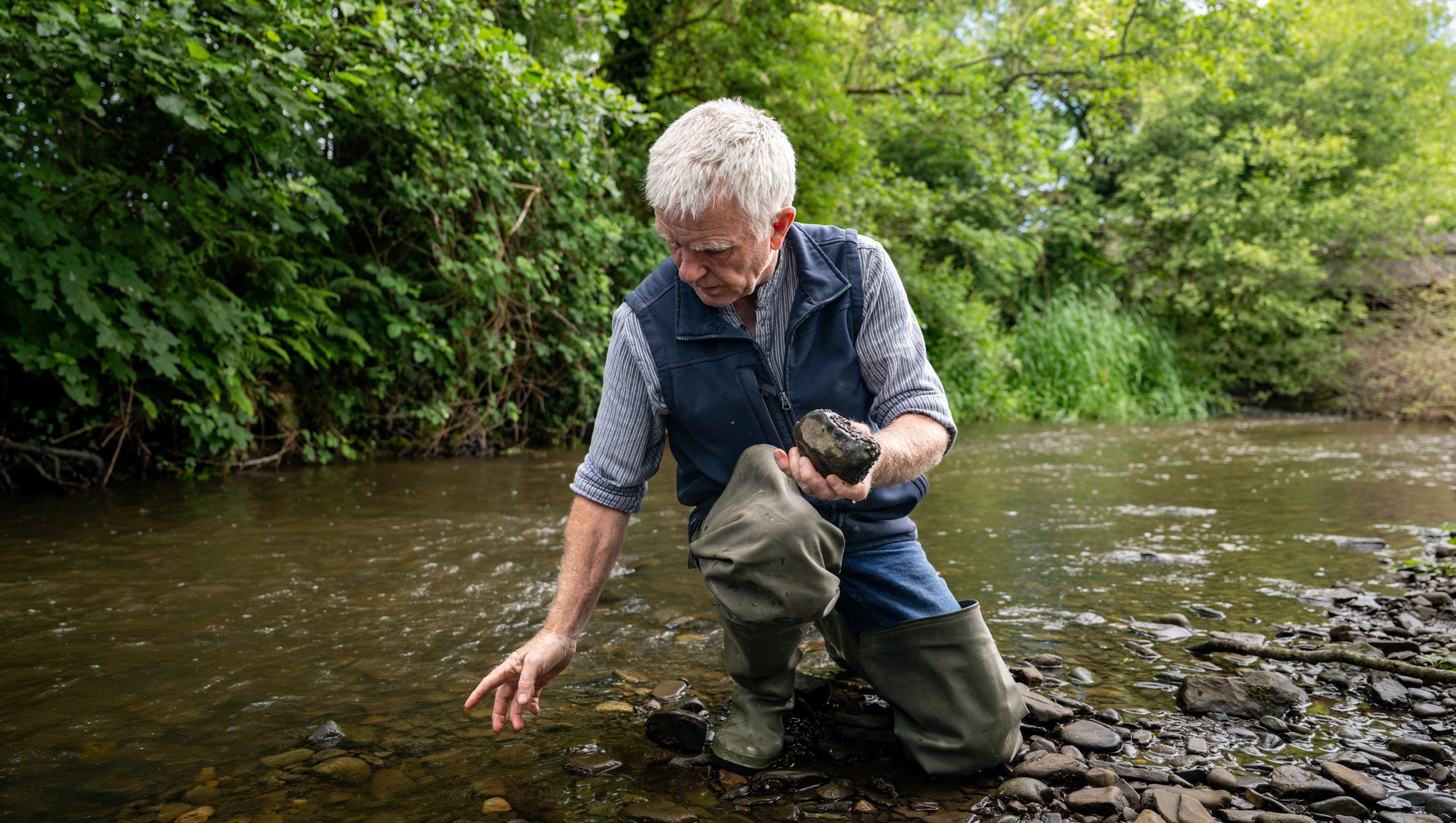
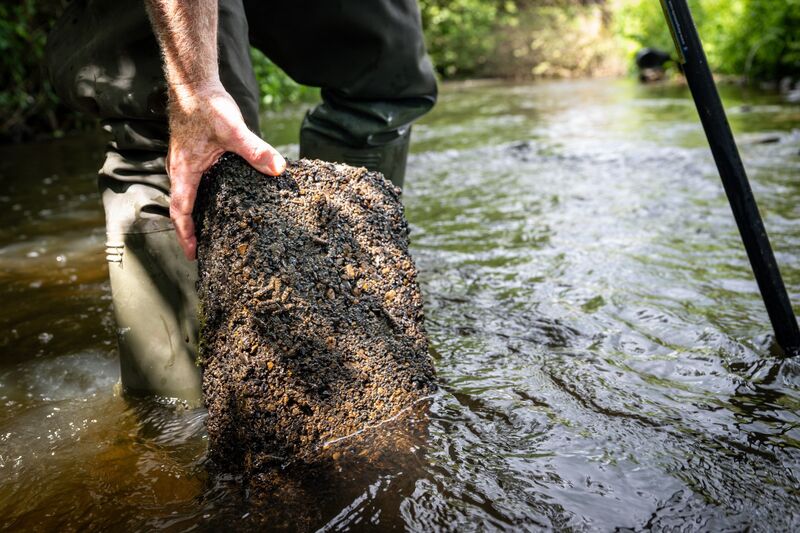
Jim Harding examines river stones for signs of aquatic life on a tributary of the River Barrow near Gowran, Co Kilkenny. Picture: Chani Anderson
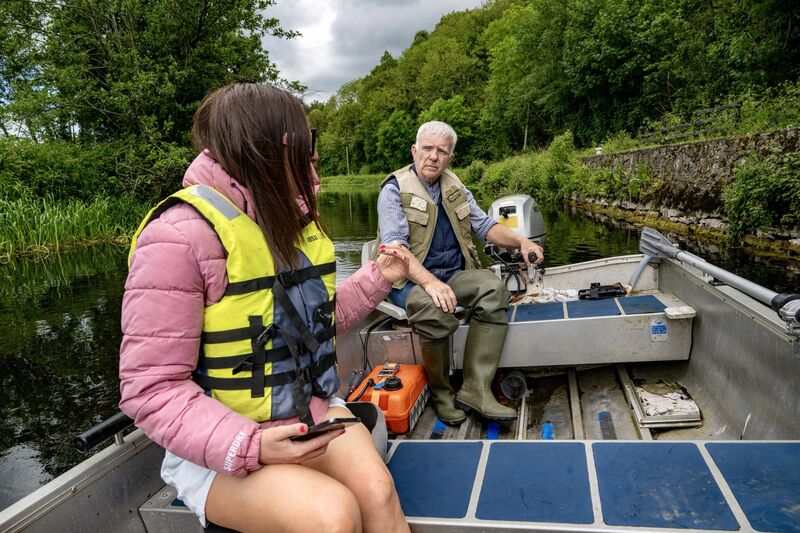
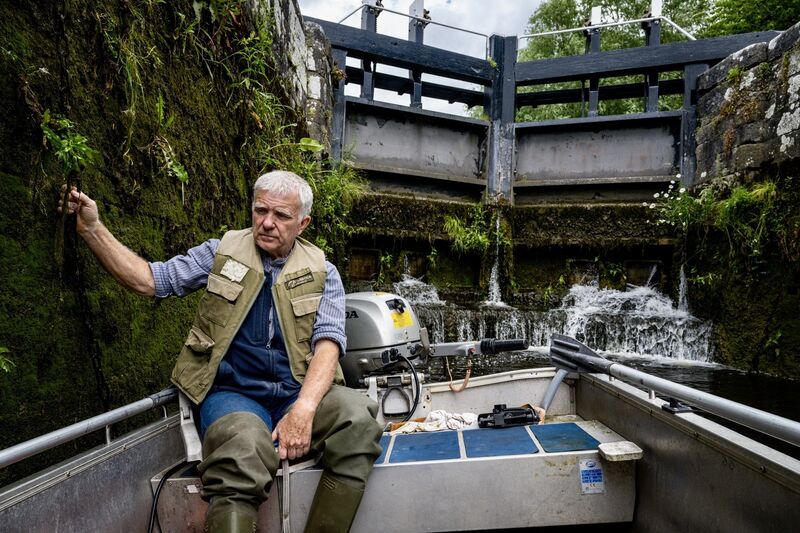
Angler Jim Harding navigates his boat through the River Barrow with a heavy heart, as he struggles to contemplate where it all went wrong.
As the salmon population continues to decline so too does his hope for future generations of aquatic wildlife in the locality.
Once plentiful in Irish freshwater rivers, the ongoing depletion of salmon stocks has hit crisis levels.
According to Salmon Watch Ireland, numbers across the country have dramatically reduced from 1.7m in the 1970s to fewer than 150,000.
Harding says the fish, along with other wildlife like trout, form an instrumental part of our ecosystems. Sadly, they have all but disappeared in the tributaries near Gowran and Gorsebridge, Co. Kilkenny.
“There are pools where people once poached salmon in winter that can now almost be walked in boots,” he told the .
“We are seeing every bit of gravel and dirt from tractors and trailers being flushed straight from the road into the river. The number of smolts are not only getting scarcer, they are also getting smaller. Some of the ones we saw this year are tiny and not able to survive or get away from predators.
"I’ve seen the gradual decline. The bigger pools have practically disappeared. Sixty years has gone by and there is nothing left in the river.
"Goresbridge anglers, which was kept alive for 60 years, is now gone. Why would you bother when there is nothing left in the river?”
Read More
The 70-year-old insists it doesn’t have to be this way. Harding claims that his proposed solutions to the issue have been overlooked on more than one occasion by Inland Fisheries Ireland.
“There is a huge focus on conservation but what we need is restoration. Absolutely nothing is being done to restore our rivers. I have raised this with IFI many times.”
Harding’s concerns come just days after Salmon Watch Ireland highlighted its own concerns about the challenges facing wild Atlantic salmon at the North Atlantic Salmon Conservation Organisation Conference 2026 in Aviemore, Scotland.
The event addressed the need for international cooperation and a stronger emphasis on the pressures facing salmon throughout their marine migration.
Politicians, scientists, and representatives of indigenous communities were just some of the groups in attendance.
Scientific assessments presented by the International Council for the Exploration of the Sea offered a sobering accounting of declining salmon stocks. The historically low levels have been put down to factors such as climate change, habitat degradation, and disease, among other issues.
Harding is on a mission a little closer to home to save his beloved river.
His dedication comes as no surprise, given the central role the water has played in his life.
After contracting polio as a toddler, the Kilkenny man found solace in the river while his friends played sports like hurling and football.
“Having polio as a child meant those things weren’t available to me,” he told the . “That’s why I got into fishing instead. There was one advantage to having the condition because it made me more familiar with the river than a lot of other people.
"My left leg is shorter than my right leg. Because most of my walking is dependant on my right leg I can’t have one leg on soft ground. This meant I was well aware of where I could go in the river and where I couldn’t. As a result of this experience I can recognise the changes in the river since my childhood.”
Many of those changes, Harding pointed out, have been to the river’s detriment.
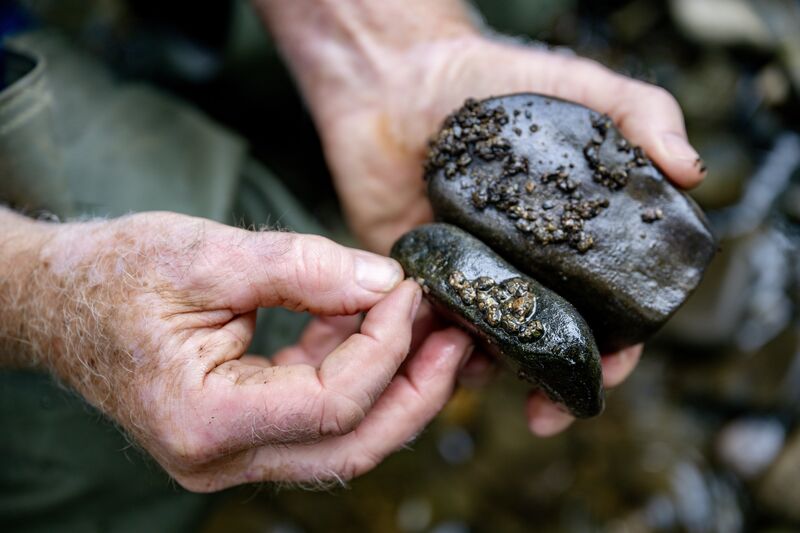
“What’s happening is that a lot of the surface runoff and historic dumping has washed all this debris down the river but there is something even more sinister at play.
"The bottom of these rivers have become really hard. You can see where the stones have filled up. What happens with the salmon is they come up and lay eggs. The hen has to dig a salmon redd which is a nest in the riverbed to lay her eggs in.”
He described the challenges facing salmon in the area.
“She digs a hole in the gravel that is usually about 2ft long and anywhere between six inches and a foot deep. She will then move up and disperse the eggs eight or 10 miles away so they have a better chance of surviving. She has to flap her tail enough to get the stuff up from the bottom.
"Keep in mind that we can’t get through this with a shovel and a fish has to do it with her tail. If you look at many of the stones here you will see that they don’t belong to the river and are in fact building material. It’s crazy the amount of building materials that are here that have no place in the river. The problem is that salmon can’t dig a hole through it.”
Harding noted that salmon are not the only aquatic wildlife under threat.
“Over the years I’ve seen the river get shallower but nobody thought too much about it. Invertebrates are the smallest form of river life. They end up being food for fly larvae — commonly known as maggots — and flies.
"When the invertebrates disappear the flies disappear too which is what has happened in the river. There should be billions of these deep down in the river. The only thing that can live here now is what can survive on the surface of the river.
"What’s happening is the runoff is being piped directly into the river. I’m seeing a lot of stones that are straight out of buildings. I know building stone a mile away because I run a limestone quarry and I’ve been taking this stuff out for years.
"There is a much wider aspect to this. This is primarily about salmon but the trout are gone, the river flies are gone, the freshwater crayfish are gone as well as the freshwater mussels.
"The other thing that people don’t seem to understand is that flies, while in flight, are the main food of swallows too. The number of swallows returning to Ireland can be directly related to the lack of flies because they don’t have anything to eat.”
Harding said there is still hope. “There is no reason this river can’t be recovered. If I decided in the morning that I wanted to restore this part of the river, I could.
"However, if I put a digger here to do what IFI don’t seem to know how to do, it would result in me being prosecuted immediately. I am being told that the problems are down to calcification but this is only part of the problem.
"What is taking place is an utter systematic failure. The utter hopelessness is not in the river, but rather within the system itself.”
He put many of the issues down to bureaucracy. “It is caught in a systematic interagency paralysis which prevents, not only agencies from restoration but all interested parties, even though funding is available to resolve it.
"The overreliance on science to identify problem sources is hindering straightforward mechanical issues which could easily be resolved and should at the very least be investigated and tried.
"Twenty years of failure indicates to me at least that this science-based logic is simply incorrect on its own and the evidence is there of that utter failure. The agencies need to either be removed from the task or forced to test other avenues.
"In relation to the rivers, the biggest problem I have is that the blame is being placed anywhere that the government agencies can’t do anything about. A lot of it is being put down to the unpaved agricultural roads, but most of these unpaved agricultural roads are in grasslands.”
Meanwhile, John Murphy from Salmon Watch Ireland said fears for the future of salmon in Ireland have escalated.
“The causes of the overall decline are not set in concrete,” he told the .
“There are a lot of issues which are common to all countries. We experience a lot of pollution from agriculture and wastewater treatment plants. There is also the intensification of agriculture to consider, which is basically destroying rivers.
"We still have some rivers in Ireland that have pristine conditions and should have a stable population. However, they are also declining which leads us to believe that the biggest issues are in the ocean.
"We have made some recommendations in regards to bycatch at the sea."
Bycatch refers to fish that are accidentally caught when targeting a different species.
Referring to ships that operate in the open sea, Murphy continued: "There are enormous pelagic fleets operating now in the Norwegian Sea. Our salmon and a lot of other salmon from other countries go in their first year. There has to be a significant bycatch which was one of the issues that came up at the conference.
"Salmon is now part of a mandatory bycatch reporting system. In other words, pelagic fleets have to report salmon in their bycatch. They didn't have to do this before but initial observations would suggest that people are still not reporting them.
"I imagine that pelagic skippers would not always be inclined to report salmon due to the fact that they might be told they can’t fish in certain areas. There seems to be very low numbers in bycatch, but it’s difficult for the pelagic trawlers to see this because they're landing vast quantity of fish.
"If you're landing thousands of tonnes of fish it's going to be difficult to find juvenile salmon among them.”
Murphy reiterated the frustration experienced by those advocating for the cause.
“The catches won’t be reduced by regulation. They will be reduced by collapse.”
Inland Fisheries Ireland said in a statement that it is responsible for managing fish populations in the State’s rivers, lakes, and coastal waters.
“IFI officers are not warranted under the Waste Management Act to remove construction or unauthorised waste materials.
“Unauthorised waste disposal or road runoff issues can be brought to the attention of the relevant local authority or road management authorities.
“A combination of better land management practices, better control of industrial dewatering processes, and improving climate resilience in rivers can all contribute to a reduction in the causes of calcification.
“This requires an integrated collaborative catchment management approach involving multiple agencies and stakeholders.
“Calcification - the process where dissolved calcium minerals (typically calcium carbonate) form hard, chalky deposits - in rivers is caused by a combination of natural factors and human activities:
- Runoff from some fertilisers and lime-based products can add extra calcium to rivers;
- Increased nutrient levels in water also increases biological activity, which can cause calcium to form on riverbeds;
- In some areas, the underlying rock, especially limestone, naturally releases calcium into water;
- The way groundwater and surface water interact can also increase calcium levels;
- Warmer water temperatures can increase the risk of calcification;
- Some industrial processes, particularly dewatering — when water is pumped out of the likes of quarries and mines — can also increase calcium loads in surface waters.
“Simply removing the calcium deposits does not solve the root causes of the overall problem,” the statement says.

CLIMATE & SUSTAINABILITY HUB
CONNECT WITH US TODAY



Be the first to know the latest news and updates