Defence Forces to be involved in 'peace enforcement' if Ireland joins EU's mission in Lebanon
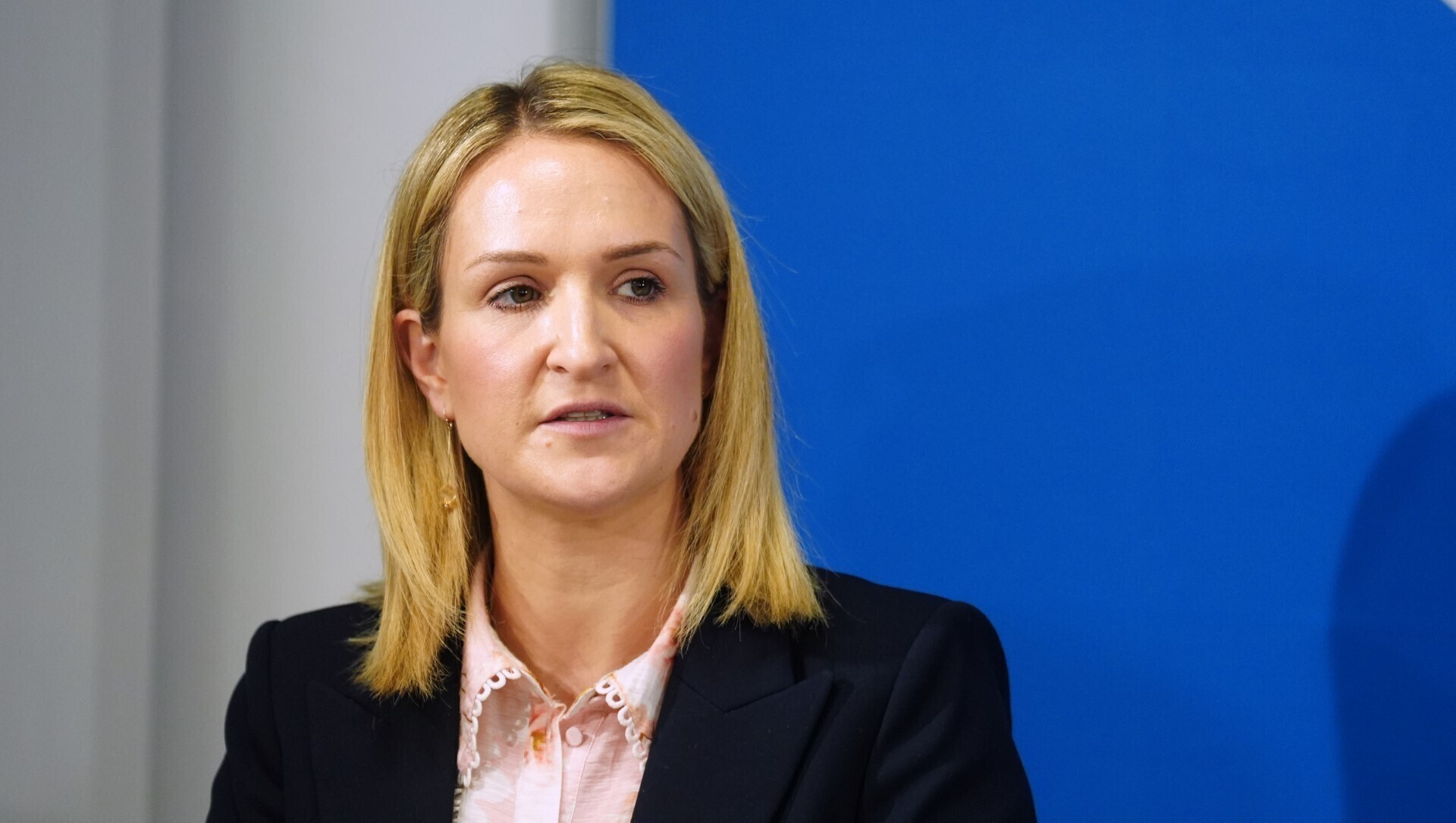
Foreign affairs minister Helen McEntee: 'What I want to do is not just show our support for the Lebanese armed forces and for our own troops as well, but to the community who are the ones that are suffering in all of this.' Picture: Brian Lawless/PA
The Defence Forces would be involved in 'peace enforcement' as well as 'peacekeeping' if Ireland joins an EU-led mission to Lebanon, foreign affairs minister Helen McEntee has said.
Ms McEntee confirmed she wants Ireland to be involved with the recently sanctioned EU mission, as the current UN peacekeeping force is set to be wound down across 2027.
Asked if Ireland would be involved in peacekeeping or peace enforcement in Lebanon under an EU-led mission, Ms McEntee said: “It’s likely that it would be both.”
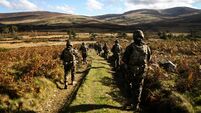
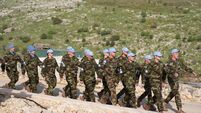
Ms McEntee said Irish troops in Lebanon are currently engaged in peace enforcement as part of the Unifil (UN Interim Force in Lebanon) mission.
“I think there's a misconception or there's an attempt to suggest that our troops are on the ground in one context and one context only,” Ms McEntee said.
Read More
Peacekeeping is where troops are deployed by the UN to support the implementation of a ceasefire or peace agreement, typically with the consent of both parties.
UN peacekeepers are permitted to use force to defend themselves and civilians.
However, peace enforcement involves the use of military force to restore peace.
The mission received approval from EU foreign ministers earlier this month, with both a military pillar and a civilian pillar.
The military side will see EU member state troops provide support and training to the Lebanese Armed Forces, with a particular focus on border and maritime security.
“I want us, and I know our troops in particular want to be on the ground working with their colleagues, whether it's those from France, from Indonesia, from Poland, where so many countries across the world have contributed, and our troops want to continue that presence on the ground,” Ms McEntee said, speaking on RTÉ’s .
“They want to continue to be able to support the Lebanese armed forces. We will not be in a position to do that in the way that we want to if the triple lock is not reformed.”
Ms McEntee said she did not intend to rush through legislation to abolish the triple lock, saying she has given it “as much time as was needed”.
However, she added: “I do plan to and would like to have this done by the end of the year.”
Ms McEntee was speaking ahead of a visit to Lebanon, where she is expected to meet with Irish troops as well as Lebanese political figures.
She said: “What I want to do is not just show our support for the Lebanese armed forces and for our own troops as well, but to the community who are the ones that are suffering in all of this.
“It is the civilians. It is those who are, quite literally, being driven from their homes, from their cities, from their villages.”
Ms McEntee said she wanted to show them that they still have Ireland’s support.
Labour’s foreign affairs spokesperson Duncan Smith criticised the move by Ms McEntee to announce the intention to join the EU-led mission.
“Whilst it may be understandable to want to continue a presence in Lebanon, it needs to be made crystal clear that the proposed new mission will not be a peacekeeping mission in the south of Lebanon under a UN mandate,” Mr Smith said.
“This is the direction of travel this Government want to take us, and they are doing so incrementally and by stealth."
Sinn Féin’s foreign affairs spokesperson, Donnchadh Ó Laoghaire, said the EU-led mission would not be Unifil, adding it was not known how the mission objectives could evolve.
“We believe that the Irish government should focus its energies on finding a new peacekeeping deployment that has a UN mandate, of which there are many. There is no shortage of locations to deploy,” Mr Ó Laoghaire said.

CONNECT WITH US TODAY



Be the first to know the latest news and updates