Government to progress bill that would ban online deepfakes
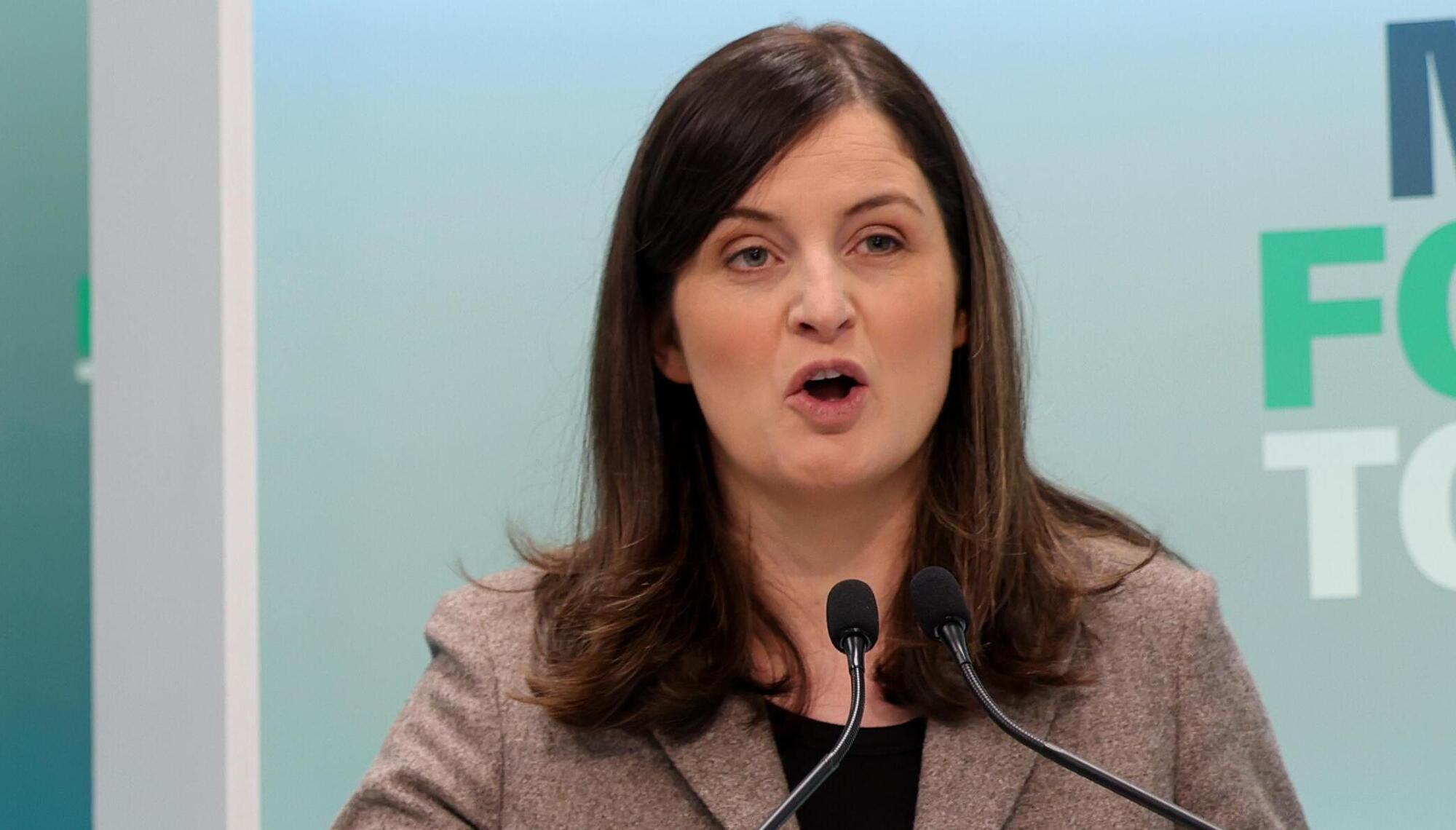
junior justice minister Catherine Ardagh said there are 'existing criminal law provisions that address the misuse of deepfakes in certain circumstances', such as Coco’s Law and defamation laws, with the EU Council and Parliament also agreeing to ban AI systems that generate non-consensual explicit images. File picture: Leah Farrell/RollingNews.ie
The Government has agreed to progress a Bill that would ban deepfakes and make it an offence to use a person’s likeness or voice without their permission.
However, junior justice minister Catherine Ardagh also argued that there are existing laws in place and new laws coming down the tracks that may mean the creation of a new criminal offence may not be “the best strategy”.

The proposed legislation has been put forward by Fianna Fáil TD for Wicklow-Wexford Malcolm Byrne who warned that as deepfakes get more sophisticated through advancing technology, it will have “potentially very serious consequences” for people.
A deepfake is an artificially created video, photograph, or audio which purports to be real.
During the Presidential election, a deepfake video which purported to show RTÉ journalists Sharon Ní Bheoláin and Paul Cunningham suggesting Catherine Connolly had pulled out of the race, was removed from Facebook and Instagram.
Mr Byrne’s plans would make it an offence for a person to knowingly use, publish, distribute, or transmit an individual’s name, photograph, voice, or likeness without their permission.
It is not, he said, about someone making a funny meme, but when the content is created for malign purposes.
In the Dáil, Mr Byrne warned that deepfakes could have “potentially serious consequences” if someone is tricked by an AI-generated deepfake of a loved one’s voice.
Taoiseach Micheál Martin previously launched a High Court action against Google over the use of his name and image in scam financial advertising.
Ms Ardagh told the Dáil that “as artificial intelligence becomes more sophisticated, so too do the ways in which it can be misused”.
“For many women and girls in particular, the unauthorised manipulation of their image or voice is not simply a technological issue, but a deeply personal and traumatic violation of their dignity, privacy, and sense of security,” she said.
She said that creating deepfakes has “fostered polarisation” and attempted to “influence political discourse” and “erode public trust”.
However, she also noted that the EU Artificial Intelligence Act regulates deepfakes by ensuring that they are disclosed as AI-created rather than banning them outright.
She also said there are “existing criminal law provisions that address the misuse of deepfakes in certain circumstances”, such as Coco’s Law and defamation laws, with the EU Council and Parliament also agreeing to ban AI systems that generate non-consensual explicit images.
“I am not convinced that the creation of a new criminal offence beyond what is already provided for is necessarily the best strategy to address the issues that the bill seeks to tackle,” she said.
“A criminal justice approach is applicable only after a deepfake has been deployed to cause harm and may well be an appropriate means to address the most egregious harms caused by the misuse of generative AI tools.”
- Louise Burne is Political Correspondent.