Housing delivery forecasts becoming harder to predict, minister told
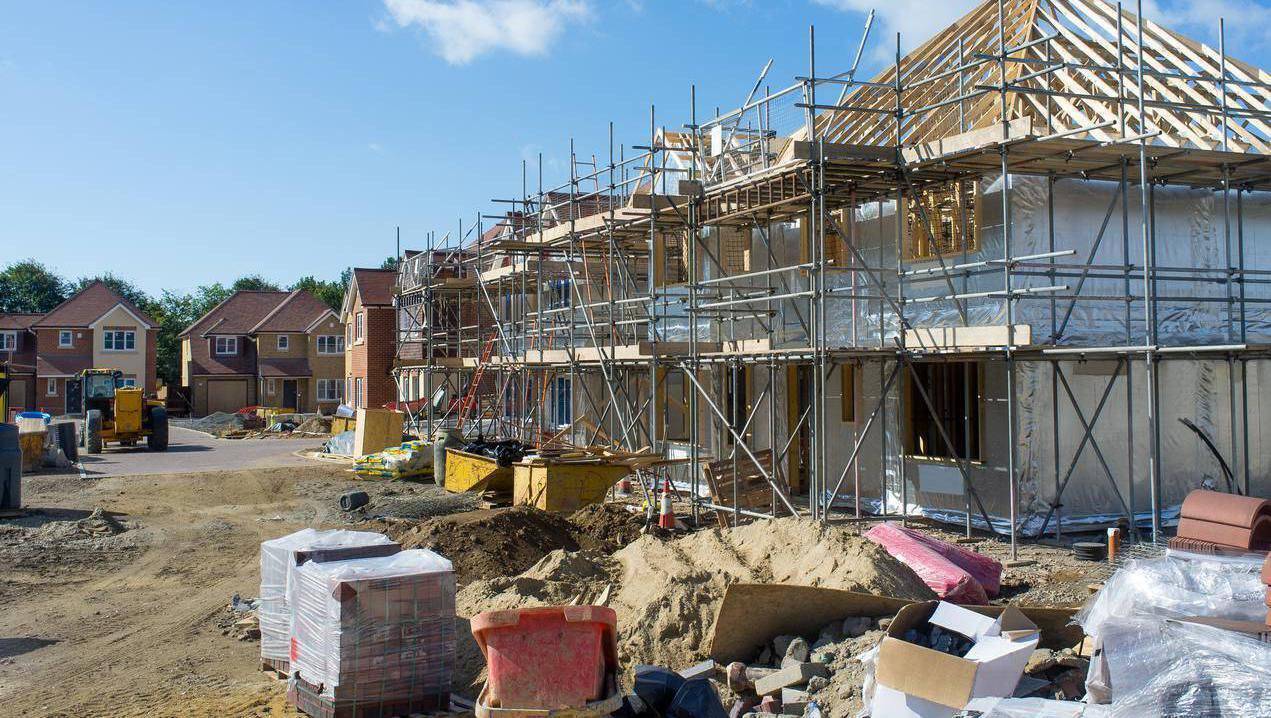
The National Housing System Overview told Mr Browne that because of the increase in commencement notices, it has 'become more difficult to predict the likely time lag between commencement and completion and therefore to forecast delivery'. File picture
Housing minister James Browne has been warned that delays in the construction sector are making it increasingly difficult to predict when homes will be completed and to accurately forecast housing delivery.
Briefings provided to the minister and released under Freedom of Information show officials warned that housebuilding timelines are "clearly shifting" away from the previous average of between 12 and 18 months from commencement to completion.
The National Housing System Overview is compiled each month and provided to the minister with updates on the housing market, projections for completions from external bodies, and commentary from the department.
In June’s update, under the headline 'summary assessment of medium to long-term supply', Mr Browne was told the time between a commencement notice being signed and a dwelling being completed is getting longer.
This makes it “more difficult” to forecast housing delivery, the department said, noting it was due to an “unprecedented level of commencement notices lodged across 2023 and 2024” following several waivers introduced by the Government,
Read More
Officials told Mr Browne that because of the increase in commencement notices, it has “become more difficult to predict the likely time lag between commencement and completion and therefore to forecast delivery”.
“While we remain confident that the vast majority of development, the subject matter of these 2023/24 commencement notices will build out, the appropriate timelines remain difficult to pinpoint, though clearly shifting out from the previous average of 12-18 months,” the National Housing System Overview document outlined.
“This is particularly the case for apartment developments — which tend to be more complex, and in some cases, larger developments that do not lend themselves to phased completion.”
This warning was also contained in the updates prepared for the minister in March, April, and May.
Commentators have suggested that between 35,000 and 43,000 houses will be completed in 2026, the update noted, adding that “this range seems reasonable”.
“The picture for the longer-term is less certain, with the supply pipeline weakening somewhat in 2025,” it stated. “That said, there was a rebound in planning approvals in the second half of 2025, particularly Q3.
“While it is too early to ascertain whether this, coupled with positive Q1 planning approvals, marks the beginning of a trend or an indication of a short-term levelling of output as measures introduced by Government to increase supply bed in this year.”
The document said that commencement notices in 2025 “ran at historically low levels in 2025” but that this was expected due to the surge in 2023 and 2024.
It was also noted that housing delivery could be "further supplemented somewhat in the medium term" by the large number of homes that have planning permission but where construction has yet to begin.
In Dublin alone, there were 46,722 permitted but uncommenced homes at the end of March, comprising 41,114 apartments and 5,608 houses. Of those, 37,318 units were located on 282 sites where no construction activity had commenced.
Commencement notices were lodged for 2,099 new homes in May, up 103% on the same month last year.
The latest CSO figures show housing output remains under pressure. A total of 8,823 new homes were completed between April and June, down 3.6% on the 9,152 completed during the same period in 2025.
That brought the total number of new dwelling completions in 2026 to 16,688 by the end of June.
- Louise Burne, political correspondent

CONNECT WITH US TODAY



Be the first to know the latest news and updates