'Late Late Show' presenter Patrick Kielty paid extra €23,000 over past two years
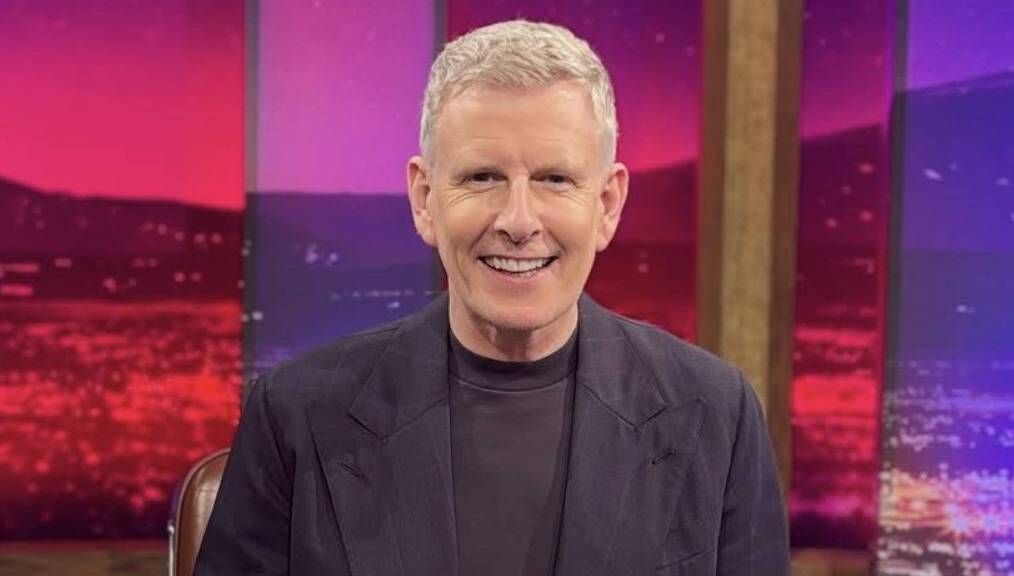
Patrick Kielty: 'Late Late Show' presenter has come to end of contract. Picture: Late Late Show/Instagram.
RTÉ presenter Patrick Kielty was paid an extra €23,000 across 2024 and 2025 as he presented additional programmes beyond his standard contract.
Kielty, who recently came to the end of a contract to host the , had said his pay was €250,000.
Figures released by RTÉ on Thursday showed he was paid €266,323 in 2025 and €257,657 in 2024.
Asked to explain the discrepancy, the national broadcaster said: “RTÉ required Mr Kielty to present some additional programmes beyond his standard contract in these years, and he was paid the agreed fees for this work as included in the published figures".
Read More
Meanwhile, Taoiseach Micheal Martin on Friday evening defended RTÉ’s licence fee as the broadcaster again finds itself in controversy surrounding pay of presenters.
The Taoiseach told reporters at the Fianna Fáil ard fheis: “We think the licence fee should stay because we do believe in public service broadcasting.
“I think it matters, and I think media generally matters across the board, and anything we do to support them we need to do — whilst retaining the independence of media.”
He added: “We don’t want to be micromanaging RTÉ either, or indeed micromanaging commercial semi-states, so obviously the formal decision has to come to Government, but again, there’s a marketplace out there as well and one has to be sensible in how you go about things as well.”
It was revealed earlier that RTÉ’s Derek Mooney was paid enough to feature among the 10 highest-paid presenters every year between 2020 and 2025, according to new figures from the broadcaster.
Mr Mooney had not been included in the annually published list as he was deemed to be a “producer” as per the terms of his contract.
On Thursday, RTÉ published its 2025 figures and included Mr Mooney for the first time since 2014, saying it had reconsidered what constitutes a “presenter”.
It also republished revised figures for 2024 to allow for a year-on-year comparison.
Mr Mooney featured eighth in 2024 and seventh in 2025, earning €197,151 and €202,264 respectively.
RTÉ confirmed on Friday afternoon that it had received permission from Mr Mooney to publish details of his full salary between 2020 and 2023.
He earned €195,079 in 2020, €187, 854 in 2021, €188,885 in 2022, and €192,592 in 2023 – all of which would have placed him ninth on the list.
RTÉ’s director general Kevin Bakhurst said Mooney’s exclusion from the list after 2020 was not part of a “side deal”.
He said the exclusion was seen as a “justifiable” decision by the organisation’s past management, given his contract as an executive producer, but added the current leadership had taken a different view because most people know him as a presenter.
Asked if the reclassification was a side deal to avoid pay cuts from 2020, Mr Bakhurst said: “No, I don’t think it was.”
Earlier, media minister Patrick O'Donovan has warned that RTÉ is once again at risk of losing public trust as another controversy over payments impacts the national broadcaster.
In a strongly worded interview, the Fine Gael minister said the situation felt like “Groundhog Day” and that he believed had “moved on” after receiving a €750m Government bailout.
Speaking on , Mr O’Donovan said he could not understand how someone presenting a programme would not be classified as a presenter.
Mr O’Donovan confirmed he has instructed to provide his department with a breakdown of all workers’ remuneration packages in €5,000 bands by Tuesday.
He said this should include not only salaries but details of all aspects of remuneration packages with the broadcaster.
The media minister warned that “as sure as night follows day”, the latest controversy would damage public trust in , almost three years after the Ryan Tubridy payments scandal.
“This producer, presenter thing, I think is, to be quite honest about it, a side show,” he said.
“What I want to know [is] what are they being paid in the totality. Don't be giving me mixum-gatherum titles and saying, ‘Oh, this bit is a contract, and this bit is for services rendered, and this bit is in employment’.
“I just want to know what is the bottom line, hook, line, and sinker. What are the public on the hook for here?
“I also don't want to know monies without total packages. I think we've moved on way too far from that.”
Mr O’Donovan said he was canvassing in County Galway on Friday ahead of the by-election and that the latest controversy was being raised by voters on the doorstep.
He continued: “We're trying to rebuild confidence. I'm trying to get people to buy the television license. I'm trying to get people to have faith in the public service broadcaster.
“We're trying to get people to go back into their post office and pay their license fee. And, you know, invariably, people are going to ask for what?
“Here we are yet again, Groundhog Day, explaining something that, to be quite honest about, I thought after giving the company €750m, that we had moved on from that, and that we had moved to a position where there was full disclosure.”
Mr O’Donovan said he did not want Mr Mooney to be scapegoated and that his department now wanted to examine “everything” dating back to 2020.
He said failing to revisit the top 10 earners lists and total pay packages over the last five years was “not an option”.
The comments follow suggestions from Kevin Bakhurst, director general, and Terence O'Rourke, chair of the board, that top earners lists before 2025 would not be re-examined.
Mr O’Donovan said this was “not acceptable”.
When it was put to Mr O’Donovan that Mr Mooney’s pay between 2020 and 2023 would be released by if he agreed to it, the minister said that was “not good enough”.
Elsewhere, Mr O’Donovan said he also wanted further information on why Claire Byrne and Ray D'Arcy continued to receive payments after leaving .
Ms Byrne received €47,000 for the remainder of the year, while Mr D’Arcy received €50,000, despite both leaving the broadcaster in October.
Speaking on her programme, Ms Byrne said she had offered to continue working until the end of 2025 to fulfil her contract, but RTÉ did not want her to remain.
CONNECT WITH US TODAY



Be the first to know the latest news and updates