Last month was the worst for patients on trolleys since 2022
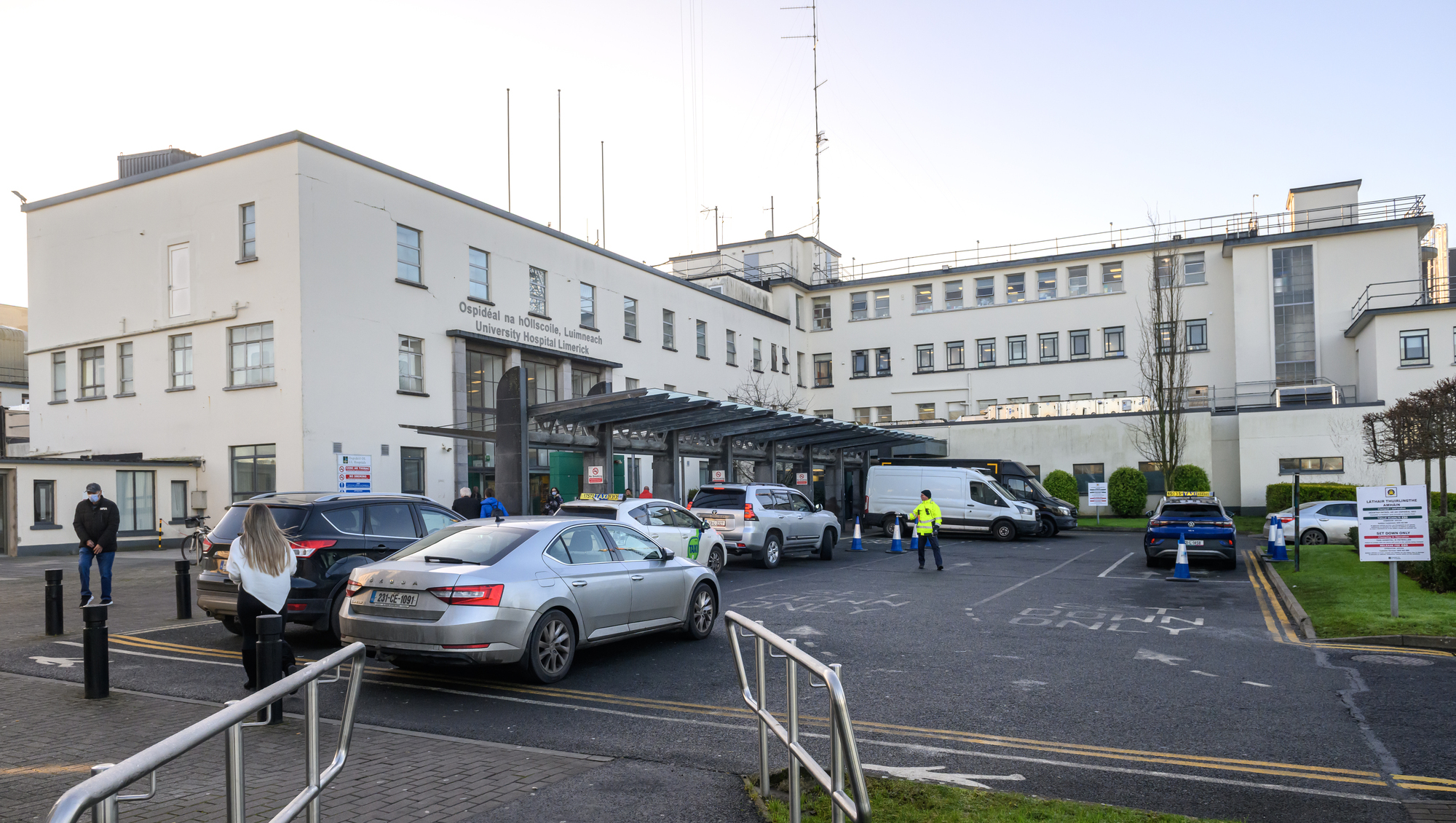
University Hospital Limerick. Picture Dan Linehan
More people were on trolleys waiting for a hospital bed last month than any June since 2022 during the pandemic, new figures from the Irish Nurses and Midwives Organisation show.
Munster in particular was impacted with the highest trolley figures in University Hospital Limerick (UHL) while Cork University Hospital had the third highest.
University Hospital Waterford continued to see the lowest figures for large hospitals with just 12 people on trolleys last month compared to the hundreds it registered monthly before the pandemic.
At UHL last month 1,799 patients were unable to get a bed. The figure is 100 less than last June but higher than June of the two previous years.
This is despite on-going opening of new beds. Advocates are continuing to call for a new hospital to be built locally.
Its satellite hospital in Ennis also saw 124 patients on trolleys last month, the highest recorded there ever.
Nenagh hospital was less busy with just one person recorded on trolleys compared to 30 in 2022.
At CUH pressures linked to bed shortages and overcrowding continue at a high rate with 708 people on trolleys last month compared to 405 in June last year.
It is however lower than in 2022 when numbers soared to 1,059.
Other hospitals listed as extremely busy last month were Sligo University Hospital, St Vincent’s University Hospital and Galway University Hospital.
The INMO said it is alarmed about such high figures at this time of year.
General Secretary Phil Ní Sheaghdha said “a significant reduction” in pressures used to be expected in summer but no longer.
“Our members have had little reprieve from the daily levels of overcrowding they are working in,” she warned.
“In June nurses and midwives had to deal with the additional pressures associated with caring for patients in high temperature weather conditions.”
She said this can “greatly impact patient safety and called for significant planning for summer in case of more high temperatures.
“The first half of 2026 has been extremely concerning, with a 10% increase in the number of patients on trolleys compared to 2025,” she said.
She questioned whether staff will continue working for the HSE.
“If the HSE is serious about retention, predictable surges of healthcare needs must have a planned approach to deal with them so our members know they can care for their patients in a safe environment,” she said.
The HSE also counts patients on trolleys. It divides these numbers into those on trolleys and those on temporary surge beds.
The latter are usually beds which should be reserved for day-patients having elective care. Their use for emergency patients often results in cancellations or postponing of non-crisis care.
The HSE data for Monday for example showed 325 people on trolleys but 569 using temporary surge beds. It disputes the INMO’s characterisation of some types of its surge bed as ‘trolleys’.
Ms Ní Sheaghdha said the continued use of so-called surge capacity is particularly concerning.

CONNECT WITH US TODAY



Be the first to know the latest news and updates