Cork woman who lay dead in house led reclusive life and rebuffed family attempts to contact her
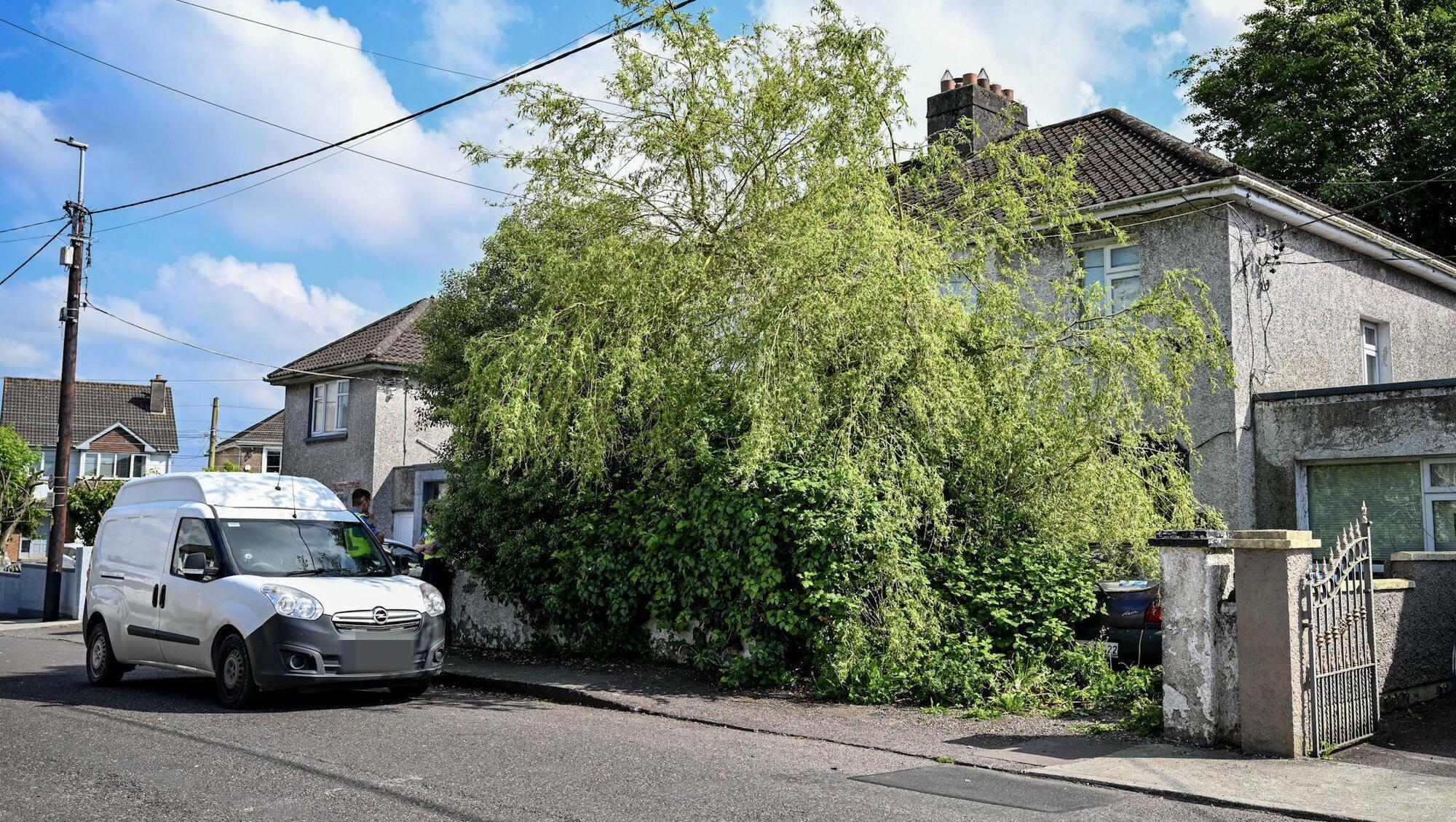
The house where the body of Joyce O’Mahony was discovered. Picture: Chani Anderson
A woman whose skeletal remains lay undiscovered in her Cork City home for several months led a reclusive life and rebuffed repeated family attempts to contact her, an inquest has heard.
The family of Joyce O’Mahony, aged 57, whose decomposed remains were found in the family home near the Lough on the city’s southside last May, outlined the efforts they made over many years to engage with her by calling on-spec to the house, by phone, text and email, all without success.
She changed the locks on the house, and eventually withdrew to such an extent that she didn’t attend her mother’s funeral in 2021, Cork City Coroner’s Court heard.
“It was with great sadness and shock, then, that we learned, in May 2024, that Joyce had been tragically found dead in the family home,” her family said.
In a statement read into the record, they said: “We remember Joyce, at her best, as a lively, intelligent and capable person. She had an excellent sense of humour and had a personal interest in fashion, music and horses.
“Sadly, before and after she moved back from London to Cork in 2010, there was a notable change in her and she became withdrawn and unco-operative, eventually rebuffing countless attempts by the family to reach out to her in person, by phone, text or email.
“We held a small, private funeral service for Joyce in June 2024. We hope that, now, she can rest in peace.”
The details were outlined at an inquest at Cork City Coroner’s Court on Thursday into her death.
The inquest heard how on May 21, 2024, pest control expert Eoin Grant was responding again to an enduring vermin issue at a house in Brookfield Lawn, the Lough, when he traced the problem to the house next door, the O’Mahony family home, where Joyce lived having returned to Cork from London in 2010 to care for her mother.
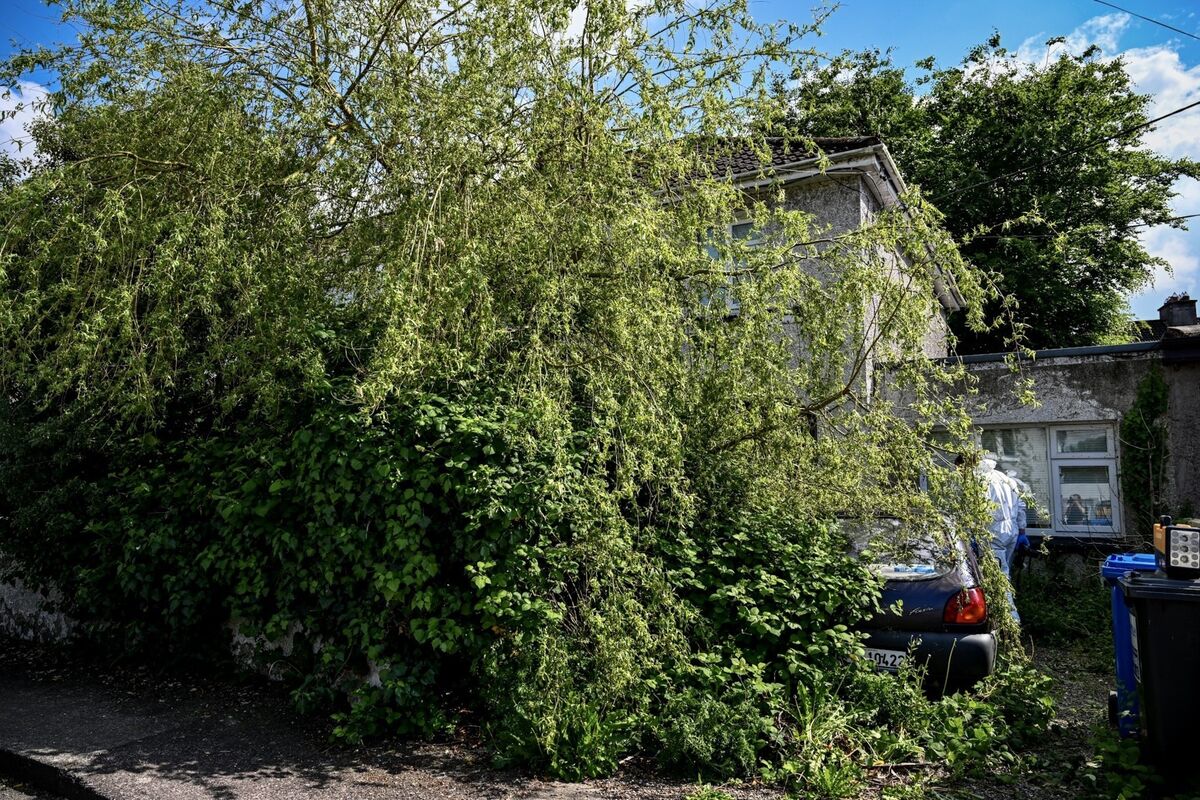
The front garden was overgrown and a car parked in the drive was covered in moss.
Mr Grant used a crowbar to access the house and found all but one of the downstairs doors locked. He said when he pushed open the unlocked door to a back room, he noticed a decomposed body lying up against it inside, and raised the alarm immediately.
Gardaí sealed off the scene immediately for a full forensic examination. Death was pronounced at the scene but gardaí found nothing of a suspicious nature.
DNA samples taken from a family member were used to confirm Ms O’Mahony’s identity.
Gerard O’Connor, who lived next door since 1986, told the inquest that his connection with Ms O’Mahony was neighbourly, rather than friendly, and that she “kept to herself”.
He said she gave him a key to her house around 2010 but took it back following the death of her mother in 2021. “That was the last contact we had,” he said.
He described her as a “night owl” who always went to the shops at 8pm, and recalled a rear light being on in her back garden overnight, and accepted that it was probably on during the daytime too.
“I never saw her during the day, and when she was out, she would just walk past,” he said.
He told the coroner he believed gardaí had called to her house to check on her at some stage after her sister expressed concerns, but he said it was his understanding that she told them she was fine.
His last recollection of her was from October 2022, and he said: “Covid came and that was the last I heard of her.”
Dr Claire McCarthy, Ms O’Mahony’s GP from 2012 to 2018, described her as “strange, sad and reclusive” but nice, and someone she got on well with.
She said it appeared as if Ms O’Mahony was sad about being back home in Cork, and found it hard to adjust to life in Ireland, and she prescribed anti-depressants but believed she actually had a personality disorder.
She also said Ms O’Mahony didn’t follow her medical advice and was difficult to contact about test results and appointments.
Garda Kate Kelly of Togher Garda Station, who investigated the case, said there was no evidence of Ms O’Mahony being in receipt of social welfare payments, and her last banking activity was a €50 withdrawal on October 20, 2021. The account was closed soon afterwards due to insufficient funds.
The last ESB meter reading at the house was done on October 21, 2021, with the remaining readings estimated.
She said the last image on Ms O’Mahony’s Nokia phone was taken on May 25, 2023, and gardaí found a SuperValu receipt, dated June 23, 2023, with food cartons on the kitchen table matching the receipt. There was no food in the fridge.
Pathologist Dr Asmaa Abdelsadek said given the advanced state of decomposition of Ms O’Mahony’s remains, a cause of death could not be determined but she confirmed there was no sign of trauma, and estimated that death could have occurred at least six months before the body was found, and possibly the previous September or October.
In their statement, the O’Mahony family said they tried to engage with Joyce, but without success. “Joyce was a very capable person and worked in London for approximately 20 years,” they said.
“In the few years prior to her moving back to Cork to live with our mother in November 2010, following our father's death, she became quite withdrawn, having limited contact with the rest of the family, even as her siblings — who lived in Cork, Dublin and London — did their best to support and visit their parents as they got older.
“It was somewhat of a surprise, then, when she left her life in London to move back to Cork.
“It was only a matter of months, however, when she changed the lock on the front door for no apparent reason so that no-one else in the family could gain access.
“She then had the telephone landline disconnected and took control of our mother's mobile phone. The only way to reach her, and to visit our mother, was by phone text or email, and strictly by appointment only.
“At this point, seeing that the front of the house was becoming overgrown, she agreed that the work needed to be done, which was paid for by her siblings.
“During late 2016 and early 2017, we received medical advice that our mother's dementia was advancing rapidly and that her condition seemed to be too much for Joyce to handle.
“On a number of occasions and in the few communications she engaged with, Joyce had referred to having medical appointments herself but never expanded on that, so we didn't know if she actually had a medical condition and, if so, what that was.
“She had been a heavy smoker for most of her life, so it may or may not have been related to that."
The family said it also became "increasingly difficult for the family doctor and health care staff to engage with Joyce to gain access to the house to see and assess our mother".
“We swiftly pursued the more affordable Fair Deal route to have our mother placed in full-time care as we had heard about an available place in a nursing home.
“We made repeated attempts to get Joyce to engage in discussions about our mother and about Joyce's own future, but to no avail. Joyce was unco-operative through our legal processes regarding family documents to make the Fair Deal happen.
“While our mother was in full-time care in the nursing home, between 2017 and her death in January 2021, we were informed that Joyce had visited her just once, in 2017.
“We made attempts to reach out to her, through 'on spec' calls to the house and with notes under the front door, but again to no avail.
Cork City Coroner Philip Comyn said given all the circumstances, an open verdict was the only option available, and he extended his sympathies to the O’Mahony family.
“They found themselves in a very, very difficult position,” he said. “Joyce came back to look after their mother, who was unwell, she became reclusive and gradually withdrew from the family despite the family’s best efforts.
“Their statement gives clear testimony to the efforts they made on an ongoing basis to try and engage with Joyce, but despite their very best efforts, they were unsuccessful.
“We have had a number of tragic deaths like this over the years and one of the common threads is that the person who dies withdraws firstly from their family, their family make efforts to try to keep connected with the person, but their efforts are rebuffed and the more they try, the more they are rebuffed, and they perhaps leave it in the hope that the person may change their mind and re-engage with everybody.
“Another common thread is that neighbours tend to respect the person’s privacy and if somebody wants to lead a reclusive life, people leave the person on their own, not out of any lack of empathy but more out of respect for their wishes.
“And unfortunately here, Joyce went into a downward spiral and I think it became worse following the death of her mother and then covid, and that made her more and more withdrawn.”
He praised Garda Kelly for conducting a thorough investigation in very difficult circumstances. Sgt Fergus Twomey extended sympathies to the family and got permission of the coroner to return a mobile phone to them.
CONNECT WITH US TODAY



Be the first to know the latest news and updates