Volunteers 'doing the council's work' as number of outdoor staff declines sharply in Cork
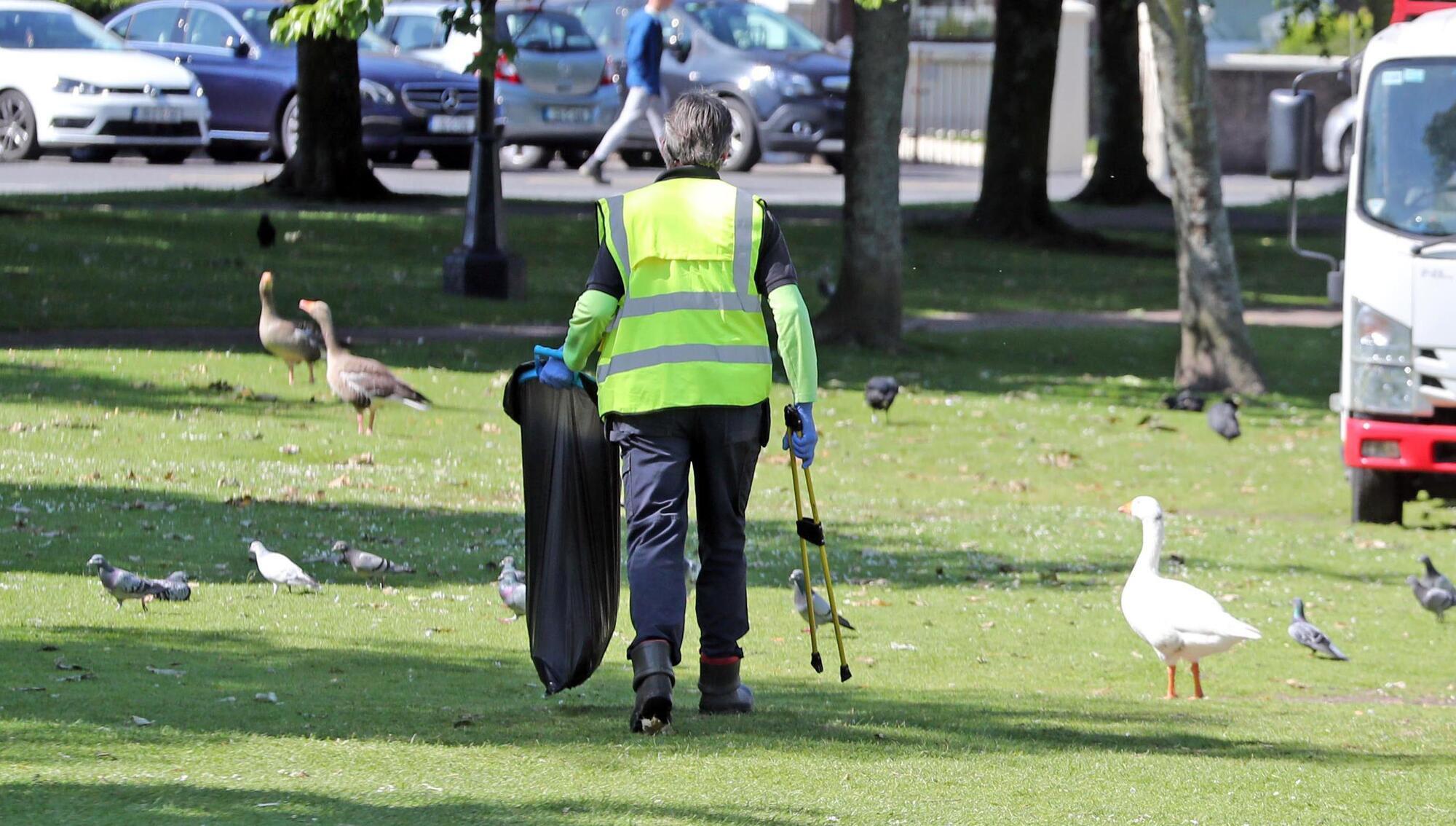
New figures show that in 2008, there were 1,162 whole-time equivalents outdoor workers employed by the local authority. That number has declined to 780.1. File picture: Jim Coughlan
The number of outdoor workers employed by Cork County Council has fallen significantly since 2008, confirming councillors’ repeated claims that there are not enough people on the ground to keep towns and villages litter-free, maintain parks and cemeteries, and carry out road repairs.
New figures show that in 2008, there were 1,162 whole-time equivalents outdoor workers employed by the local authority. That number has declined to 780.1.
The information was issued to Fianna Fáil councillor Gearóid Murphy.
When the county council ceded territory to the city council in 2019, it had to transfer some outdoor staff to the control of City Hall. As a result, the numbers fell again, from 883.15 to 820.99 WTEs. However, since then the county council has lost a further 40.
“There’s a very clear downward trend since 2008. There should be a greater focus on recruiting outdoor staff, especially as the population is increasing all the time,” Mr Murphy said.
“Unfortunately, they’re [the figures] extremely disappointing to say the least. Since the boundary change, we’ve lost another 40 staff. That’s unacceptable. We need to talk about this at budget time. At the end of the day, the outdoor services we provide are absolutely critical to communities. Too much slack is being taken up by Tidy Towns and other voluntary groups,” Fianna Fail councillor Seamus McGrath said.
Independent councillor Declan Hurley claimed that in the Dunmanway area the outdoor workforce had been reduced from 30 to 13.
“It’s not good enough. We’re losing the confidence of the public. There’s a huge volume of voluntary work being done by communities but we’re losing their support because they feel they’re being taken for granted. We can’t even clean signposts, lots of which are illegible,” Mr Hurley said.
Fianna Fáil councillor Joe Carroll said when town councils were abolished in 2014 councillors were assured the level of service provided by outdoor workers would not be diminished.
He claimed prior to 2014 there were five outdoor workers and a foreman based in Skibbereen.
“We’ve no one now. Tidy Towns are doing the council’s work. Services have fallen down. I hear there will be even less money for next year for graveyard maintenance. It’s a matter of dignity. I’m not accepting the budget unless we get extra funding from Government [to employ outdoor staff],” Mr Carroll said.
“Unfortunately, we've left communities down. People aren’t there to clean gullies etc. This is something that must be dealt with,” Fine Gael councillor Anthony Barry said.
Fianna Fáil councillor William O’Leary said people were rightly questioning why they are paying Local Property Tax for services they are not getting.
Fianna Fáil councillor Audrey Buckley, a Tidy Towns volunteer, said the public thinks it is up to such groups to maintain their local areas and not the council.
She said if it wasn’t for her group, beaches would be strewn with litter.
James Fogarty, the council’s assistant chief executive, said he would come back to councillors with a more detailed analysis of the locations where the workers are based and the jobs they carry out.
Mr Fogarty said councillors would have to discuss the budgetary implications of employing more outdoor staff.

CONNECT WITH US TODAY



Be the first to know the latest news and updates