State Papers: Nasa wanted to use Shannon Airport as a landing site for the space shuttle
At the time, NASA was preparing to launch the space shuttle, Atlantis, in June 1995 on a mission to dock with the Russian Mir space station
State Papers: Nasa wanted to use Shannon Airport as a landing site for the space shuttle

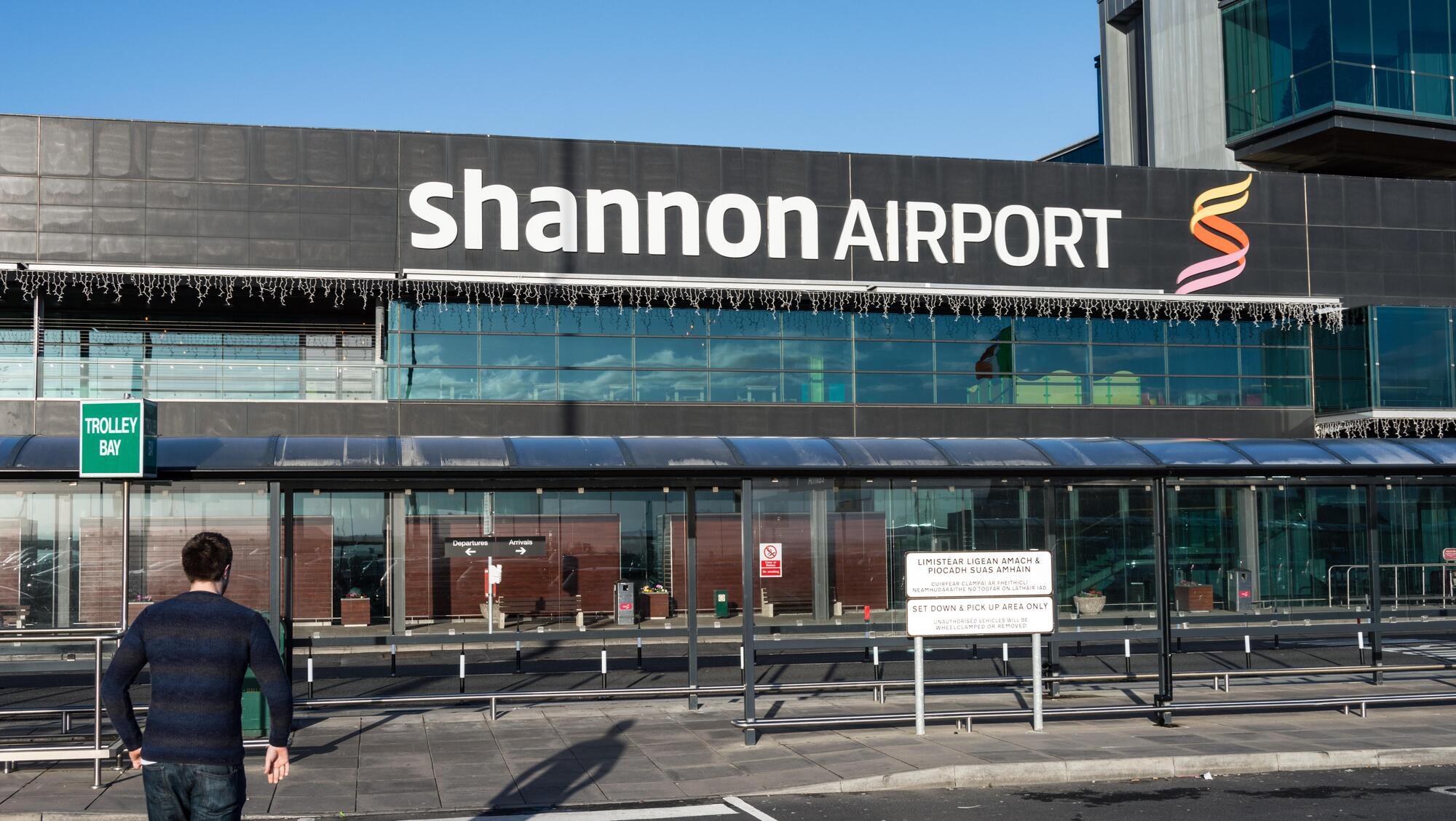
The US embassy in Dublin had asked for Shannon Airport – which was a key transatlantic stopover base as Europe’s westernmost airport with a 3,199-metre runway – to be included on a worldwide list of potential landing sites.

“Shannon, we’ve got a problem” could have become a famous saying if one of the more unusual emergency plans in the rich aviation history of the airport with the longest runway in Ireland had come to pass.

Newly released files from the National Archives show US officials contacted the Irish government in March 1995 to seek permission to use Shannon Airport in the event of some malfunction with a space shuttle mission.

At the time, Nasa was preparing to launch the space shuttle, Atlantis, in June 1995 on a mission to dock with the Russian Mir space station, requiring a new launch trajectory for the world’s first reusable spacecraft.

The US embassy in Dublin had asked for Shannon Airport — which was a key transatlantic stopover base as Europe’s westernmost airport with a 3,199m runway — to be included on a worldwide list of potential landing sites for the space shuttle.

It was explained that the reason for this request was that the altered trajectory of launches would in future bring shuttles in line “where Ireland could be involved”. Nasa had designated an airport in Zaragoza, Spain, as the main landing site in the event of an emergency if there were multiple main engine failures after take off during the ascent phase before going into orbit.

However, it had selected Shannon Airport as a suitable back-up landing site in the event there were additional engine failures while taking the action to abort to Zaragoza.

“There would be an eight- to 20-second period where insufficient power would exist to get the shuttle all the way to Zaragoza,” Irish officials were told.

Due to the speed at which a space shuttle travels — up to 27,300km/h — the options available when main engine failure occurs were limited.

They were also informed that US personnel would be dispatched to Shannon in the unlikely event that a landing at the airport would be necessary to prepare the shuttle’s orbiter for a return flight to the US.

US diplomats also pointed out that they might seek approval from the government for a minimal number of third country nationals to assist as necessary for the safe and expeditious recovery of any foreign payloads that might be carried on the shuttle.

The US government promised it would provide planning information and consult with the government to ensure the safest possible landing of the space shuttle as well as accepting liability for any damage that might occur.

Officials in the Department of the Taoiseach received legal advice that Ireland would be obliged to respond positively to the request under the terms of two international agreements which Ireland had ratified: The Treaty on Principles Governing the Activities of States in the Exploration and Use of Outer Space, including the Moon and Other Celestial Bodies; and the Agreement on the Rescue of Astronauts, the Return of Astronauts, and the Return of Objects Launched into Outer Space.

In a memo written on June 14, 1995, before the planned launch of the space shuttle later that month, officials noted that the possibility of Shannon Airport actually being used as a landing site was “a very remote one”.

The Department of Foreign Affairs confirmed in June 1995 that the government would provide all possible assistance “in the unlikely event” of the space shuttle needing to carry out an emergency landing on an airfield in Irish territory, doing so “to safeguard the lives of the astronauts”.

It provided the US embassy in Dublin with contact details for the chief aeronautic office at the Department of Transport, Energy, and Communications who would act as a liaison for “appropriate technical arrangements”.

It also arranged for direct contact between Nasa and the Irish Aviation Authority.

Irish officials also noted that extensive logistical preparations would be necessary from co-ordinating with Shannon ground services to alerting hospitals, fire brigades, naval units, and sea rescue teams in case the shuttle missed the runway and came down in a populated area or offshore.

Nasa’s space shuttle programme ended in 2011 without ever having recourse to complete an emergency landing at Shannon.

However, an Irish Tricolour that was brought on board a mission by Discovery in 2008 was presented to Shannon Airport by Nasa in appreciation and recognition of its support for its space shuttle programme.

It is on display in the airport’s boardroom.

More in this section

Lunchtime News

Newsletter

Keep up with stories of the day with our lunchtime news wrap and important breaking news alerts.

Cookie Policy Privacy Policy Brand Safety FAQ Help Contact Us Terms and Conditions

© Examiner Echo Group Limited