Avian flu suspected in death of four gannets on Tramore beach
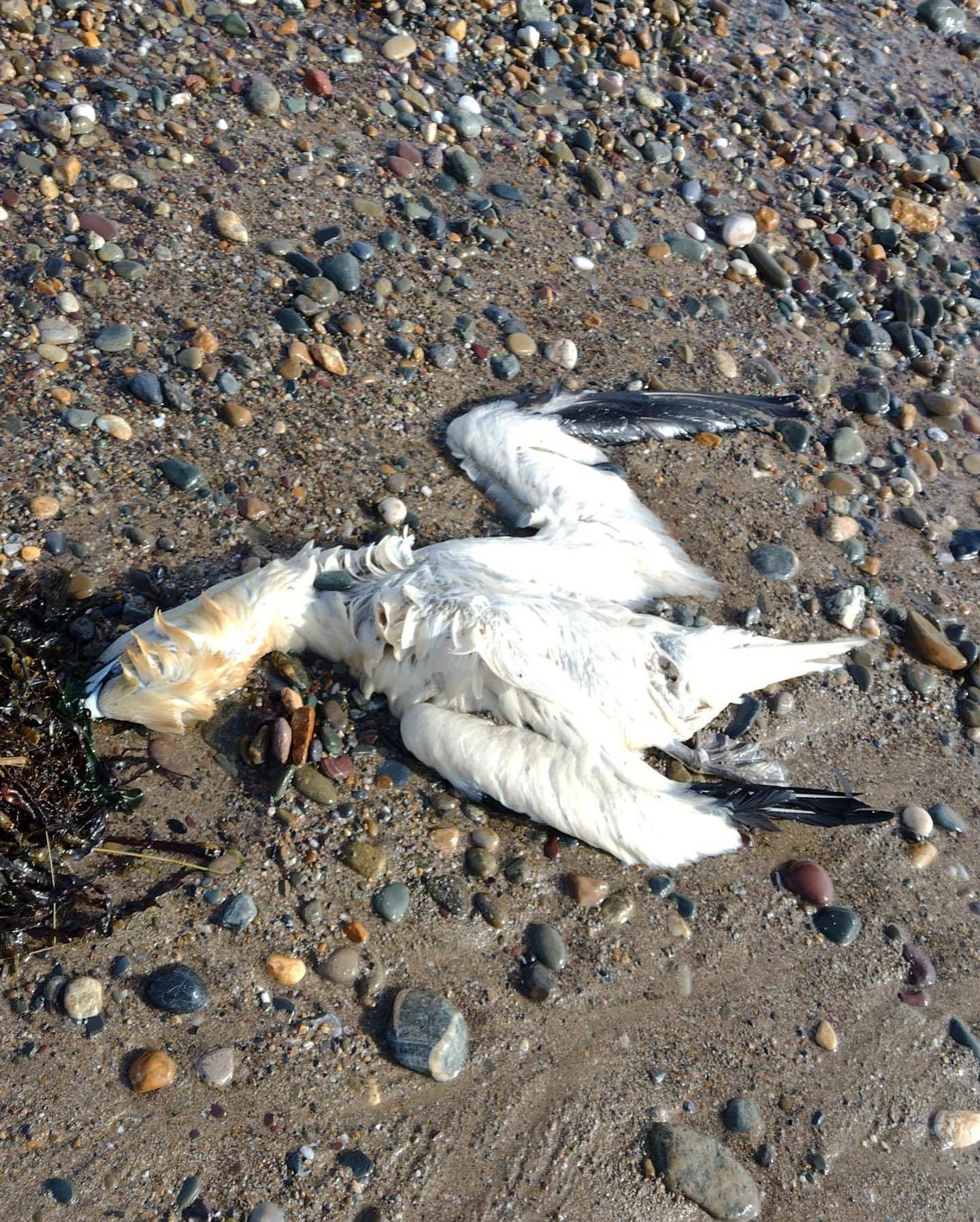
Four dead northern gannets in Tramore were reported to ORCA Ireland via their Observers app this Easter weekend. Picture: Observers App, Facebook
Environmental researchers have raised concerns about the discovery of four dead gannets on a Tramore beach as fatal cases of bird flu continue to be reported across the country.
Highly pathogenic avian influenza HPAI H5N1 can have up to 100% mortality in affected flocks, with six poultry outbreaks reported by the Department of Agriculture since October 2021.
The department’s latest report says there have been no further outbreaks of HPAI H5N1 since December 18, 2021, though cases continue to be reported in wild birds.
The discovery in Tramore was alerted to Ocean Research and Conservation Association (ORCA Ireland) who said the deaths of the birds was “of concern” due to the prevalence of the disease.
“It is quite unusual to find four gannets dead so unless there was direct interaction with fishing gear this may be a case of the avian flu,” said an ORCA Ireland spokesperson.
The first wild bird case of HPAI H5N1 was confirmed in a peregrine falcon on November 3, 2021, in Galway, with 80 wild birds testing positive for the virus since.
Bird flu cases in wild birds have been reported in 16 counties, including more than 100 cases in swans in several counties including Tipperary, a barn owl in Sligo, a herring gull in Kerry, and a white-tailed sea eagle in West Limerick.
The Department of Agriculture, Food and the Marine said “the continued detection of avian influenza-positive cases in wild birds indicates that there is still a significant risk from circulating virus in wild birds and the environment”.
It was added that direct contact with other infected domestic or wild birds is the biggest risk factor for the spread of the disease.
“Other methods of disease spread include contamination of feed, bedding, equipment and vehicles with infected bird droppings or other material such as respiratory fluid,” it was added.
Regulations came into force on November 22 which required Irish flock keepers to keep all poultry and captive birds in secure buildings to limit the spread of the disease.
For this reason, eggs from free-range poultry farms could no longer be marketed as free-range.
The virus can also be spread by people through contaminated clothing and footwear and poor hand-washing, while vermin accessing poultry houses, feed and bedding storage also poses a risk of infection.
The department is urging the public to report sick or dead wild birds using the Avian Check Wild Bird Application, and not to touch the animal.
“The disease is highly contagious for birds, but risk of transmission to humans is considered very low,” the department said.
“The disease poses no food safety risk for consumers. Properly cooked poultry and poultry products, including eggs, are safe to eat.”

CONNECT WITH US TODAY



Be the first to know the latest news and updates