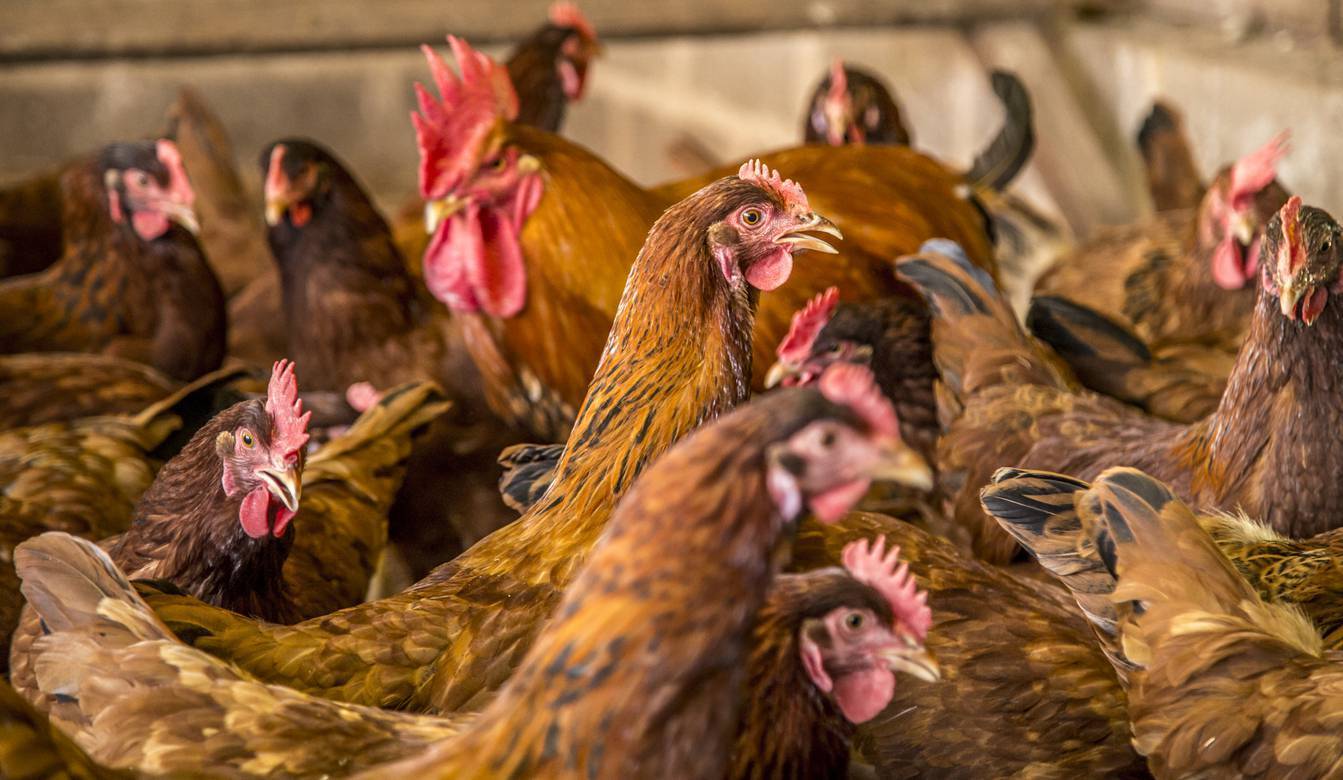
Poultry farmers, loss-making due to feed price increases, continue to fight avian influenza by keeping their birds indoors.
When they joined an IFA protest in mid-February, they warned they could not survive at current prices, and asked retailers to pay 15c extra per chicken and 2c extra per egg.
Increasing the pressure on the farmers is the ever-present threat of bird flu. To combat this, poultry owners were required by law to keep their flocks confined, away from wild birds which are a source of infection.
This approach has been successful, with no further Irish outbreaks of H5N1 bird flu in poultry or captive birds since December 18 last, despite 11 cases of bird flu in wild birds confirmed from February 10 to late March, which indicated continuing risk, requiring poultry owners to continue stringent biosecurity measures.
Since November 3, 80 wild birds in Ireland tested positive for H5N1 bird flu in 16 counties. Wild birds affected included peregrine falcon, white-tailed sea eagle, brent goose, barnacle goose, greater white-fronted goose, greylag goose, swans, merlin, water rail, magpie, kestrel, herring gull, crows, common buzzard, grey heron, barn owl, and cormorants.
The disease poses no food safety risk for consumers. Properly cooked poultry and poultry products, including eggs, are safe to eat.
But poultry flocks are usually slaughtered to reduce the spread of the disease, which is highly contagious.
The recent winter has been the worst globally for bird flu, with 1,682 outbreaks in poultry in the EU. Since February 23, there were 966 outbreaks globally.
In January, the US was hit by H5N1 in commercial poultry operations for the first time since 2020.
The disease has spread since then, with more than six million chickens and turkeys killed nationwide to reduce its spread from infected flocks.
This has limited exports of US poultry products.
In the EU, the pressure on poultry farmers of high feed prices and the bird flu threat has increased, due to their eggs from laying hens confined for more than 16 weeks no longer allowed for sale as free-range.
They will thus depend on consumers’ goodwill, as egg labels are changed to indicate they are no longer free range. In Ireland and the UK, they are now labelled as “barn eggs”.
Agriculture Minister Charlie McConalogue said he supported a proposal for an EU extension to the 16-week confinement derogation for free-range, but the European Commission advised this was not possible, but it would review EU marketing standards legislation.
In the UK, free-range eggs are predicted to return to supermarket shelves imminently, due to 35m hens cooped up for four months being freed as the Government lifts an indoor housing order. The UK has had its worst-ever winter of bird flu, with more than two million poultry culled after 80 bird flu outbreaks.
France has been another of the worst-hit European countries, leading their government to carry out trials of bird flu vaccines.
Here, Mr McConalogue said there is renewed international attention to vaccination due to the high scale of bird flu outbreaks globally.
But he said it is not without significant challenges, including many non-EU countries refusing imports of live animals and food of animal origin from countries where vaccination is practised.
Also, there is no way to distinguish the antibody response to vaccination from that of infection, and some vaccinated birds may still become infected.
The effectiveness of a vaccine would be challenged by new and emerging strains emerging annually, and wild birds, often the source of virus spread, cannot be vaccinated.
There are currently no vaccines with Irish market authorisation, and vaccination in Ireland is prohibited.
He was responding to a Dail question from Cavan-Monaghan Sinn Féin TD Matt Carthy.

Subscribe to access all of the Irish Examiner.
Try unlimited access from only €1.50 a week
Already a subscriber? Sign in