Caribbean endures 90% of global economic damage due to climate-fuelled disasters
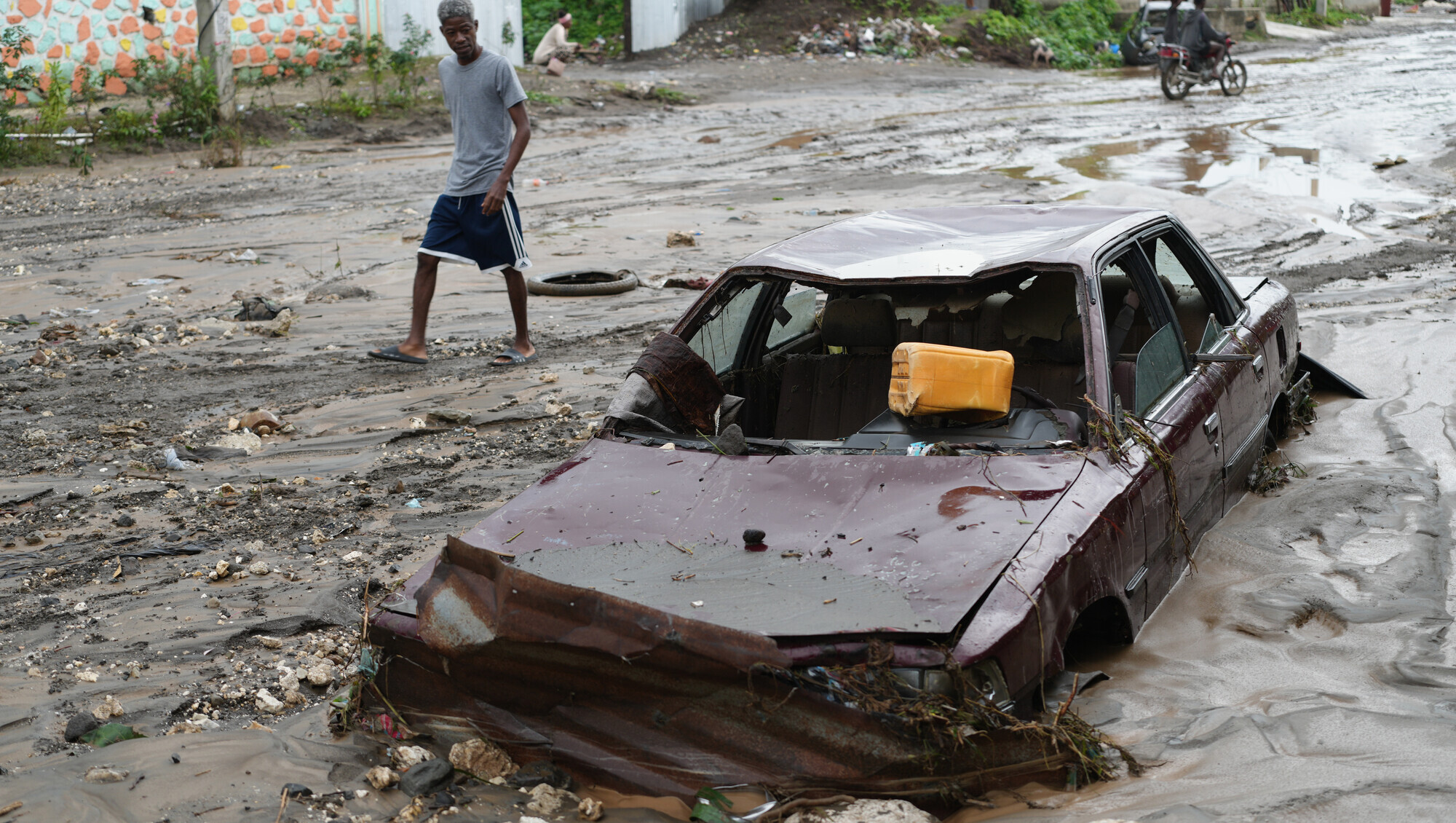
Devastation in Petit-Goave, Haiti, after Hurricane Melissa in October 2025. Picture: Odelyn Joseph/AP
Caribbean nations suffered $53.2bn (€46.75bn) of damage from climate-fuelled disasters between 2000 and 2024, research into the cost of the climate crisis to developing small islands has found.
The figure is more than 90% of the total $57bn in economic damage caused by floods, storms, and drought across 39 developing island nations in the Caribbean, the Pacific, the Atlantic, the Indian Ocean, and the South China Sea, according to a study by development think tank ODI Global.
ODI Global also estimates that the climate crisis caused more than 190 deaths a year over the 25-year period studied.
The research is important for conversations about global climate reparations, the report’s author, Emily Wilkinson, said.
The Caribbean has been pursuing climate justice after bearing the brunt of the crisis, which is primarily caused by high carbon emitters outside the region.
Read More
Several Caribbean countries provided evidence to the International Court of Justice, the world’s top UN court, in a case that ended last year with a landmark advisory opinion that could mean states are ordered to pay compensation if they fail to phase out fossil fuels and prevent harm to the climate system.
Ms Wilkinson said: “There have always been hurricanes, heavy rainfall, drought, and temperature extremes, historically — but it’s really important to be able to say what percentage of that kind of strength or intensity is actually due to increasing global temperatures.
“Climate scientists do these attribution studies, and they’re really important for when we start to think about responsibilities for the impacts of climate change, compensation and climate reparation.”
The report also highlights the devastating impact of Hurricane Melissa, which tore through Jamaica in October 2025 with winds reaching 298km/h, the strongest ever recorded in the country.
Experts say the storm was supercharged by global heating. The report attributes $9.7bn — about 80% of the $12.2bn of the government’s calculated damage and losses — directly to the climate crisis.
This figure is almost half of the country’s total economy and far above commitments to the UN’s loss and damage fund to help climate-vulnerable countries recover from disasters.
For Jamaica, it was the second year in a row that brutal storms caused widespread damage, after 2024’s Hurricane Beryl.
Thousands of people were left without homes, livelihoods, communication services, and basic utilities such as water and power.
- The Guardian
CLIMATE & SUSTAINABILITY HUB
CONNECT WITH US TODAY



Be the first to know the latest news and updates