Military co-operation with Britain critical to protecting maritime infrastructure, ambassador says
Strengthening military co-operation between Ireland and Britain is “critical” to protecting key maritime infrastructure, the British ambassador to Ireland has said.
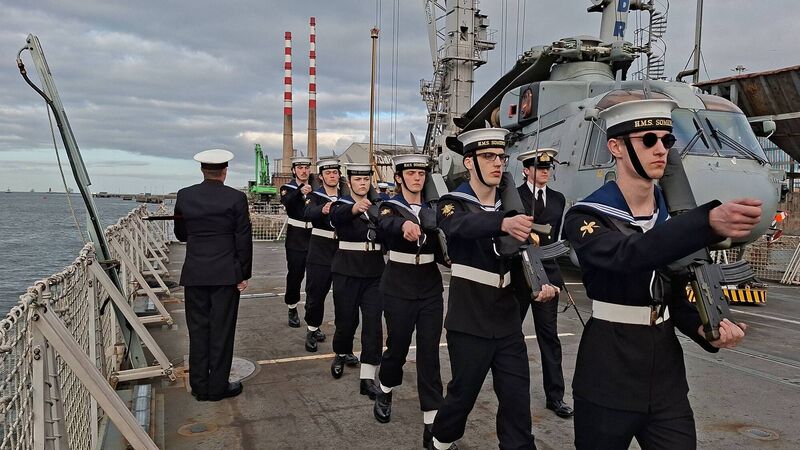
Kara Owen was speaking during a port visit to Dublin by the Royal Navy warship HMS Somerset following an exercise with the Irish Naval Service vessel LÉ James Joyce off Rosslare on Thursday.
The Somerset is believed to be the largest British Navy frigate to visit Irish shores in many decades.
The vessel is a dedicated anti-submarine warship equipped with an array of surveillance systems, weaponry, electromagnetic warfare tools and decoys.
Read More
It recently returned from patrols in the North Sea focused on tracking the movements of Russian submarines between Britain and Norway, where crucial power and data cables criss-cross the seabed.
Speaking to senior Defence Forces officers, including Chief of Staff Lieutenant General Rossa Mulcahy, senior Department of Defence officials and Dublin-based politicians, Ms Owen said sub-sea infrastructure was a major security concern for both Britain and Ireland.
“We share maritime space and it is critical we work together to protect our nations’ infrastructure,” she said.
She noted that approximately 99% of data travels through sub-sea cables and said protecting them was essential for both the economy and society.
She also highlighted the importance of gas pipelines between the two countries — which provide Ireland with around 80% of its gas supply — as well as electricity interconnectors.
Ms Owen referenced the activities of the Russian underwater surveillance vessel Yantar, which has recently been active in the North Sea.
The Yantar was the focus of a joint maritime security operation involving the Naval Service and the Royal Navy in the Irish Sea in November 2024 when it loitered over gas pipelines near the Isle of Man.
Ms Owen also referred to a “refresh” of the Memorandum of Understanding between Ireland and Britain last March. The agreement, which dates back to 2015, calls for enhanced maritime, cyber and airspace co-operation.
The ambassador said Irish-British diplomatic relations were currently in an “excellent place”.
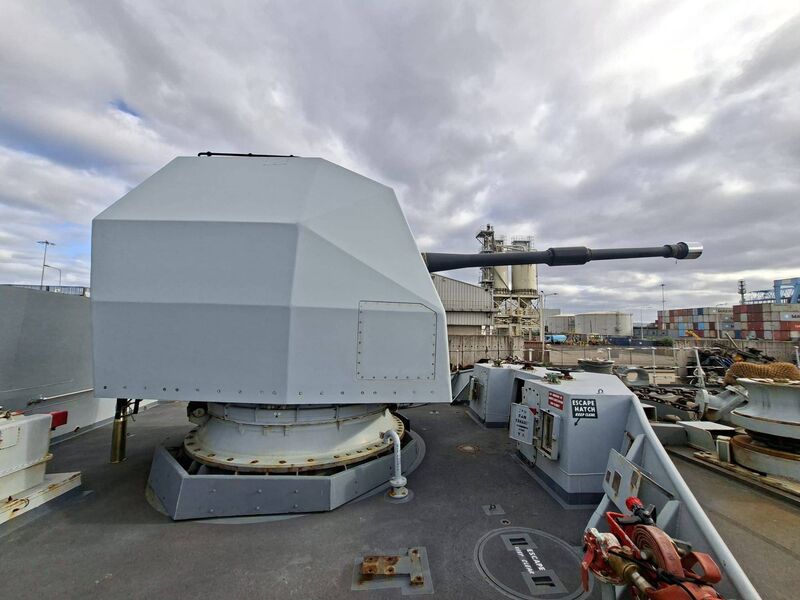
The Somerset, commanded by Commander Matt Millyard, had about 200 crew members on board during its visit to Ireland, including trainees.
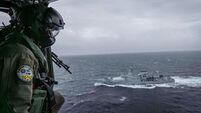
At 133m in length, it conducted a Passex exercise with the LÉ James Joyce off the Wexford coast on Thursday.
The 90m-long LÉ James Joyce has a crew of approximately 50.
The Somerset is not the largest warship to visit Ireland in recent years. The Dutch naval vessel HNLMS Johan de Witt, measuring 176m, visited Dublin Port last October and participated in Passex exercises with the LÉ William Butler Yeats.
Ireland has hosted a number of naval visits from European countries over the past year, including vessels from the French, German, Dutch and British navies.
Speaking at the launch of Ireland’s first Maritime Security Strategy in February, defence minister Helen McEntee emphasised the importance of greater co-operation with neighbouring coastal states on maritime security issues.
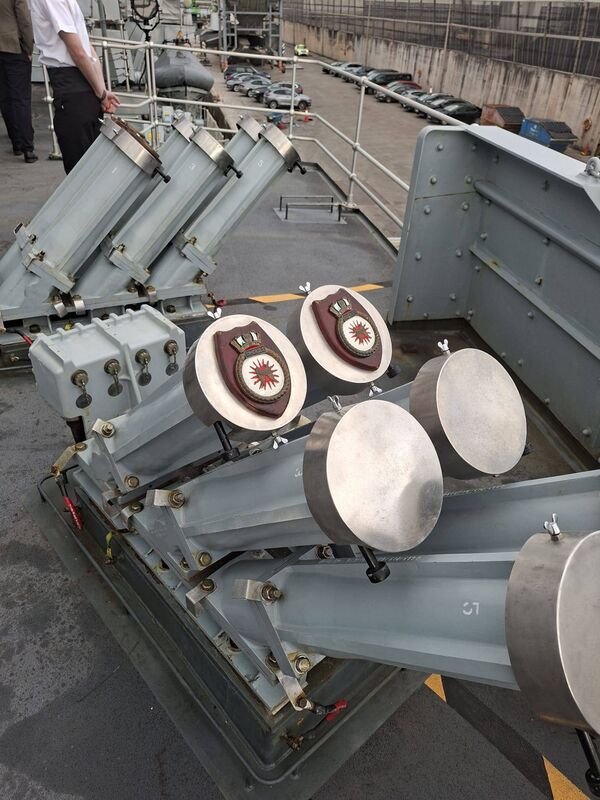
Ireland’s presidency of the Council of the European Union begins on July 1 and runs for six months. It will involve a series of high-level EU meetings, culminating in the European Political Community (EPC) summit at Dublin’s Convention Centre later this year.
The EPC gathering will be the largest such event and will include non-EU countries, including the UK and, most likely, Ukraine. It is expected to be the biggest security operation undertaken by An Garda Síochána, the Defence Forces and the National Cyber Security Centre.
The visit of President Volodymyr Zelenskyy to Dublin last December was overshadowed by the presence of drones on his flight path after his aircraft had passed through Irish airspace.
As the drones were not recovered, Irish security agencies were unable to determine whether they originated from land or sea, or who was responsible. However, as previously reported by the , suspicion focused on an actor linked to Russian agencies.
Although primarily an anti-submarine vessel, the Somerset is equipped with significant anti-aircraft and anti-ship missile capabilities, along with a range of gun systems.
At present, its machine guns remain its primary defence against drones. However, new Royal Navy frigates entering service in the coming years are expected to be fitted with laser weapons, which are considered cheaper and more effective for countering drone threats.
These systems may also be retrofitted to existing vessels.
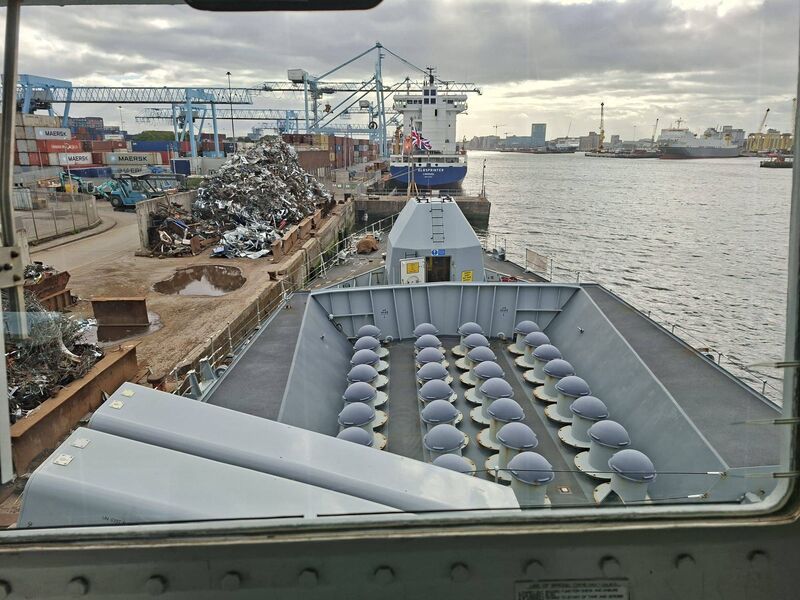
Built at the end of the Cold War, the Somerset has undergone numerous refits and is expected to be decommissioned within the next five years as newer frigates enter service.
In terms of countering submarine activity, existing anti-submarine vessels can track submarines, but efforts are under way to improve capabilities that could disrupt hostile underwater operations. The use of torpedoes during peacetime is considered highly unlikely, sources said.
The Somerset has extensive sonar capabilities, both on board and through its helicopter operations, enabling it to detect and track submarines.
Following recommendations from the Commission on the Defence Forces, Ireland began investing in ship-based sonar systems and Air Corps helicopter sonobuoy capabilities in February 2022.
The towed sonar capability is scheduled for delivery in 2027, with the Air Corps capability to follow.
Ireland’s military radar programme is due to begin later this year with the introduction of counter-drone systems. The wider radar network, including a maritime radar capability, is expected to be operational by the end of 2028.

CONNECT WITH US TODAY



Be the first to know the latest news and updates