How much will shortfalls in EU climate targets cost Ireland?
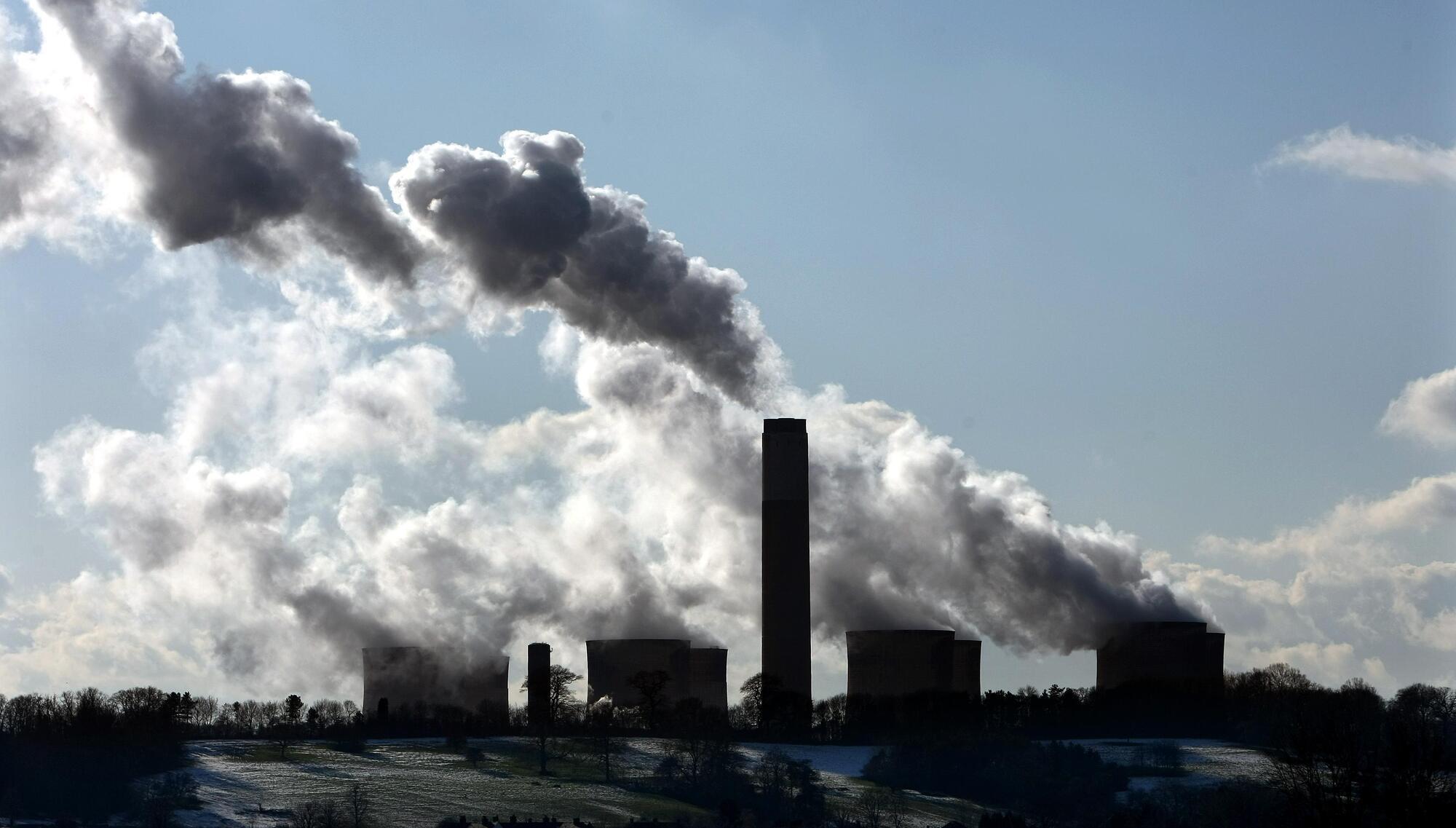
Under the regulation, Ireland is required to reduce greenhouse gas emissions by 42% compared with 2005 levels. File picture
Irish ambitions to meet EU climate targets[/URL] remain all but dead in the water, with the cost of failing to reach those goals by 2030 expected to run into the billions.
Climate minister Darragh O’Brien has openly accepted that Ireland will fall short of a range of EU climate targets. Experts estimate the resulting cost to the State could be anywhere between €3bn and €28bn.
But where does that vast divergence in figures come from?
The underpinning EU legislation offers little clarity on how much a country might ultimately be required to pay. The climate minister has also acknowledged that he does not yet know how much Ireland’s shortfall could cost.
Read More
In 2018, the EU introduced three major climate measures requiring significant emissions reductions and renewable energy progress from member states.
According to a report by the Irish Fiscal Advisory Council (IFAC), entitled , the EU’s Effort Sharing Regulation poses the greatest financial risk to Ireland.
At the heart of the regulation is a trading system designed to reward countries that exceed their climate targets and penalise those that fall short.
Under the regulation, Ireland is required to reduce greenhouse gas emissions by 42% compared with 2005 levels. However, in a recent report, the Environmental Protection Agency predicted Ireland would achieve a maximum reduction of just 23% by 2030.
Ireland’s targets were determined partly by economic indicators such as GDP, with wealthier member states expected to shoulder a greater share of emissions reductions.
Some experts argue Ireland’s large agricultural sector has made those ambitions particularly challenging.
“We have about one-third of our greenhouse gas pollution emissions go to agriculture,” Mr Deane said.
“Technology fixes that are available to reduce the pollution in agriculture are relatively limited…In agriculture, you have less technology options.
“So what you have to look at is social options, you have to look at the really tricky stuff about well, we need to have less cattle in the country, and that becomes a social rather than a technical issue,” said UCC Climate Expert Paul Deane.
Countries that exceed their targets will receive surplus emissions allocations, which can then be traded with countries in deficit to help them meet their obligations.
The price of these emissions credits is negotiated bilaterally between member states. Current projections for 2030 suggest demand is likely to outstrip supply significantly.
There is no clear guiding principle for how much a tonne of carbon emissions could cost, and a constrained market could drive prices sharply higher.
Using a range of financial forecasting models, IFAC estimates that payments to other EU member states under the Effort Sharing Regulation could range from €5bn to €16bn if the Government continues on its current trajectory.
That figure could be reduced to between €3bn and €10bn if additional measures are introduced to lower emissions, according to IFAC.
Ireland is also subject to two other major pieces of EU climate legislation that could have significant financial implications.
The Land Use, Land Use Change and Forestry (LULUCF) Regulation, which relates primarily to land use and carbon sequestration, is another area where Ireland ranks among the poorest-performing countries in meeting targets.
IFAC estimates the cost of missing those targets could range from €500m to €5.8bn if no additional action is taken. However, uncertainty over how the EU will ultimately enforce compliance makes precise estimates difficult.
The Renewable Energy Directive, which requires Ireland to accelerate the transition to renewable energy, presents another challenge.
Ireland has fallen behind in this area amid delays in delivering offshore wind projects through the planning and regulatory system.
IFAC estimates the potential cost of missing these targets could reach €4.4bn.
The Department of Transport has yet to outline how any such costs would be met, whether through increased taxation, reduced public spending or additional borrowing.
The department did not respond to requests for comment at the time of publication.
“Typically there is some money put away. I'm not sure what the numbers are for Ireland, but it's relatively small. But it comes out of the Exchequer, out of our pocket,” Mr Deane said.
The final cost will not become clear until 2030.
However, Mr Deane suggested the EU may ultimately soften its approach to penalising member states that fail to meet climate targets.
“I would expect to see a step back at a European level because the realisation will dawn that financially punitive fines are counterproductive to achieving targets eventually... most of these legislations are written with enough ambiguity in there to allow some kind of reassessment."


CLIMATE & SUSTAINABILITY HUB
CONNECT WITH US TODAY



Be the first to know the latest news and updates