700 principals demand change to allocation of special education teachers

The dispute centres around the removal of complex needs as a criterion of support for schools in the new allocation model.
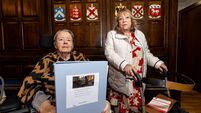
More than 700 primary school principals have signed a petition to demand the Department of Education make changes to how special education teachers are allocated.
It follows the publication of Special Education Teaching (SET) allocations for the 2024-25 school year.
The petition from the National Principals’ Forum (NPF) accompanies a survey revealing that 76% of primary principals do not believe they have enough hours to support children with additional needs. The forum also says that allocations are divided into fragments of positions that are difficult to fill.
The main dispute, however, centres around the removal of complex needs as a criterion of support for schools in the new allocation model. A person with complex needs will have two or more needs affecting their physical, mental, and social well-being.
Going forward, the Department will rely on data from standardised tests to allocate supports, alongside data on enrolment figures and educational disadvantage.
A spokesperson from the Department said: “Children with complex needs are supported in the model by now using school-level data from standardised tests to reflect relative levels of overall need.
"This data is available from each primary school and is used by the department as it is highly reliable, verified, and easily accessible.”
The principals say it is not adequate information upon which to allocate supports. They say trust must be placed in principals to input their requirements through the Primary Online Database (POD) to ascertain the level of special educational needs.
However, the department maintains the new model is the fairest approach.
“The model distributes the total available number of SET posts in line with each school’s profile of need. The data for these inputs is collected in respect of all primary and post-primary schools based on information supplied by these schools to the Department, except in the case of junior cycle scores, which are supplied by the State Exams Commission.”
The Department also promises an easier review process for schools, saying it “is always a challenge when making allocations in respect of 4,000 schools".
Angela Dunne, principal of Loughmore National School in Tipperary, urged the department to listen to schools and accept more detailed data concerning the specific needs of the children.
“Such data would ensure that our schools are no longer erroneously profiled. The new criteria take no account of neurodivergence, emotional or behavioural difficulties, hearing or sight issues, medical conditions, mobility issues, speech and language difficulties, to list just a few of the myriad needs in schools.
"Specific targeted support cannot be given within a generalised allocation.
"It is heartbreaking, depressing, and exhausting to constantly have to fight for what our children need to access education and to thrive in school, while being gaslit on these issues by government.”
The Department says the reduced number of students in classrooms is the biggest support for all children, regardless of need.
“Special Education Teaching (SET) is only a component of support for children in mainstream, but the most important support is the mainstream class teacher. The pupil-teacher ratio at primary level is now 23:1 which means there are more mainstream teachers than ever before in our educational system.”

CONNECT WITH US TODAY



Be the first to know the latest news and updates