Legacy Act cannot wipe away tears of Troubles victims, court hears
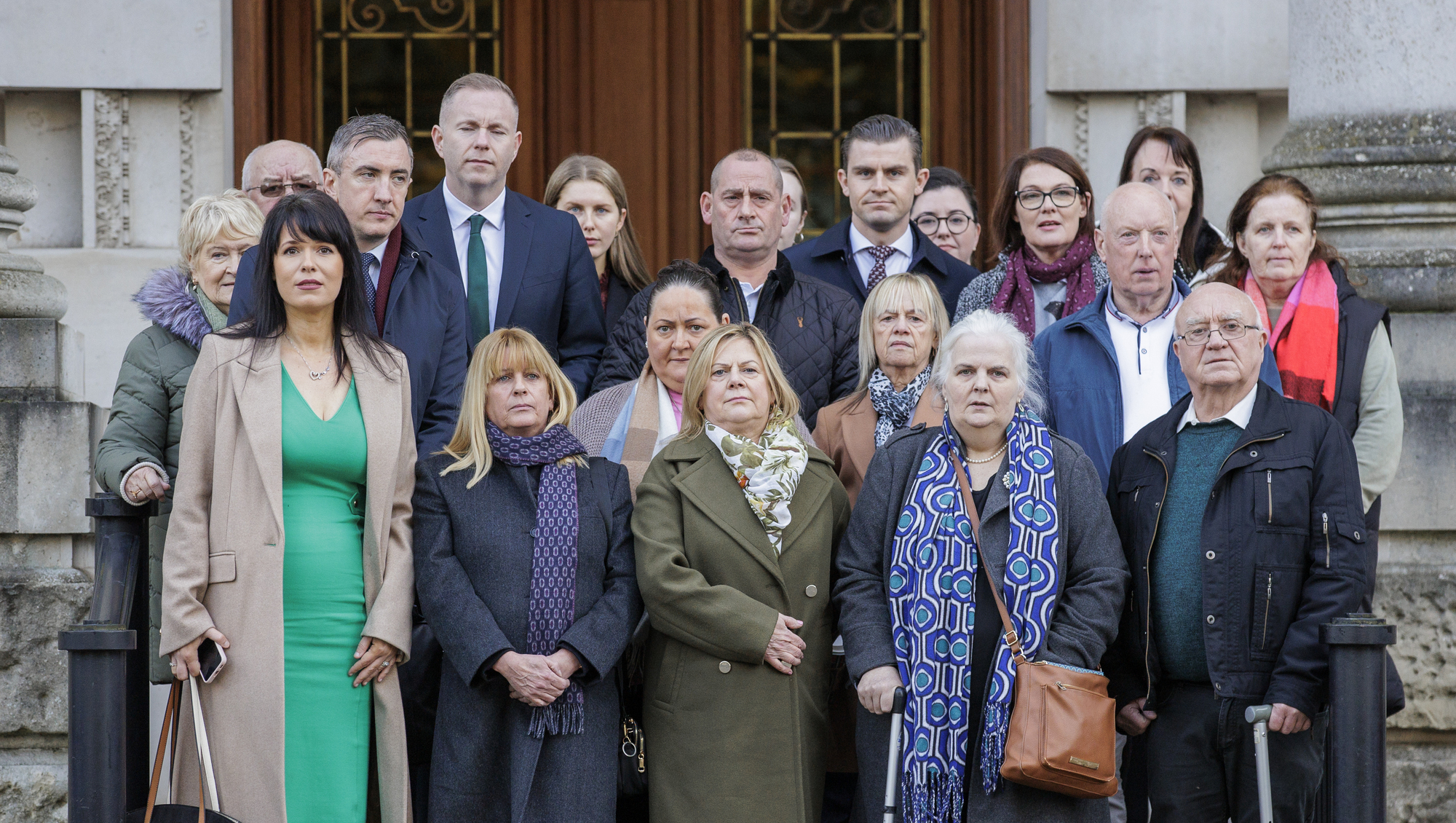
Victims who have taken a legal challenge to the Government’s Legacy Act (Liam McBurney/PA)
The UK government’s controversial Legacy Act cannot “wipe away the tears” of suffering of Troubles victims in Northern Ireland, a court has been told.
Submissions in a legal challenge to the Northern Ireland Troubles (Legacy and Reconciliation) Act at Belfast High Court concluded on Thursday morning after eight days.
High Court judge Mr Justice Colton said it had not been an easy case and pledged to deliver a ruling as soon as he could.
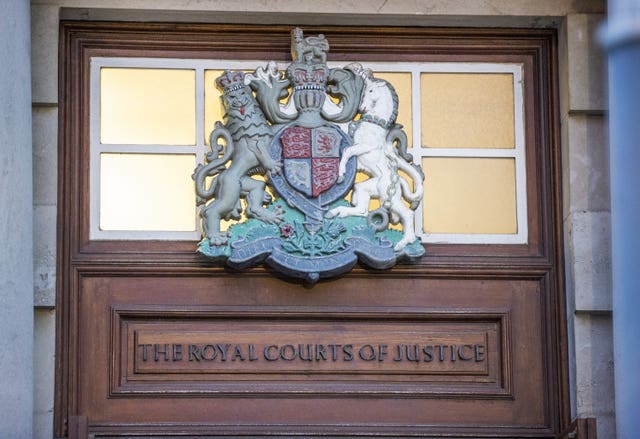
The Act, designed to deal with the legacy of the Troubles, received royal assent in September despite widespread opposition from political parties, victims’ organisations in Northern Ireland and the Irish Government.
Aspects of the laws include a limited form of immunity from prosecution for Troubles-related offences for those who co-operate with the new Independent Commission for Reconciliation and Information Recovery (ICRIR).
The new Act will also halt future civil cases and legacy inquests.
The legal challenge, being brought by a number of Troubles victims argued that the Act does not comply with human rights law.
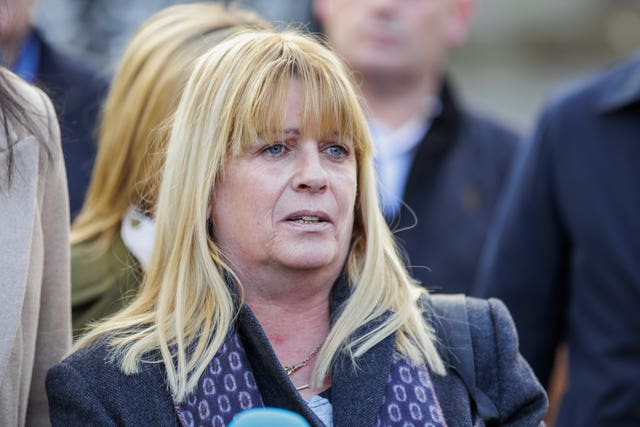
Opening the proceedings last Tuesday, barrister John Larkin KC read from the accounts of a number of Troubles victims whose cases were heard jointly, including Martina Dillon, whose husband Seamus was shot dead in Dungannon in 1997.
Bringing the proceedings to a close on Thursday, Mr Larkin returned to the accounts of the victims who brought the case.
He said they all had unique experiences but shared “an agonising commonality” experienced by many people in Northern Ireland.
Mr Larkin said the victims were at the “heart of this case”.
He then referred to a passage from Virgil, translated by poet Seamus Heaney as “there are tears in things”.
He added: “The experience of the Troubles year by year sadly confirmed and continued to confirm that.
“Legislation is sometimes incapable of ensuring that all tears are wiped away, that is not simply possible.
“But what the applicants collectively seek is not that legislation wipe away their tears, but that legislation will not cause them to weep again and propose, as this Act does, a pretty vicious form of secondary victimisation by shutting out emphatically any prospect of redress, any prospect of justice.”
He concluded: “Your Lordship can stop that vicious secondary victimisation and we respectfully invite your Lordship to do so.”
Mr Justice Colton thanked all the legal representatives in the hearing.
He said: “It is not an easy case, posing difficult issues, but I will give the case priority and try to deliver a judgment as soon as I can.”

CONNECT WITH US TODAY



Be the first to know the latest news and updates