Medieval Cork school has tourism potential
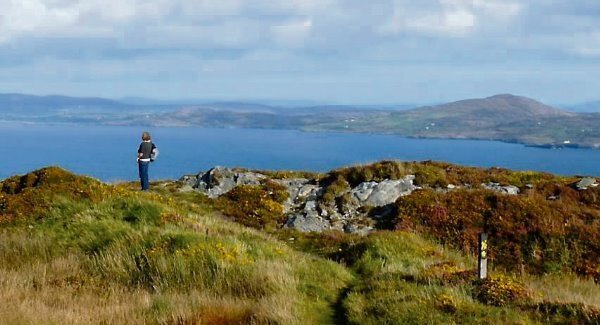
A peninsula community is investigating the tourism potential of a medieval school in West Cork where local folklore suggests a king of Spain had sent his sons to be educated.
The O’Daly Bardic School in the 1300s was located near the village of Kilcrohane on the Sheep’s Head peninsula.
LEADER funding of €18,000 has allowed the local community council to hire heritage experts to conduct archival research and hold public consultations as part of a tourism assessment of the ruins of a famed ruin.
“The objective is to assess any work to date on the bardic school tradition, both locally and nationally,” said Anne O’Donovan of the Muintir Bháire Community Council. “We understand that the Sheep’s Head school was one of a number around the country and this would be a unique project.
“A public meeting will be held and the researchers may link in with local schoolchildren as well. There will be broad consultations with people about the potential to develop a year-round attraction.”
The professional assessment project is due to be completed by March next. The school was run by a family of bardic poets, the O’Dalys, from around the 14th century.
“Bardic poets were professionals hired by clan leaders,” said Caroline Crowley, a volunteer researcher with the Muintir Bhaire group.
“They were essentially chroniclers of history and politics. In a way, they were the journalists of their day and, also, very much the PR people of their day for their chieftains. They wrote elegies praising the chieftain and his family,” she said.
The O’Dalys were poets to MacCarthy Reagh and O’Mahony the Western and the last known professional poet of the Sheep’s Head clan was Conchobhar Cam O’Daly who was still writing elegies in 1660. “The role of the bardic poets was to sing the praises of these families to demonstrate their status and power to those who would have been beneath them in social status.”
Local folklore has it, she said, the king of Spain sent his sons there but two of his sons drowned when their boat struck a rock while mackerel fishing.
“What is special about the school on the Sheep’s Head Peninsula is it is one of the few places where we know, for sure, a bardic school existed,” she said, with its ruins constituting a wall and a window.
“We know that in the 1840s, an Ordinance Survey was carried out and this is the first documented evidence about a structure identified as a bardic school,” Ms Crowley said.
“What is really special about the bardic schools is they show a side of our history in medieval times many of us are not familiar with.
“They give an insight into a very structured society where places of learning were available, where people studied for seven years learning Latin and Greek and rigorously training to become bardic poets.
“The fact that that sort of education, which had an international dimension and happening in a very remote part of Ireland is fascinating,” she added.