UUP declines position in North’s government
Party leader Mike Nesbitt said the move heralded a new era for devolved politics in the region.
The 1998 Good Friday Agreement established a form of government based on a ruling coalition executive made up of all the North’s main parties. The aim was to ensure all sections of a deeply divided society had a role in power.
While smaller parties and Independents have sat outside the executive in past mandates, they have not been afforded the recognition, funding and status of an official opposition.
A law passed earlier this year enable parties with the electoral strength to enter the executive to instead form an opposition.
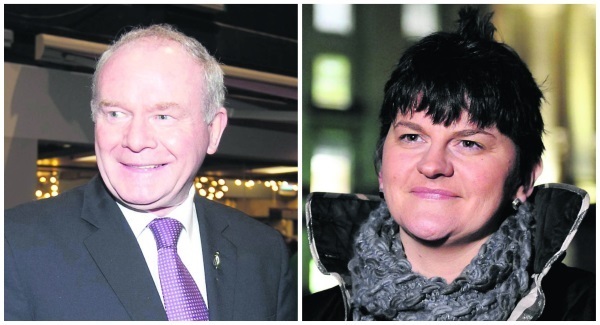
Mr Nesbitt made the announcement moments after Democratic Unionist leader Arlene Foster and Sinn Féin veteran Martin McGuinness were reappointed first minister and deputy first minister respectively in the first sitting of the legislature since last week’s Assembly election.
With the DUP and Sinn Féin having consolidated their positions at the head of the executive in the election, the focus now shifts to the SDLP to see if it will follow the UUP out of government. The cross-community Alliance Party is expected to remain in the executive and again take on the politically sensitive justice portfolio.
SDLP leader Colum Eastwood said his party would wait until negotiations around a new programme for government were completed.
Eighteen years ago, the UUP, the then dominant force within unionism, was one of the key architects of the Good Friday Agreement while the DUP opposed it.
Mr McGuinness accused Mr Nesbitt of a lack of leadership, claiming he had “repudiated” the UUP’s Good Friday Agreement legacy. “I find that deeply disappointing,” he said.
“I do think rather than being seen as leadership it will be seen as a lack of leadership, it will be seen as a lack of the Ulster Unionist Party’s ability to accept the democratically expressed wishes of the people who have charged both the DUP and Sinn Féin with responsibility to lead this administration forward.”
DUP Assembly member Paul Givan said the UUP had been rejected by the electorate. “With Mike under internal pressure he is now running into opposition having lost the election,” he said.
“Whilst others have run away, the DUP, as the leaders of unionism will get on with the business of government.”
As an official opposition, the UUP will have additional speaking rights in the chamber, be able to table opposition day debates, will fill some key scrutiny committee roles and have access to funded research services.
Alliance Party leader David Ford accused Mr Nesbitt of “grandstanding”.
“Whether in opposition or not, today’s move by the UUP shows Mr Nesbitt clearly makes decisions based on where he can best be seen, as opposed to what can best help the people of Northern Ireland,” he said.
CONNECT WITH US TODAY



Be the first to know the latest news and updates