VIDEO: Ex-IFA boss Eddie Downey: I’ve been thrown under the bus
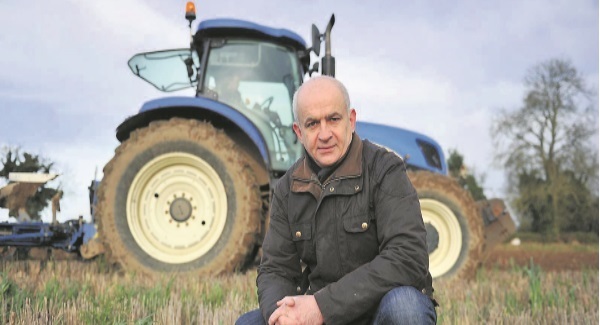
Mr Downey last night told the Irish Examiner he had approval and did not act on his own when reaching a severance agreement with Mr Smith. He said he is speaking now “to put the record straight”, and he stands over all he has done.
He said he had “been thrown under the bus” at the 17-hour meeting of farmers last week and does not regret his decision to resign.
Mr Downey said he fully supports the review of pay and pensions in the IFA, being carried out by Con Lucey who resigned as audit committee chair last year.
When he resigned, Mr Lucey said there was a compelling case for the establishment of a remuneration committee in IFA, which would not include the president or the general secretary for obvious reasons.
Mr Downey said he had supported that view and revealed yesterday that, on foot of concerns expressed by Mr Lucey, he and IFA treasurer Jer Bergin had, last December, “refused to review the salary of the general secretary on the basis that we wanted it done within a proper structure, as directed by Con Lucey’s letter”.
“While other people have said they refused to review the salary of the general secretary, and they have said this on public record, they were not in a position to review it because there were only two people supposed to do that, and they are the treasurer and the president, as per the rules and regulations of the organisation, but we refused,” said Mr Downey.
“I wanted the recommendation that Con Lucey put forward be fully implemented. I felt there needed to be strengthened corporate governance within the organisation. There was no indication of anything being wrong but having good procedures is always a positive. I wanted a proper renumeration committee in place.
“I stuck my heels in the ground and said ‘no’, and the treasurer was of the same mind.”
Mr Downey was also happy for his own salary to be reviewed by the remuneration committee.
“I walked in the door and was told [the] salary was €147,000,” he said. “I did not set this salary. I had no hand, act, or part in setting this salary, but I have put in place a remuneration committee to review this salary that is proper governance and that is what is required within this organisation.”
He said that, after tax, his salary amounts to €70,000, which pays for two people to run his farm, which is a commercial enterprise.
Legal questions dog €2m settlement with ex-IFA boss Pat Smith https://t.co/u8Zl3gVyrj pic.twitter.com/qM0SDhVpPK
— Irish Examiner (@irishexaminer) November 27, 2015
He said he wanted the committee in place “and let it do its job” and believes he “absolutely” had the support of IFA members in wanting the remuneration committee established. “They want to see transparency and full accountability in the organisation. They trust people. We have trusted the arrangements there over time to be fully accountable for us and those arrangements have not proven to be robust enough.”
Mr Downey said the IFA has grown into an internationally recognised association with great leverage for its 90,000 members and, “to operate at those levels, you need the best staff you can possibly get and to attract those you need to offer good salaries. Not withstanding that, the salary paid to our general secretary was unacceptable and unsustainable.”
He said: “I knew that I wanted proper procedures in place that I was comfortable with. I was not comfortable going in with the treasurer to review the salary of a chief executive having worked closely with him for over 12 months at that stage.”
Mr Downey said he did not know the full remuneration package Mr Smith was receiving until Thursday, November 19, following his request for said information the previous day.
Mr Downey said that, on November 18: “I went into the financial controller’s office. I said I wanted to see all the details surrounding the GS’s salary and he replied: ‘You won’t like what you are going to see.’ I was very worried when I heard that.”
At 11am the next day, he was shown the documents. “I asked the financial controller to get our legal adviser as quickly as possible and he said to me he is on standby.”
An hour later, Mr Downey met with the legal advisor, treasurer, and financial controller, and spoke by phone with the deputy president. Mr Downey said it was made “absolutely clear to me you cannot remove somebody from a salaried job just because of the size of that salary”.
He was told that the general secretary had been given “an indefinite contract of employment which incurred major rights to him and it meant I was in a very difficult situation. There was a financial risk to the organisation and a risk of potential legal action. The view of the meeting was I was to speak to the general secretary.”
Mr Downey said he then went to Mr Smith’s office. “Man to man, we had a very difficult conversation. I was angry but I had to take heed of all the advice I had just been given. I advised Pat Smith of his position and he decided to exit the IFA.”
Mr Downey said: “The only time that I acted on my own was when I looked for the information from the financial controller and when I delivered the initial message to Pat Smith, ie that meeting when I advised him of his position.”
Mr Downey said he had approval for his actions in relation to the severance package for Mr Smith. “Afterwards I got verbal approval for all the actions I had taken. This was a momentous moment. It is a serious position for the president of the association to go and deal with. It had to be dealt with but I had to have approval from other people and I did have it.”
Asked whose approval he needed, Mr Downey said: “I think there is enough reputational damage done to people; mine has been shattered, my family have suffered enough pain, I have no intention of inflicting pain on other people.
IFA president Eddie Downey has resigned https://t.co/Si2K9w90pq pic.twitter.com/9Wye89TyFn
— Irish Examiner (@irishexaminer) November 25, 2015
“Everybody in this process acted with height of upmost integrity and I have height of respect for everybody in this process.”
Mr Downey said he then decided to stand aside while Mr Lucey concluded his report. “I am confident the outcome will show that all for the issues raised by him have been resolved over the last nine months,” Mr Downey said.
He said he decided to resign during a crisis meeting of farmers that took some 17 hours. He was not present as he had stood aside in relation to pay and pensions but said: “I got word from the meeting that some of the facts surrounding my involvement surrounding the general secretary’s departure were being misrepresented.
“In a very fraught room with a lot of emotion, there was no way I could counteract the misrepresentations even if I had been there. The message I got was I was thrown under the bus at the meeting.”
“There was so much media coverage out there, so much pain in the farming community and in the IFA itself, and so much misinformation being thrown out there that the only option was to stand aside, to move out of the picture, and allow people time to get clarity on the issues.”
Asked whether he stands over his actions, Mr Downey said “absolutely”, adding that he does not regret resigning.

CONNECT WITH US TODAY



Be the first to know the latest news and updates