‘Recommendation fatigue’ claim after abuse reports
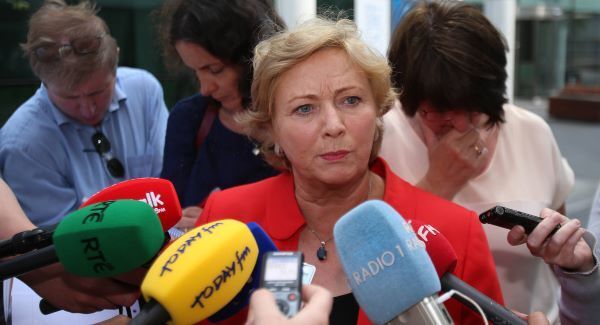
The study, launched in Dublin yesterday by Children’s Minister Frances Fitzgerald, outlines a model that would see a selected inquiry team work with other stakeholders to deliver a blueprint for future action.
The report was written by Helen Buckley and Caroline O’Nolan, of the School of Social Work and Social Policy, Trinity College Dublin.
Meeting the authors of the study, Dr Helen Buckley, Dr Caroline O'Nolan and Michele Clarke from my Department. pic.twitter.com/tPIP7kBw7r
— Frances Fitzgerald (@FitzgeraldFrncs) December 2, 2013
It looked at five high profile reports from the Kilkenny Incest Investigation in 1993 to the Roscommon Child Care Case in 2010 to see how many of the recommendations made in them had been applied.
According to the report: “Since the early 1990s, there have been 29 inquiries and reviews in Ireland in response to concerns arising from the serious abuse and/or death of children known to the statutory child protection services, from which 551 recommendations have emerged.”
With Justice Catherine McGuinness whose 1993 Kilkenny Inquiry proved so influential for child protection in Ireland. pic.twitter.com/prpagwzJGm
— Frances Fitzgerald (@FitzgeraldFrncs) December 2, 2013
It found that many of the recommendations in the Kilkenny Incest case were implemented, but others were acted upon in a piecemeal way.
The report states: “There was a trend whereby certain recommendations made by each of the inquiries appeared difficult to implement in full or with any lasting effect.
“The findings of this study have revealed a type of ‘recommendation fatigue’, which has developed following the succession of inquiries.”
Listening to Dr Helen Buckley in Trinity at report on past child protection inquiries and their effect pic.twitter.com/c8mVkyBiV0
— Frances Fitzgerald (@FitzgeraldFrncs) December 2, 2013
Instead it sets out a way in which a consultative or collaborative process would be undertaken by the relevant inquiry team with key stakeholders, with an advisory group established at the start of the inquiry to assist the inquiry team. Written submissions would be considered and then discussed at workshops before finalising ways in which any recommended actions could be acted on.
CONNECT WITH US TODAY



Be the first to know the latest news and updates