New Goal chief, Barry Andrews, in conversation with the Irish Examiner
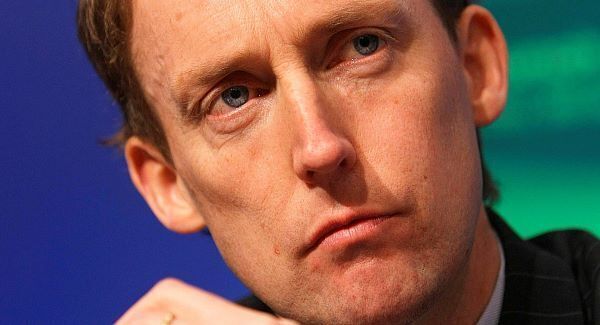
QUESTION. At the time of John O’Shea stepping down, there was talk that Lisa O’Shea, his daughter, was interested in that role. She was fundraising and marketing manager. I understand she’s gone, that she didn’t come back after maternity leave?
Answer: That’s correct, yes.
Q. Was any reason given for her departure?
A: No. I mean she can speak for herself, but I understand there’s some new venture that she’s embarking upon. I mean she’s very highly thought of, a lot of her staff here wish her the best and our volunteers are very strongly supportive of her. She did immense work over 17 years so, yes, we wish her well. I think that’s the issue, that she’s moving on to something new.
Q. Lisa was part of the senior management structure and Irish Aid (overseas aid arm of the Department of Foreign Affairs, with responsibility for monitoring how grant aid is spent) raised concern that the board needed to examine if senior management was “fit for purpose”. There had been criticism of keeping people in “acting” positions. In terms of the senior management structure in place under John O’Shea’s tenure, have any of the personnel changed besides Lisa O’Shea and have staff in acting positions been made permanent?
A: Well, I mean I don’t know exactly who was in where in John’s time. Our chief operations officer, Jonathan Edgar, was acting head of programmes, then acting CEO [after John left]. Jerry Cole [previously acting chief operations officer] is now head of internal audit and risk; Fiona Gannon is the programme quality adviser [new appointment], she’s on the senior management team; Conor Elliot [new appointment] is the head of programmes; Darren Hanniffy is the acting head of fundraising, [he was head of logistics and IT]; Nicky Maguire was and remains the chief financial officer; and Alan Glasgow is head of a new business development unit [he was acting HR manager].
That latter post is now vacant, so there have been changes, some new personnel, some the same, some continuity, some change.
Q. Is Darren Hanniffy likely to remain on in the fundraising role?
A: We haven’t made a decision about that, obviously Lisa’s departure was recent, her notice period ended at the end of June, her maternity leave cover ended about 10 days ago, or less, July 10.
Q. Is it the case that Karen O’Shea who is also on maternity leave may not be returning?
A: I don’t know about that.
Q. Were the O’Shea sisters invited to the Goal ball [held in May at the Aviva Stadium]?
A: Nobody was invited to the Goal ball, everyone was welcome, there were no invitations sent out to staff or people on leave or anything. We were begging staff to get involved, because as you know the fundraising environment is difficult, but luckily enough the thing was a great success.
Q. But there were no O’Sheas there?
A: No, not that I’m aware of.
Q. Is there a package for Lisa?
A: No.
Q. What did John’s settlement involve following his High Court action last year?
A: That was a confidential out-of-court settlement.
Q. Are you happy that there’s been sufficient change in senior management since John left? There were talks in the past of institutionalised bullying?
A: I am satisfied. I mean if you talk to people in the sector they recognise the strength of our senior management team, it’s really, really strong.
Q. Are you happy that bullying no longer exists in the organisation at senior management level?
A: Well, I don’t know anything about that, it was before my time. There’s no issue in the senior management team at all.
Q. There are no complaints made about senior management?
A: No, no complaints against senior management.
Q. Do you think it’s fair that John was the one to go?
A: I don’t know anything about it. I started in January and my focus is on 2014 and beyond. We’ve a huge operation and I’m not qualified to judge. I don’t know all the facts and I wouldn’t begin to figure them all out. I told you my view of John, but in terms of the exact sequence of events and the turbulence of last year, I don’t have an informed opinion.
Q. Former Goal directors such as barrister Ken Fogarty and former FAI chief Fran Rooney were not happy with the level of transparency that existed there. Are you happy that the old culture is gone?
A: Yes, and you needn’t take my word for it, the Irish Aid external audit confirms it, they wouldn’t be slow to criticise if they weren’t satisfied, they wouldn’t stand over false report and they’re happy that there is a culture of transparency here.
Q. John consistently said nobody was paid more than €100,000, but when you look at the annual reports there were two people being paid over €100,000. That was never explained; who those two people were?
A: Right, well, before my time. But my salary is €95,000 but the total cost of employment, including pension, would be €125,000.
Q. Are there any performance-related bonuses?
A: No, no car, no benefit-in-kind, no allowances. I think it’s important that we be clear about that because people demand transparency. They don’t want to know what you spend it on necessarily, but they do want to know certain outline figures and I think that’s a reasonable amount of information to provide to people because they are volunteering, giving their time. I think that it’s a high salary but that people recognise that we have 2,500 employees, that we operate a €60m budget, that we’re in 13 countries. It’s commensurate with the responsibilities, it’s a good social purpose and I think people accept that it’s probably in line.
Q. The other senior management staff, what kind of range are they in?
A: The annual report will disclose those details. They’re all below mine. We don’t have a policy of disclosure of other salaries, so I think the CEO’s salary is reasonable to disclose and assume everything else is below that.
Q. Did the board set your remuneration?
A: It was set before I applied. It wasn’t a negotiation.
Q. Is there a clear written division of responsibilities between chair of the board and the CEO? There were concerns in the past that this may not have been the case. The Corporate Governance Association of Ireland — and corporate governance has been an issue for Goal in the past — has recommended that as far as charities are concerned, no one individual should have unfettered powers of decision.
A: I don’t define myself in terms of what happened in the past. The way I operate, I’ve a good relationship with the chairman. I do the work here five days a week at least. He comes along with the board and appropriately supervises my work and appraises it with other members, and as far as I’m concerned it’s an appropriate relationship. And as I say, Irish Aid [who grant aid Goal] are satisfied that that’s properly arranged now and that the lines of demarcation are clear and we all take that very seriously.
Q. There seems to not have been a very clear line of demarcation in the past, but even at that, when John O’Shea stepped down, Goal said they looked forward to exploring possible further collaboration with him, there was even a suggestion of an ambassadorial role. Is that likely to happen?
A: After the settlement, that’s not on the agenda right now. But having said that I have to say that I’ve known John for years and like a lot of people, I recognise that he was absolutely heroic in the way he set the thing up. And I wouldn’t like any publication to suggest that I’m sort of saving Goal. What he did was amazing and the organisation actually grew in 2012 marginally, which is surprising. The point I’m trying to make is John is a person I had huge admiration for and he built a great organisation and there’s great people here and I just want to take it to the next stage of development.
Q. Do you get a sense that the organisation or certain senior managers might be happy to see the O’Sheas exit? Just in terms of moving onto a whole new organisation?
A: No, people are very focused on their work, they really want to get to the point where the talk about is what we do not all that happened in the past.
Q. And you’re happy that it is in the past?
A: Oh yes, it’s in the past, we’d love to have journalists come and ask us “Do you think you’re making a difference?”, those type of questions.
Q. What about succession planning? Again, good corporate governance recommends succession planning for people leaving Goal?
A: Yes, we have begun that process in so far as it affects the senior management team, so yes, it’s something we have embarked upon. It’s not the top of our priorities right now, but it will be something we’ll be looking at.
Q. What length is your term?
A: A four-year contract.
Q. Is your performance reviewed during that time?
A: I’m supervised by the board in the normal way so they’ll be appraising my performance at each board meeting so it’ll be pretty intense I expect.
Q. What about ex-Fianna Fáilers getting big jobs at Unicef (former FF TD and junior minister Peter Power) and Goal?
A: I don’t know, what’s that all about?
Q. Was your position advertised externally?
A: It was.
Q. There were concerns flagged previously that if a decline in unrestricted funding (funding to which there are no conditions attached) continued apace, it might compromise Goal’s independence in terms of deciding what programmes it wanted to invest in. Do you have any concerns about that?
A: Absolutely, I share those concerns. If I could raise millions of euro and not have Irish Aid looking over my shoulder I’d be delighted. It stands to reason. Plus of course we could discharge a more specifically individualistic mandate. But with the austerity in this country, all NGOs [non-government organisations] are suffering restraints and we have to look elsewhere to try and find co-funding just to make to make sure the programmes that we operate are appropriately funded.
Q. So how is that going?
A: We’re doing fine. We’ve put a lot of energy into the fundraising strategy. Initially stabilisation is what we are looking for and then we are looking for growth. We’ve operations in New York, in London, in Dublin and throughout the country.
Q. How much per euro raised goes directly into charity?
A: Well Goal has the lowest overheads of any international NGO, it’s less than 5%. But I think what will happen is that the transparency initiatives coming from central government will require us to measure these things in a more uniform way.
You know charities can make these dramatic claims. But what I do know is that we’ve very low overheads, we do run a very tight operation and that’s one of John’s very strong legacies, he very much built that into the organisation as an ethos.
Q. You haven’t led an aid organisation before so a lot of it is new to you. Are you in a position to say how good a job Goal are doing?
A: I’m not professionally qualified to say that but I can say that we are subject to very stringent oversight and that donor compliance is one of the most important aspects of what we do. Monitoring and evaluation of the programmes we carry out is increasingly an important aspect of what we do. What I can say is that in 2013 our programmes will grow substantially by over 10%.
Q. How, if donations are down?
A: Well the fundraising is tightening, there’s no doubt about it, but donations come from governments and institutions like the UN [Irish Aid is down 12.5%] our funding in for 2013 has expanded, mostly because of Syria, we didn’t have much of a programme there last year, this year we’ve a very large operation in Syria. I was there in April, the country’s devastated, you see children who are orphaned and disfigured by the violence I’ve been in lots of children’s hospitals but when you know it’s caused by violence, needlessly, it’s enraging basically.
Q. Is it a good decision by Government to send troops to Syria?
A: I think it is. The Irish Government has been very positive about Syria generally. I think the idea of not arming rebels is a difficult one and Eamon Gilmore has been very strong on that. At this stage, I just don’t see where the future is, but certainly for Goal, we’re a humanitarian organisation we try to avoid taking positions on any political issues of the day.
Q. In terms of security in the field, Sharon Commins was kidnapped in 2009. Are you reasonably confident that your staff, within reason, are safe?
A: People know that Goal and other NGO humanitarian agencies work in conflict zones and you can’t eliminate risk, you can only manage it. That’s not to downplay it, security is one of our most important details of any intervention, particularly in Syria, but we can’t guarantee anything and nobody expects us to. But they do expect a very high standard of protocols being put in place and so huge care is taken in terms of our operations, our movements, we have very high levels of advice.
Q. What’s your opinion of our government giving direct aid to governments that may be perceived as being corrupt? John O’Shea had a problem with that?
A: I think we have to do it very cautiously, I mean we know there is serious corruption in a lot of African countries that we support bilaterally, so we have to exercise great care. The other side of that is we have to go down the road of capacity-building of institutions of empowering these governments to be able to do the work themselves.
If you don’t want any fraud occurring, then yes, fund NGOs directly and keep governments out, but I’m wondering if that’s going to serve the purpose of capacity-building institutions in the country. So it requires extreme vigilance.
Q. In terms of your vision for Goal, is there anything in particular you want to achieve?
A: I want to build on the undoubted strengths of the organisation, being a flexible organisation, very responsive, and the envy of a lot of other NGOs in that way, so having inherited a very strong management team along those lines, I want to build on that strength.
There’s a great sort of social atmosphere in Goal, a lot of Goal people have ended up in big jobs in other organisations, so we’ve a huge community of ex-Goal people, so I want to build on that. Post 2015, we’ve to concentrate on nutrition I think and health, the areas where Goal is very strong. We have to focus on children, on the most vulnerable of those, on the least developed countries. Sub-Saharan Africa is a sore thumb. It continues to stick out where other countries have developed very well, so we’ll focus on those areas countries, that’s my initial ambition.
Q. Would you have an interest in going back into politics?
A: No, I’m not going to go back into politics, certainly I won’t be contesting the next election.
Q. Never say never?
A: I suppose I would never say never but only in that I’ve had four careers — schoolteacher, lawyer, politician and now Goal.
CONNECT WITH US TODAY



Be the first to know the latest news and updates