Russia targets residential areas of Ukraine as Trump talks of possible peace
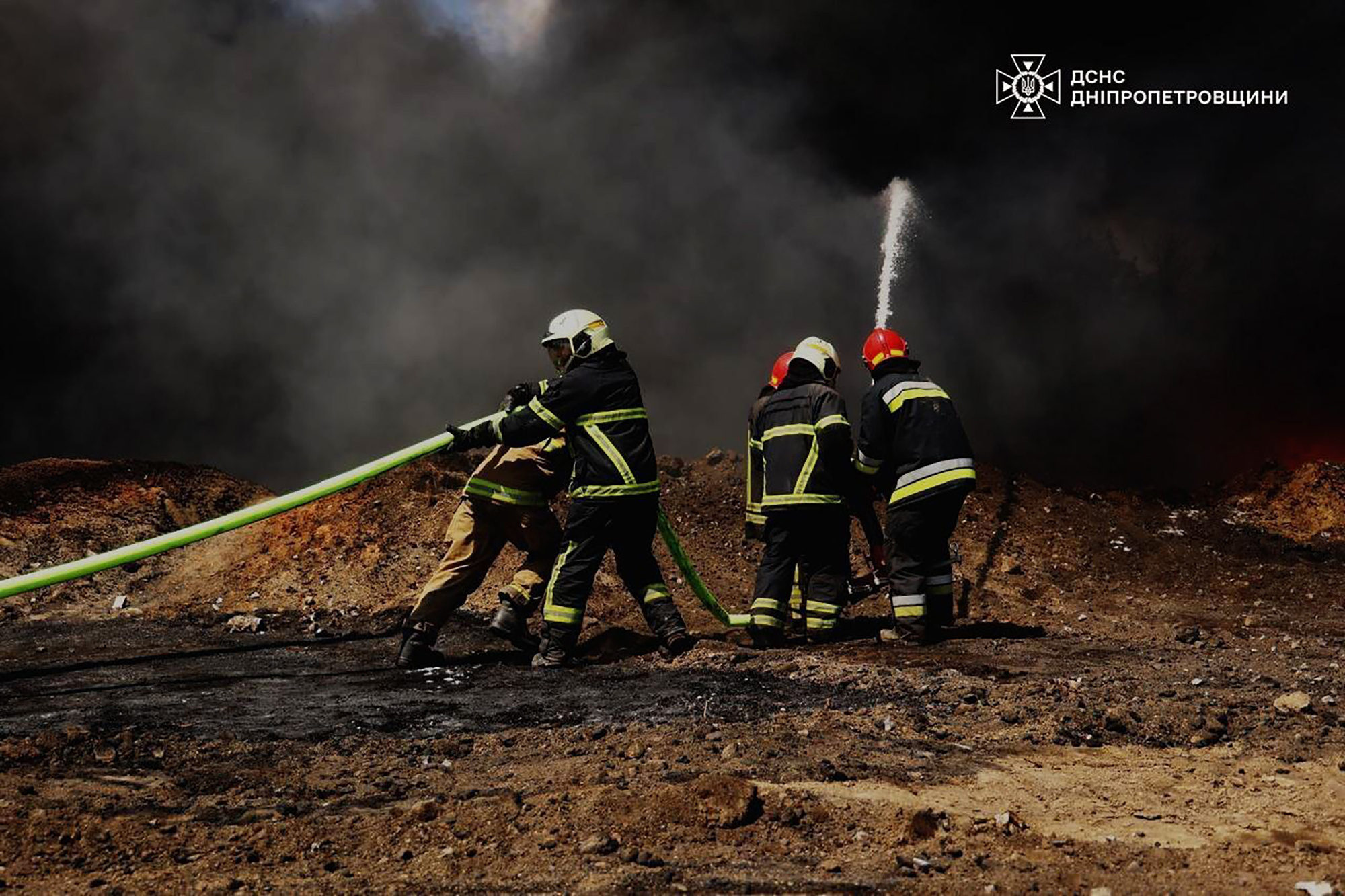
More than 100 Russian drones targeted areas of Ukraine on Wednesday, President Volodymyr Zelensky said, hours after another barrage aimed at civilian areas killed at least eight people.
“Russia continues its strikes and is doing so brazenly — deliberately targeting our railway infrastructure and civilian sites in our cities,” Mr Zelensky said in a post on X.
The overnight strikes targeted Ukraine’s residential and railway infrastructure in the central Dnipro and northeastern Kharkiv regions, port infrastructure in the southern Odesa region, and energy facilities in the central Poltava region, according to Mr Zelensky. On Tuesday, he said, 14 regions came under attack throughout the day.
There are currently more than a hundred Russian drones in our skies, and there may be more waves of drone attacks throughout the day. Russia continues its strikes and is doing so brazenly – deliberately targeting our railway infrastructure and civilian sites in our cities.… pic.twitter.com/0ZtOraERyz
— Volodymyr Zelenskyy / Володимир Зеленський (@ZelenskyyUa) May 13, 2026
“It is important to support Ukraine and not remain silent about Russia’s war. Every time the war disappears from the top of the news, it encourages Russia to become even more savage,” Mr Zelensky said, in an apparent reference to world attention being gripped by the Iran war.
Moscow’s attacks on its neighbour are unrelenting, even as Ukraine is emboldened by its recent military accomplishments and as US President Donald Trump and Russian President Vladimir Putin claim – without providing evidence – that the war could be approaching the end.
Mr Trump said on Tuesday said he believes Moscow and Kyiv will soon reach a deal to end fighting.

“The end of the war in Ukraine I really think is getting very close,” Mr Trump told reporters as he left the White House for a summit in Beijing.
“Believe it or not, it’s getting closer.”
Mr Putin said in a speech last weekend that his invasion of Ukraine is possibly “coming to an end”.
Neither leader elaborated on what persuaded them about the possibility of peace in Europe’s longest conflict since the Second World War.
US-led diplomatic efforts over the past year to end the war have fizzled after making no progress on key issues, such as whether Russia gets to keep Ukrainian land and what can be done to deter Russia from invading again.
Meanwhile, European governments are assessing the merits of opening talks with Mr Putin. Europe has for years tried to isolate the Russian leader and punished his country with international sanctions.
The correlation of forces in the war has shifted in recent months. Ukraine has gone from pleading for international help with its defence to offering foreign countries expertise on how to counter attacks, thanks to its domestically developed drone technology.
Ukraine’s long-range drone and missile attacks have disrupted energy facilities and manufacturing deep inside Russia, with three Russian regions reporting strikes on Wednesday.

The Russian Defence Ministry said its air defences intercepted and destroyed 286 Ukrainian drones over Russian regions, the illegally annexed Crimea peninsula, the Azov Sea and the Black Sea.
On the 1,250-km (780-mile) front line, the advance of Russia’s bigger and better-equipped army has been slowing every month since last October, according to the Institute for the Study of War.
Russia’s spring offensive has floundered, with Russian forces recording a net loss of territory last month for the first time since 2024, the Washington-based think tank said.
“Not only are Ukrainian defensive lines holding, but Ukrainian forces have managed to contest the tactical initiative in several areas of the front line even as Russia continues to lose disproportionate amounts of manpower to achieve minimal gains,” the ISW said.
CONNECT WITH US TODAY



Be the first to know the latest news and updates