We're in a scrolling pandemic — here's what happened when I swapped my phone for a book
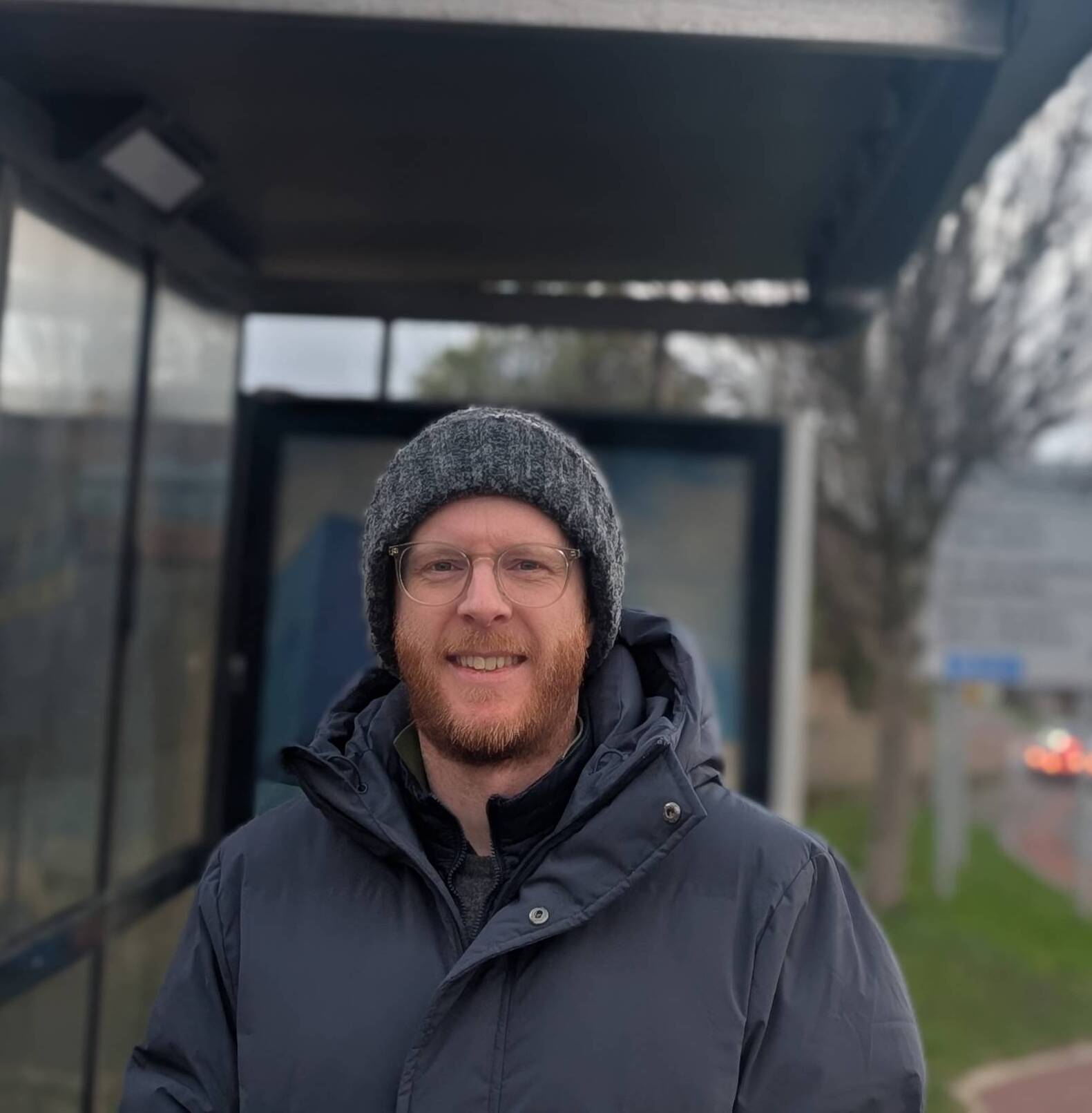
A year ago, Simon Tierney banned phone scrolling from his daily two-hour bus commute. He reports back on how it is going, and talks to other commuters who say you can turn the daily drudgery into a positive experience
We're in a scrolling pandemic — here's what happened when I swapped my phone for a book

Simon Tierney spends two hours a day on the bus: "Rather than bemoaning the gridlock and allowing ourselves to absorb the stressful nature of a typical commute, can we learn to embrace it instead?" he asks

While flicking through the pages of a paperback on the bus the other day, I looked up and was struck to notice that almost every one of my fellow commuters was scrolling on their smartphones.

I suddenly felt self-conscious… am I the odd one out, reading a book? Am I in some sort of analogue time warp, while everyone else has evolved beyond my own existence?

I spend two hours on the bus every day, travelling to and from my workplace. One year ago, I decided to use this time more fruitfully. It’s too easy to waste time on social media apps.

I set myself a goal of reading a non-fiction book or watching a classic movie during my time on the bus. I call them my ‘bus book’ and ‘bus movie’. After 12 months, I can safely say it’s been a thoroughly fulfilling experience.

We’re constantly told that commuting is a hellscape in Ireland. The popular narrative describes phalanxes of worker ants on buses and trains, trudging mindlessly through stagnant traffic, slowly descending into madness. But it doesn’t have to be this way.
I love my commute. It’s the one time of the day that I have to myself, without colleagues or my children demanding things of me. It’s ‘me time’. Sure, it’s not as glamorous as other people’s me time, such as going to a salsa class or joining an axe-throwing group. But I’m at a time in my life, with a busy work schedule and small children, that means I’ll take what I can get.

Rather than bemoaning the gridlock and allowing ourselves to absorb the stressful nature of a typical commute, can we learn to embrace it instead?

I spoke with a number of commuters for this article and some of them shared my attempts to embrace the ‘hellscape’.

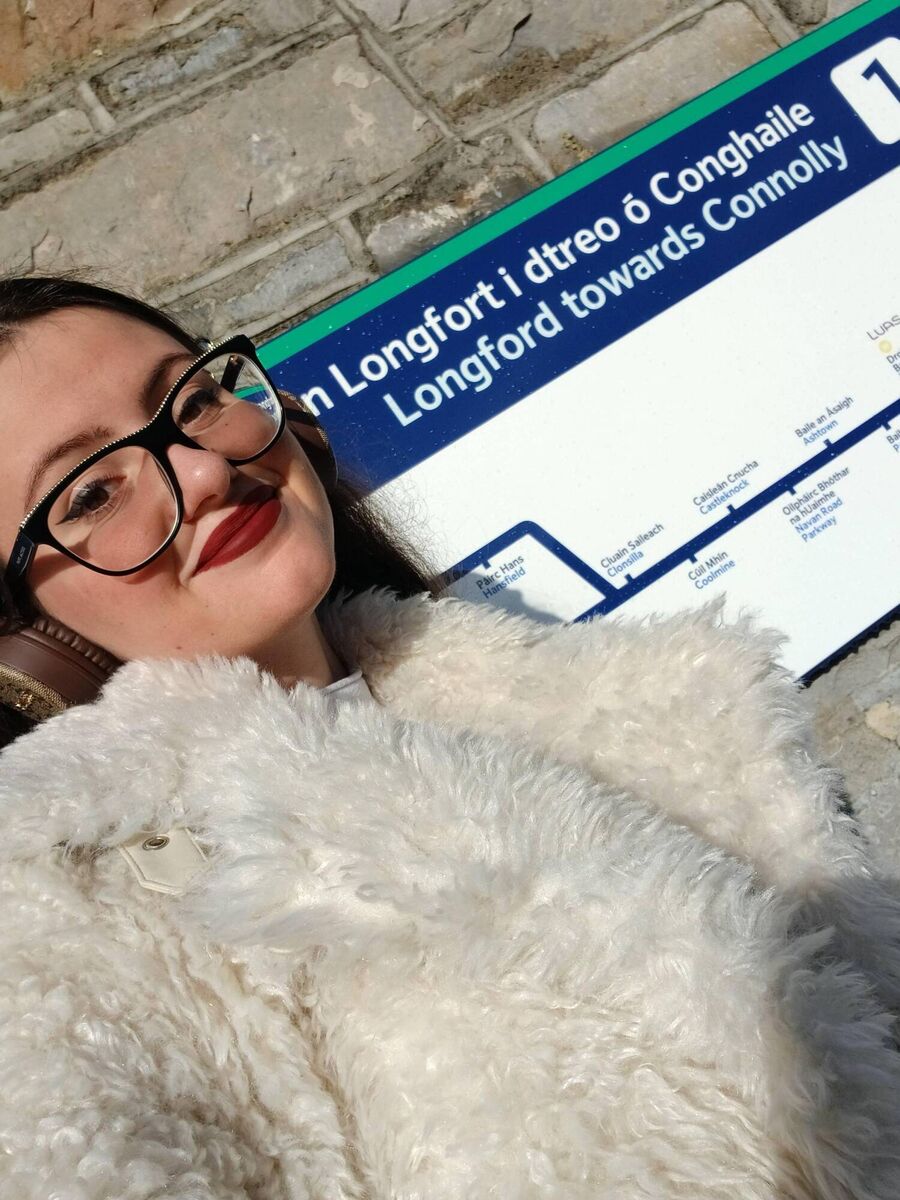
Daniela Rana is a twentysomething student at UCD and she commutes from her home in Longford to Belfield each day. The entire round trip, via train and bus, takes five hours. I gasp when she tells me this. But I soon realise that the 20% of her day which she spends on public transport is something she actually enjoys.

“I really do like to make the most of my time on the train,” she says. “It is that sort of environment where you’re forced to sit and do something.

“You can end up doomscrolling, which happens sometimes, if you’re done with [study] responsibilities and want to unwind and not think about anything.”

Daniela Rana commutes from her home in Longford to UCD — a round trip of five hours. 'I really do like to make the most of my time on the train.'

Rana is studying English literature and creative writing, and has turned the train into her own personal muse.

“To be honest, you’d be surprised how much inspiration you can get on the train in terms of the different landscapes you see,” she explains. “I’ve actually been inspired to write many short stories based on things I’ve seen beyond the window… it’s lovely. You get to pause and just appreciate the world outside.”

I share Rana's enthusiasm for finding the productive in the seemingly mundane. In the past year, I’ve read a heap of books on the bus, from Robert Mason’s classic Vietnam memoir Chickenhawk to Iris Origo’s stunning portrait of Italy under the Nazi occupation, War In Val d’Orchia

My commute has transformed from being tedious and stressful to becoming valuable, time well spent, and something I genuinely look forward to.

I’ve found time to watch some of those movies that you’re ‘supposed to watch’ but which I never found time for before. I admired David Lean’s epic romance Brief Encounter, watching his cinematic masterpiece on my tiny phone as the No 15 rolled through Terenure on a wet November evening. I know the great director is probably rolling in his grave at the idea of someone experiencing his film on such an unsuitable device, but it is what it is.

I marvelled at the intricacies of Alfred Hitchcock’s plotting in his 1954 classic Rear Window while stuck at an immovable junction in Rathmines on a sweaty bus in July, my phone propped against a pram, with someone else’s screaming baby in it. What a way to escape the chaos of ‘commuter hell’... the gorgeous intonations of Grace Kelly soaring above the pandemonium.

Sai Gujulla, from the Galway Commuter Coalition, says it’s important to find something to do in order to pass the time. He commutes from Barna to Parkmore Business Park each day, which entails a minimum three-hour round trip.

“It gets very frustrating if you’re not doing something and you’re just sitting there,” he says. “Usually, I end up doing some work in the morning to be honest... I go on my phone, listen to music, or even listen to podcasts as well… and that’s how a lot of people are spending their time on their commute.”

But his observations of his fellow commuters usually involve the smartphone. “I feel like most of them are on their phone or listening to music, they have their headphones on,” he says.

Sai Gujulla, from Galway Commuter Coalition, has a three-hour daily commute. He says he has reconnected with old college buddies that he has bumped into while on public transport

The most worrying aspect of my own recent experience with commuting was similar to Gujulla’s. A group of teenage girls were sitting near me one day. I knew they were friends as they had been chatting before we got on the bus. 

But once on board, they spent the entirety of the journey glued catatonically to their phones, scrolling aimlessly through TikTok. No chat, no mischief, nothing. It was an upsetting tableaux… dead-eyed isolation at such a young age.

I began to wonder whether our debate around the access we afford our young people to screens is missing an important dimension. Much of the discourse, quite rightly, has centred on the dangers of social media and age-appropriate content. 

But there is something perhaps even darker going on too; are screens and social media making our young people… boring? Are screens nullifying teenagers, conditioning them to keep scrolling endlessly, glued to these glow sticks as the world passes them by?

We know that young people’s attention span has regressed. Reading lists on university courses have shrunk. 

The books on Junior and Leaving Cert syllabuses are getting shorter, as Vittorio Bufacchi recently outlined in this newspaper. Will all this intellectual shrinkage produce interesting graduates?

We forget that young people, those under 18, can be commuters too. Many children spend considerable amounts of time getting to and from their schools every day using public transport. Do their parents know what they are doing on the bus? Are they aware that many of them are wasting this journey scrolling on social media?

If we switch the narrative on commuting to something positive, it can even become a social space. “You get to meet great people on the train sometimes, some really weird characters,” laughs Rana.

Gujulla has also experienced this. “You also have the occasion where people actually meet new people on their commute, because they are seeing the same person every day, and they end up talking to them.”

He says he has even reconnected with old college buddies that he has bumped into while on the morning commute.

The experience of commuting doesn’t have to adhere to the stereotypical image we have been told to accept.

Don’t get me wrong. I don’t want to portray myself as being somehow more enlightened than my fellow commuters. I have no doubt that many people listen to the radio or podcasts while sitting in traffic. But my point is this: It is getting observably rarer.

I seldom see other commuters reading books, even on a Kindle. I don’t notice other commuters switching on a radio app. What I see is a pandemic of scrolling, a lazy and inert approach to just getting through what we are constantly told should be a miserable experience.

It can be so much more.

More in this section

Lifestyle

Newsletter

The best food, health, entertainment and lifestyle content from the Irish Examiner, direct to your inbox.

Cookie Policy Privacy Policy Brand Safety FAQ Help Contact Us Terms and Conditions

© Examiner Echo Group Limited