Bringing back patience would be a good thing for democracy
By seeking shortcuts, we are issuing an open invitation to totalitarians
Bringing back patience would be a good thing for democracy

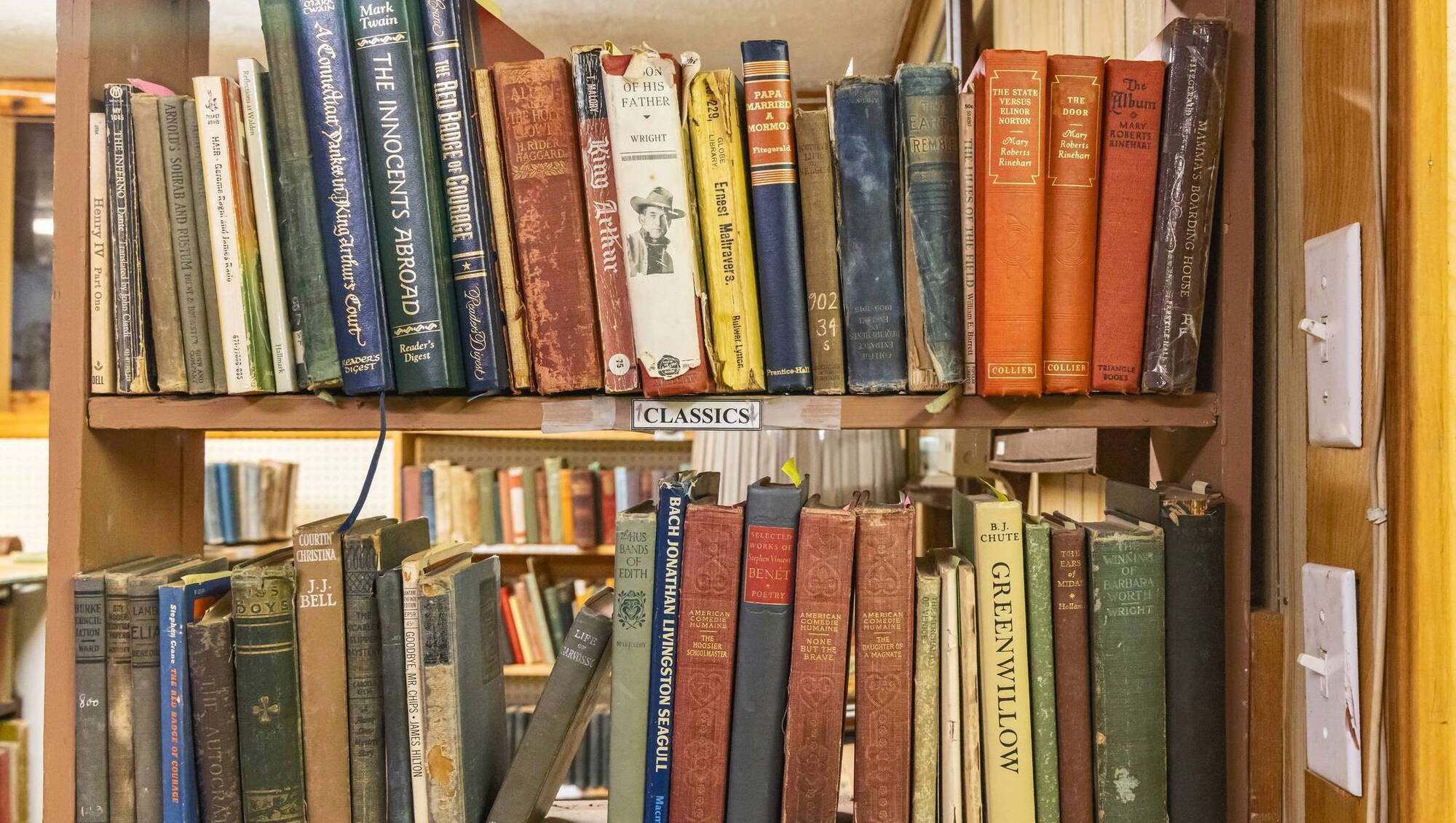
‘Our impatience is slowly making books obsolete, with long books on the way to extinction. Does anyone read Dickens or Tolstoy anymore?’ Picture: iStock

“We ruin ourselves by impatience”. I often think about this bold claim by French philosopher Michel de Montaigne.

He is so right. Montaigne wrote this in the 16th century; what would Montaigne make of our 21st century, when impatience is not only accepted, but revered? ‘Ruin’ doesn’t even begin to capture the devastating impact of impatience on our lives.

We aren’t just ruining ourselves, we are also ruining our planet. We are consumed by an unbound impatience to drill for more oil and gas deposits, burn coal and turf, have access to faster broadband and constant entertainment. And worst of all, we demand instant solutions to every problem.

Impatience has become a way of life. Consider one of the oldest and most durable inventions, the humble book. It takes at least five hours to read a 200-page novel, which translates to at least twice as long once we factor in the incessant urge to pick up our phones, scroll our social media, check emails.

Our impatience is slowly making books obsolete, with long books on the way to extinction. Does anyone read Dickens or Tolstoy anymore? Not in schools. For the Junior and Leaving Cert Irish students are asked to read tiny books: Of Mice and Men (105 pages) and Small Things Like These (116 pages). Don’t get me wrong, these are superb books, but if you are going to read Steinbeck, I would recommend The Grapes of Wrath, one of the greatest novels of the 20th century.

Alas, it’s 476 pages, far too long for our secondary school students. Dickens and Tolstoy don’t stand a chance in today’s school curriculum, nor does Joyce. If future leaders of China try to bond with a future Taoiseach over Ulysses, we may be in serious trouble.

A similar anti-bookish blight is spreading across universities, where students read less and less.

When I was teaching at Yale University 30 years ago I was told that my students expected to be assigned 100 pages a week for my course alone. Today I assign 20 pages a week, often less, and I know that only a small minority of students will do the reading.

I’m not blaming my students, they are the victims of an economic system that thrives on impatience. We want it all, and we want it now. This is the generation that is told to expect and demand instant gratification, as manifested by the phenomenon of binge-watching. Indulging in the impatience of watching many episodes back-to-back means chasing the superficial plot while missing the subtleties of substance, not giving yourself time to cogitate, reflect, mull over, and above all, think.

The tyranny of impatience is the reason why we are bingeing our way through life, with existentially disastrous consequences. The 19th century German philosopher GWF Hegel clearly understood this when he reflected on impatience in his masterwork The Phenomenology of Spirit: “Impatience asks for the impossible, wants to reach the goal without the means of getting there. The length of the journey has to be borne with, for every moment is necessary”.

We seem to have forgotten a basic lesson about reality: what gives meaning to our existence is the journey itself, not the final destination. Sadly, I can’t teach Hegel to my students since his Phenomenology of Spirit is 595 pages long.

The worst part of impatience is its impact on politics. Impatience is the driving force behind authoritarianism.

Democracy is slow in part because it takes time to be inclusive. A lengthy decision-making process is integral to any democracy. This requires patience.

When people look for short-cuts, they feed the authoritarian fire. Brexit was borne out of impatience. Voters were sold a lie, a quick solution: break away from the EU and all your troubles will soon be gone. 

The emphasis was on the ‘soon’. In the 20th century Mussolini and Hitler came to power on a similar wave of impatience. The same could be said for Donald Trump in the 21st century: quick solutions, swift despotism.

Perhaps the best way to reverse the global process of democratic backsliding is by instilling the ancient art of patience.

Heraclitus, a 5th century BC Greek philosopher, understood that patience is indispensable in forming a good character: “Good character is not formed in a week or a month. It is created little by little, day by day. Protracted and patient effort is needed to develop good character”.

We could start by resisting the temptation to binge on television shows and on fast food. Or by reading more books, and longer books.

According to Leo Tolstoy, “the two most powerful warriors are patience and time”. Herein lies the paradox: to learn from Tolstoy’s wisdom we must first find the patience to read the 1296 pages of his War and Peace.

  • Vittorio Bufacchi is Professor of philosophy at University College Cork, and author of Why Cicero Matters (2023).

More in this section

Revoiced

Newsletter

Had a busy week? Sign up for some of the best reads from the week gone by. Selected just for you.

Cookie Policy Privacy Policy Brand Safety FAQ Help Contact Us Terms and Conditions

© Examiner Echo Group Limited