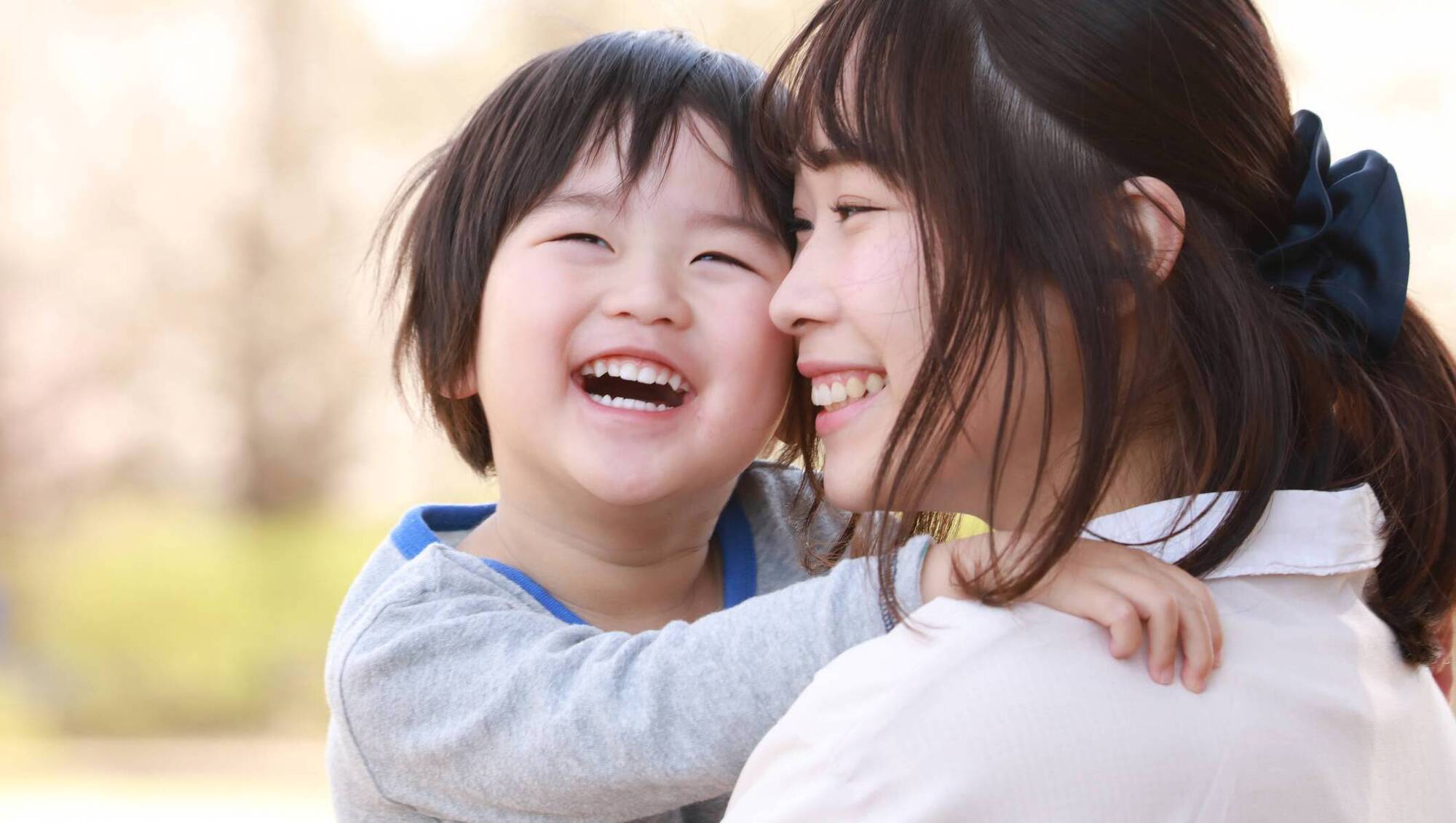
Everyone knows children don’t come with an instruction manual — but in Japan they do. Author and mum-of-two Lisa Katayama says pregnant women in Japan receive a gift from the government — an 84-page maternity planner with specific instructions on what to say, think, and do from the prenatal phase through to age 20.
California-based Katayama, who was raised in Tokyo, says the booklet is both “irritatingly pedantic” — and also “incredibly useful”.
Raising children in the US — and wanting them to grow up to be kind, caring, cooperative, and hard-working — Katayama finds herself drawing from a Japanese way of parenting. It combines loving acceptance with routines and rituals to produce free-spirited, self-sufficient kids — a primary goal is to teach children to practice ‘omotenashi’, or contributing to society’s good as a whole.

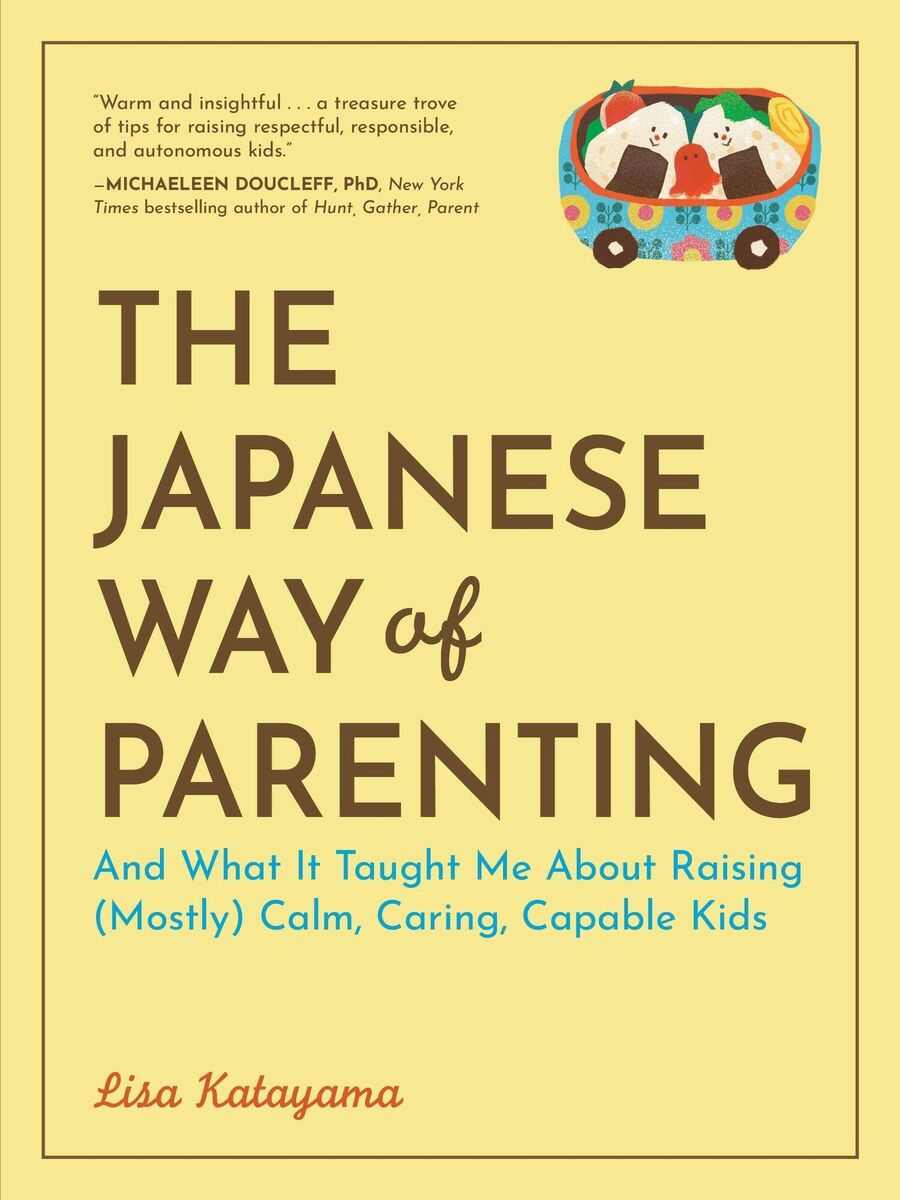
Katayama believes “boundaries and limits are just as important as art supplies and outdoor space” in raising happy, healthy humans. Her new book, The Japanese Way of Parenting and What It Taught Me about Raising (Mostly) Calm, Caring, Capable Kids, is part-memoir, part how-to parenting manual.
Here are seven of her most practical parenting tips:
Greet others pleasantly and politely
In Japan, even very small children are greeted politely and seriously by the adults around them.
When Katayama drops her children off at their Japanese day-care, the teacher always greets them with ‘ohayo gozaimasu’ — ‘good morning’. And parents exchange the same greeting with each other.
Katayama says when parents model for children – that “it’s always nice to say hello”, with the belief that “one warm greeting can make someone’s day” — children quickly learn they too should greet others pleasantly and politely.
Teach children to clean up after themselves
Katayama understands why parents might do it on their children’s behalf. “If [children] aren’t in the habit of cleaning up, it’s easier and faster than trying to persuade them to do it themselves.” But she says it serves no-one. “You’ll get tired, and the kids will start to expect it.”
Instead, teaching children they are also responsible for the wellbeing of their environment is a life lesson worth investing effort in. To make it easier, she suggests a clean-up song to help make it a fun activity — and buying them a real cleaning tool as a gift.
Believe everything has a spirit
The way you take care of your things is a reflection of how you live, says Katayama, echoing the animist beliefs that have influenced Japanese culture.
She encourages asking your young child to imagine, if their books could speak, would they be thanking them for being put back on the shelf straight — or wincing in pain because their spines were folded back too far and they were left splayed out somewhere.
“Are your clothes given room to breathe and rest in their drawers, or are they stuffed in and wrinkled, feeling crammed and unloved?”
She says encouraging children to think of even the most mundane objects as having a spirit will help them treat everything — and everyone — around them with more care.
Learn the art of saying ‘douzo’
An approximate English translation is ‘here you go’. Katayama says ‘douzo’ is one of the first words her younger daughter in particular learned to say.
She explains ‘douzo’ is much more than a verbal expression. “It’s more of a feeling, an offering — the art of letting go of something you desire and offering it to someone else.
“My two kids often want to play with the same toy, and without the art of douzo it can become a grab battle.”
She admits, however, that it is only successful some of the time.
Know the difference between indoor and outdoor shoes
This is about refining our understanding of indoors versus outdoors, and being mindful about the transition between the two.
“Teach your kids that yucky stuff from outside the house — “bacteria, bubble gum, dog poop” — doesn’t belong inside the house by creating a routine of taking off shoes as soon as you get home.”
While Japanese homes have a formal entryway where outdoor shoes are placed, Katayama suggests replicating this by having a doormat or shoe-rack as a reminder.
Do one thing at a time, mindfully
Katayama often finds herself running around the house holding stray baby bottles and an armful of laundry, or trying to squeeze in phone calls while walking the dog before heading to the office. “But this isn’t a sustainable or pleasant way to exist. For kids, being in distracted environments can lead to challenges with attention.”
She says the mindful focus of doing just one thing at a time is core to Zen Buddhism — foundational to Japanese culture. “If we simplify the flow of our day so we’re doing one thing at a time, we might help our kids find their centre more easily when it matters most.”
Be early or on time
An important value in Japanese culture, it shows respect for others — and it saves you the stress of keeping people waiting.
Katayama acknowledges that being on time as a parent is not easy. “Kids are so in the moment, they’re usually focused on doing what’s in front of them. I trick myself into believing we have to be somewhere half an hour before we ‘actually’ have to be there.”
This, she says, gives enough wiggle room for tantrums, anything you’ve forgotten, or something the child spontaneously and urgently wants to show you.
Transplanting some of Katayama’s approaches into another cultural context may not be straightforward, and she acknowledges that teaching her children punctuality in the US hasn’t been plain sailing.
Speaking to the Irish Examiner, Katayama says: “In Japan, most participants join Zoom meetings one-to-two minutes in advance of the scheduled time, and when a party is to start at a certain time, people will line up at the door to enter just as the clock strikes.
“In California, almost nobody shows up on time to a party. I’ve hosted events where the first guest didn’t show up until 30 minutes after the stated time. Now we have kids, we’re really trying to be an on-time family, but it’s tricky [with] the very different conceptions of time that exist.”
Merit in Katayama’s suggestions
Tallaght-based psychotherapist Maxine Walsh believes Katayama’s suggestions have merit. She is struck in particular by the belief that everything has a spirit. “I’m curious about it. It would be nice to believe so that we’re all a bit more gentle and respectful with our belongings. Especially in an age of climate change — we want things to last longer and not buy things that end up in landfill.

“The idea of treating toys, clothes, with kindness is great, and I think it’d transfer to how we treat other people’s things.”
Walsh also likes the idea of doing one thing, mindfully, at a time. “Children are resistant to rush. The more in a rush parents are, the more children will, almost subconsciously, try to get in the way.”
She says even if busy parents were to do just one thing mindfully, make it grounding yourself before the day starts. “Morning routines will work better if you’re meeting your child with a grounded, mindful attitude — they’ll sense it and be more likely to go with it.”
She also likes changing outdoor for indoor shoes, suggesting it could be particularly useful for neurodivergent children. “For these kids, school can be more exhausting — they may have to mask for most of the day. An intentional ritual of changing their shoes will physically manifest coming into a safe space where they don’t have to mask anymore.
“But it would be helpful for all children because they’re all in a role at school.”
Walsh believes there is a gift for children in rules and rituals. “They build safety, which is vital for a functional childhood.”

- The Japanese Way of Parenting, Lisa Katayama, €20.39.
CONNECT WITH US TODAY
Be the first to know the latest news and updates