Colman Noctor: Tech is not just replacing play, it's making kids self-conscious about playing

Toy Story 5 is one of those rare films that entertain children while prompting adults to reflect
Toy Story 5 highlights the 

Toy Story 5 highlights the 

Last week, I told my three children I was taking them to the cinema. Normally, this suggestion is warmly welcomed, but when I announced we were going to see Toy Story 5, there were audible sighs of exasperation.

It was apparently “too babyish”, especially for the two older ones (16 and almost 14), but the promise of extortionately expensive popcorn and sweets eventually persuaded them.

Why was I keen to take my children to a film they were reluctant to see? Because there are some rare films that entertain children while prompting adults to reflect. Over nearly 30 years, Woody and Buzz’s adventures have explored friendship, belonging, growing up, loss and acceptance with remarkable emotional depth. I wanted to give my children something I believed they needed rather than something they wanted.

Like many parents, I expected another nostalgic reunion with Woody, Buzz, and Jessie, perhaps with a useful life lesson. I wasn’t disappointed, as this latest instalment is not really about toys — it is about childhood.

For years, I have argued that one of our greatest responsibilities is not only protecting children from technology, but preserving childhood itself. We devote enormous attention to screen time, online safety, and social media. These are important conversations, but they can distract us from the much bigger question of what technology is gradually replacing. And Toy Story 5 highlights this issue to great effect.
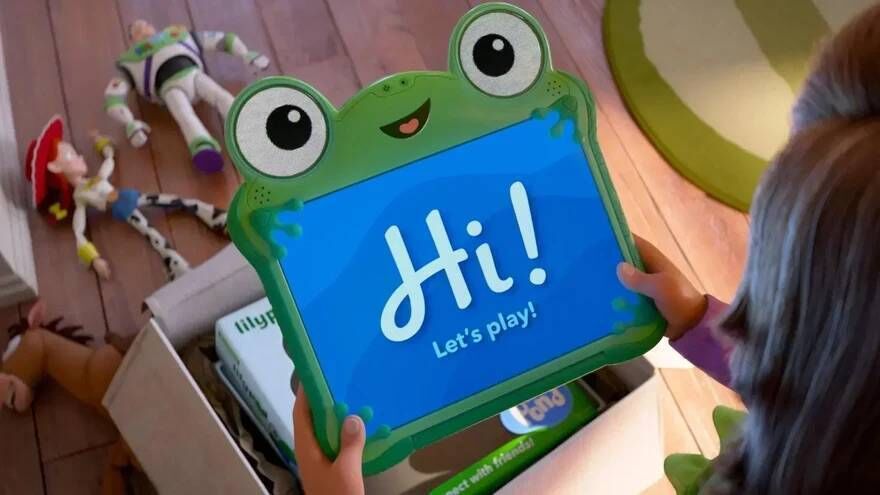
Without giving too much away, Bonnie receives her first digital device, Lilypad, and gradually spends less time with her toys. In a telling scene, she is chatting online with her friends, and they mock her for still playing with toys, saying that “toys are for babies”. In an instant, something changes. It isn’t that Bonnie has stopped enjoying imaginative play. She simply becomes embarrassed by it. The toys that once brought comfort, adventure, and endless stories suddenly become symbols of being left behind.

The character Lilypad in 'Toy Story 5'

I understand that childhood is meant to evolve, as it did with the previous main character, Andy. What saddened me was that she felt pressured to abandon childhood before she was ready.

This scene perfectly captures what technology is increasingly doing to childhood. It is not simply replacing play — it is also making some children self-conscious about playing.

Protected space

Every generation has wanted to look a little older than they really were. As a nine-year-old, I insisted on wearing football boots that were too big for me, even though they gave me blisters, simply so I could claim I wore a size six rather than a size five. Wanting to seem older is nothing new.

The difference is that previous generations experienced those pressures within relatively small friendship groups. Childhood was largely a protected space where children could simply be children.
Today’s children carry audiences in their pockets. Instead of comparing football boots, many nine-year-olds are exposed to “get ready with me” videos, elaborate skincare routines, and constant reminders of how older children supposedly behave. The comparison never stops. The pressure to appear older, cooler, and more mature is no longer occasional. It is relentless.

Technology has not only changed how children communicate. It has changed what childhood is expected to look like. That is why I increasingly describe this as technology’s colonisation of childhood.

Colonisation rarely happens overnight. Small territories are gradually occupied until the landscape becomes unrecognisable. We already see this elsewhere in life. Calling unexpectedly at someone’s house is now considered socially inappropriate. Starting a conversation with a stranger at a bus stop can be perceived as being weird. Technology has quietly reshaped social norms, making previously ordinary behaviour seem unacceptable.

The same process is happening in childhood. The journey to school that once involved conversation is often spent in headphone-wearing silence. Rainy afternoons that once produced Lego cities or elaborate dens built from couch cushions are now spent scrolling through YouTube Shorts. The boredom that once forced creativity to awaken and children to invent games now lasts only seconds before a screen removes it.

Perhaps most concerning of all, technology has begun to determine something even more precious: Children’s permission to be children.

The American Academy of Pediatrics describes play as fundamental to healthy brain development, helping children develop executive functioning, emotional regulation, language, social competence and resilience.

Play is not what children do after learning. It is how they learn. Yet somewhere along the way, we have allowed children to believe that play is something they should outgrow as quickly as possible.

Healthy development

Emotional development cannot be rushed. Looking older is not the same as being more mature. Owning a smartphone does not confer emotional readiness. Being included in adolescent conversations does not equip children to manage adolescent pressures. That is why seeing children as young as eight carrying smartphones jars so deeply with my understanding of healthy development.

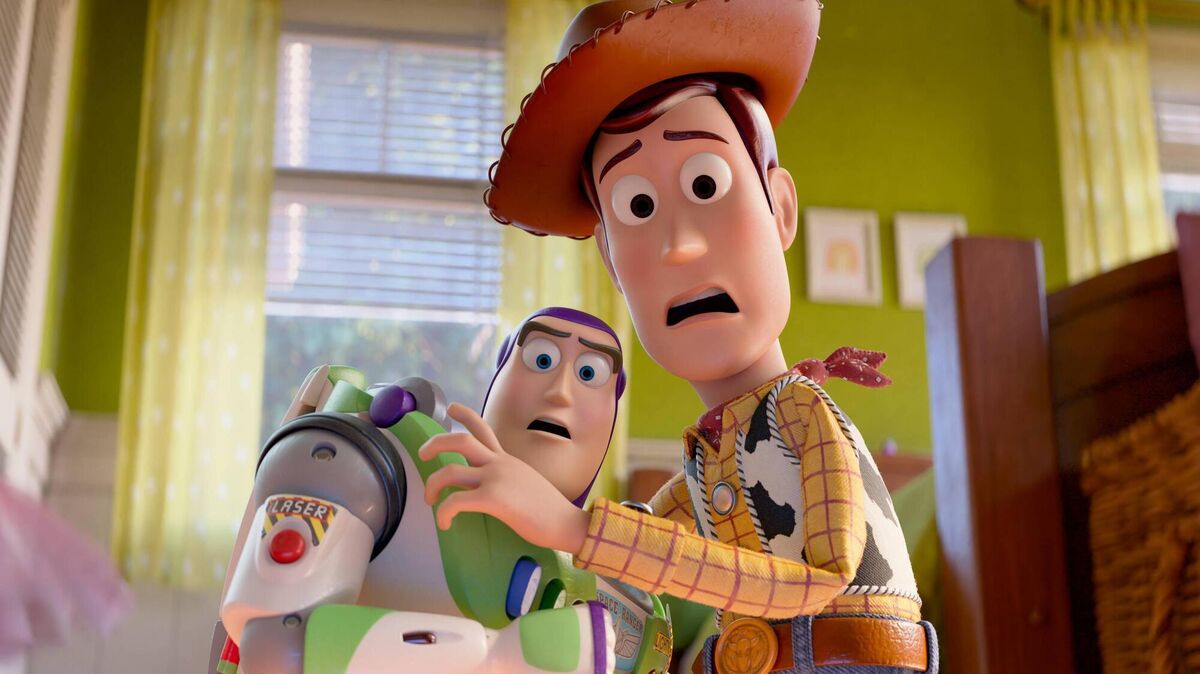
Colman Noctor: In Toy Story 5, Woody, Buzz and Jessie are not really fighting to be played with. They are fighting for Bonnie’s right to remain a child for just a little longer.

American social psychologist Jonathan Haidt argues that once children receive a smartphone, they move from “discovery mode” to “defensive mode”. Rather than freely exploring the world around them, they become increasingly preoccupied with social comparison, peer judgement and the performance of maturity. The earlier children enter this world, the earlier those developmental pressures begin.

While we worry about rising anxiety, loneliness, and diminishing resilience, we are simultaneously weakening one of childhood’s greatest protective factors: Unstructured play.

The freedom to become fully absorbed in an imaginary world, without worrying how it looks to anyone else, is invaluable. Yet we are surrendering it with remarkably little resistance.

Parents often ask me how much screen time is acceptable. The better question is: What is the screen replacing?

If technology replaces climbing trees, inventing games, or simply sitting with boredom long enough for imagination to emerge, then something far more significant is being lost. Children stop discovering that fun is something we create rather than something we consume.

Most parents are doing their best to navigate an environment that has changed faster than any previous generation. In Toy Story 5, Bonnie’s parents buy her the Lilypad after noticing she is being socially excluded because she doesn’t own one. It is a dilemma that is entirely recognisable. No parent wants their child left behind socially, and every parent wants them to become digitally competent. But digital competence should never come at the expense of developmental skills.

Children need protected spaces where they can play without embarrassment, become bored without instantly seeking stimulation, and not feel that they must constantly perform as though they are older.

Perhaps that is why the film affected me more than I expected. Over the past decade, I have seen countless young people in my therapy room struggling with precisely these pressures.

The greatest threat to childhood is not merely that children spend more time looking at screens. It is that technology increasingly persuades them that childhood itself is something to be left behind as quickly as possible.

In Toy Story 5, Woody, Buzz and Jessie are not really fighting to be played with. They are fighting for Bonnie’s right to remain a child for just a little longer. That is a battle we, as adults, should be fighting, too.

I don’t know whether the movie changed my children’s minds about it being ‘too babyish’, and I suspect they would never admit it if it had. They did say that they enjoyed it, and given the pensive looks on their faces, I have a feeling its message landed somewhere for them too.

If it did, then perhaps Woody, Buzz, and Jessie have reminded all of us that childhood is not something to rush through, but something to protect for as long as we possibly can.

As I walked out of the cinema, I was reminded of the quote often attributed to George Bernard Shaw: “We don’t stop playing because we grow old; we grow old because we stop playing.”

So, perhaps preserving childhood begins by remembering the value of play ourselves.

  • Dr Colman Noctor is a child psychotherapist

More in this section

Cookie Policy Privacy Policy Brand Safety FAQ Help Contact Us Terms and Conditions

© Examiner Echo Group Limited