Chip off the old block: Would my kids play with my childhood Lego?
With the fifth ‘Toy Story’ film set to hit the big screen, Simon Tierney dusted down his old Lego to see if his daughters would play along
Chip off the old block: Would my kids play with my childhood Lego?

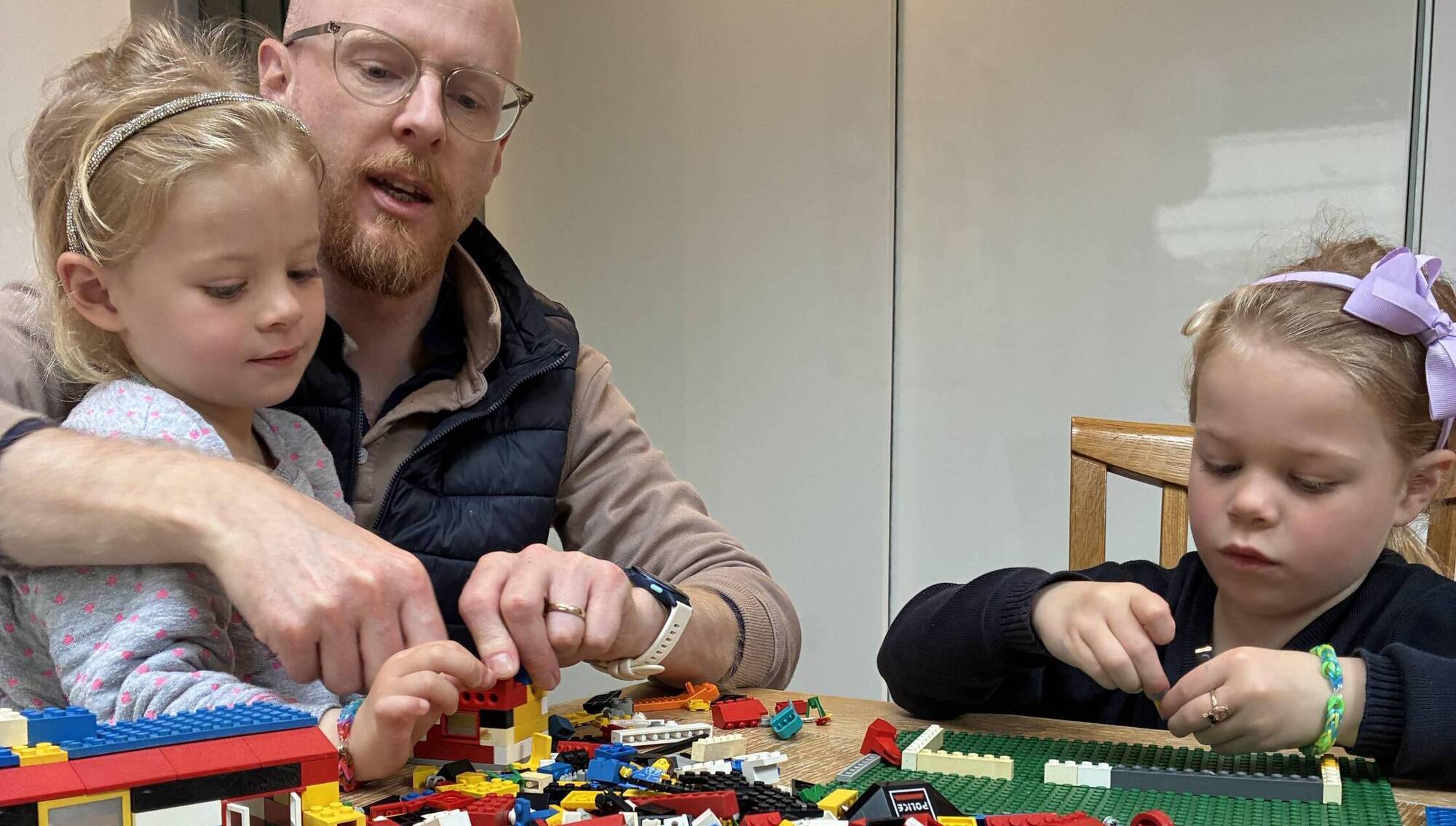
Simon Tierney playing with his 35-year-old Lego with his daughters, Daniela, 4, and the Giovanna, 6. 'It is completely immaterial to them that it was made decades before they ever existed. All that matters is that it’s fun.'

AS FANS of the Toy Story franchise gear up for the release of the fifth installment next week, many of us will be remembering our favourite bits from the previous films.

One particular highly-charged scene, in Toy Story 3, came to mind when I found myself in a similar position to Andy, the master of Woody, Buzz Lightyear, et al.

At the end of the film, as Andy prepares to leave his childhood behind and head off to college, he passes his beloved toy collection on to his neighbour, a little girl called Bonnie. He is reluctant to let go, couching the bequest in custodial terms. “Can you take care of these for me?” he asks Bonnie.

Despite his initial reticence, Andy realises that the toys that gave him so much joy as a child can now fuel the imagination and sense of play of the next generation.
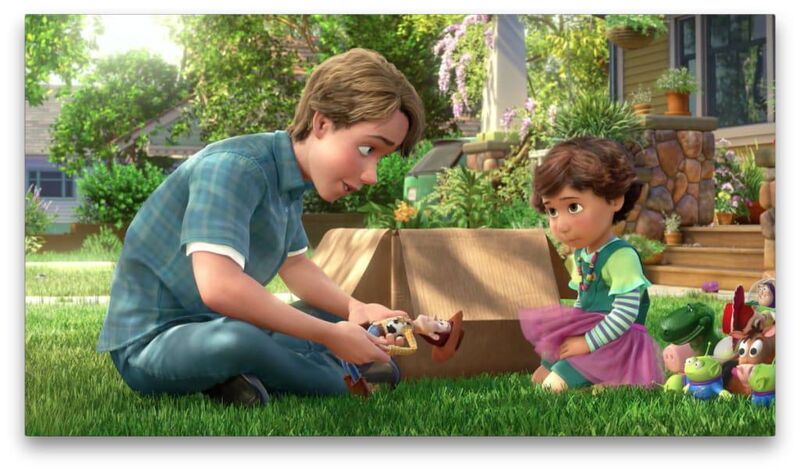
The evocative scene at the end of Toy Story 3 when Andy gives neighbour Bonnie his old toys, fuelling the imagination of the next generation

I recently came across a box of my old Lego in my parents’ garage. Like Andy, I took the opportunity to pass it on. Would these bricks, sitting dormant for 30 years, find a new lease of life with my own kids?

I pulled away the cobwebs and dumped the entire box into a bath of warm, soapy water. After treating the wet bricks to a blow-dry with the hairdryer, I found myself engrossed in the memories the different pieces sparked in me. 

The little pilot Lego man, the tiny red bicycle, the pick-up truck (which I thought was the coolest thing ever when I was nine years old). All originating from Lego sets that have long since been retired.

There is a huge amount of nostalgia associated with the handing down of our most treasured toys to the next generation. The object — be it a doll, a Lego helicopter or a Subbuteo set — allows us to connect with our sons and daughters through the prism and memory of our own experience of childhood. We meet them on their level, not ours.

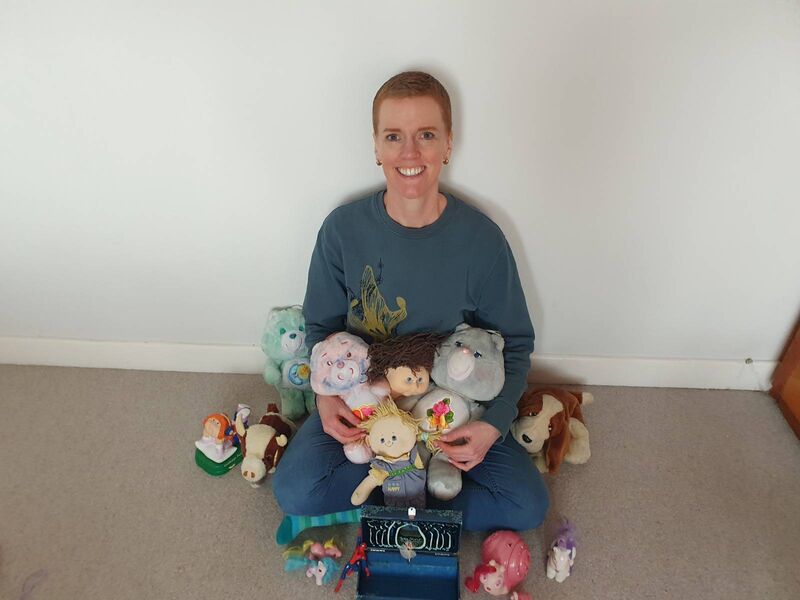
Sharon Keilthy is the founder of the Irish eco toy company Jiminy, and now works as a sustainability consultant. She tells me that her mother kept many of her and her sister’s toys, from Cabbage Patch Kids to Care Bears, so that when her own daughter arrived she was able to pass them on.

“About half my daughter’s toys were from the ’80s,” she says.

Keilthy argues that toys are more meaningful when they change custody over time.
“I do think that it actually adds to the value of the toy,” she says. 

A child would much rather have Aunty Debbie’s Barbie than a random Barbie picked off the shelf, because children look up to their aunts and uncles and grandparents. 

"The history and story behind something adds a whole layer that a random new toy lacks.”

I was apprehensive about how a child of the 2020s would respond to my old-fashioned toys. Handing down a precious heirloom from your own childhood can lead to personal disappointment because their reaction may not meet our expectations. 

We might expect them to be equally enthralled by the Mercedes dinky car we loved as a child, but we forget that they are seeing this object through an entirely different lens.

Sharon Keilthy, founder of the Irish eco toy company Jiminy, says: 'About half my daughter’s toys were from the ‘80s'

I spoke with artist and architect Roisín Murphy about her experiences with the passing down of toys from one generation to the next. She kept a porcelain doll she had loved as a child for her own daughter.

She wasn’t interested in it.

“My best friend gave me this doll. It was an old Victorian doll, really cute,” she says. “It was completely unplayable, it was decorative. (My daughter) had all these talking ponies so why would she play with this porcelain doll? The kids move on.”

Murphy, whose children are now grown up, sees a sentimentality gap between the generations.

She says:

They don’t have the same nostalgia. I think that means they are far more mentally healthy than I am. They go, ‘trot on, move on. Don’t do your hoarding, arty crap with us please’.

Murphy is conflicted about holding onto things. While she is naturally inclined to cling on to the threads of her past, she recognises the sometimes limiting nature of this behaviour.

“You need to make new memories,” she explains. “You can’t make space for new things if you keep holding onto old things. This is illustrated with considerable hilarity in Evelyn Waugh’s classic novel Brideshead Revisited

"The college student Sebastian Flyte is attached at the hip to his childhood teddy bear, Aloysius. Clearly living with some sort of Peter Pan syndrome, Sebastian can’t let go of the teddy because if he does, then he will have to accept change and the responsibilities of adulthood."

Different times

There is another aspect to the transfer of old toys to a new generation. They became subject to more rigorous safety standards in 2011 when the EU Toy Safety Directive was enacted.

“It means older toys can include chemicals that are now not allowed at all, or can include chemicals at a higher level that are not allowed now,” explains Keilthy.

I found an old photograph of myself recently from the late 1980s carrying a tattered old teddy bear. I noticed the button eyes were hanging by a thread. 

The EU directive ensures modern teddies have very secure eyes to prevent them becoming choking hazards, hence why many bears nowadays have stitched-on eyes rather than the traditional button eyes of days gone by.

It isn’t just safety that presents a hurdle for reintroducing older toys. Many parents will wonder whether or not a Barbie from the 1970s or ’80s conforms to the more enlightened standards of today. 

Keilthy recognised a marked difference in the Barbie dolls she passed on to her daughter.

“They weren’t politically correct Barbie dolls that my daughter played with,” she explains. “They had unfeasibly thin waists relative to the size of their chests, whereas today’s Barbie dolls are more anatomically correct and inclusive.”

The evidence backs this up. My wife passed her treasured childhood Barbie, which she received as a gift from her dad in 1988, on to our daughters. 

Comparing this particular model with one of Mattel’s 2024 range, I discovered a startling difference between the anatomies of the two dolls. The waist of the ’80s Barbie is 43% smaller than the waist of the contemporary model. 

While body standards may not have shifted as much as people would like, at least their representation in children’s toys has. Beyond Mattel, are there other toys that are now considered mascots of a less evolved and inclusive time?

“I suspect there’s many people who have a golliwog in their attic,” speculates Kielthy. “[There are] some very politically unacceptable things that were OK just two generations ago, when granny or grandad had toys.”

I noticed a similar incongruity with my own box of Lego. Almost all the fun and interesting jobs, such as a pilot or a motorbike delivery driver, are represented by the uniformed Lego men, whereas the female Lego figures are jazzed up with jewellery and fancy hair, and are seemingly unemployed. 

When I tried to switch costumes on the figures in order to create more balance for my two girls, my youngest daughter asked why her Lego woman had a beard. You can’t win them all.

In the end, my daughters love the box of 35-year-old Lego. 

It is completely immaterial to them that it’s outdated, that it was made decades before they ever existed. All that matters is that it’s fun.

What elevates the experience for everyone is that dad is absorbed in the sense of play in a much more engaged way than he would be with a toy that’s fresh off the shelf at Smyth’s. 

The long arm of history has connected the two generations.

Kids desperately want their parents to meet them at their level of playfulness. 

Anything that can bridge the gap adds value.

More in this section

Cookie Policy Privacy Policy Brand Safety FAQ Help Contact Us Terms and Conditions

© Examiner Echo Group Limited