Culture That Made Me: Irish artist Amanda Coogan in advance of Cork Midsummer Festival
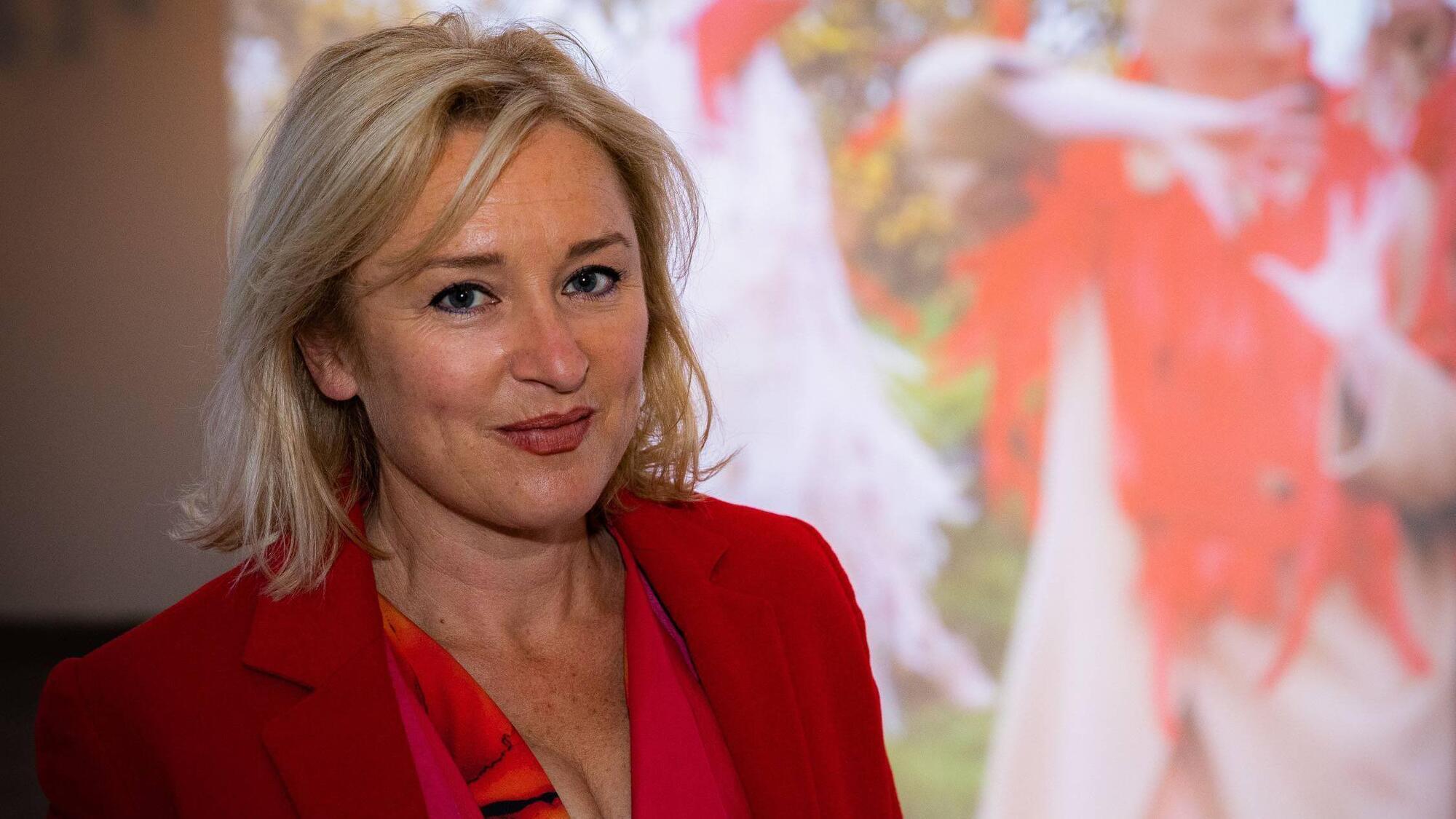
Growing up as the child of deaf parents has had a huge impact on Amanda Coogan's artistic output.
Amanda Coogan, 54, grew up in Ballinteer, Dublin. She is a performance artist whose work has been exhibited around the world, including at the Venice Biennale, and Boston’s Museum of Fine Arts.
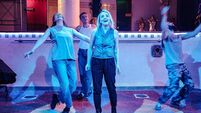
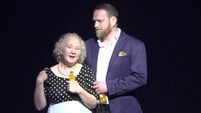
Along with the Cork Deaf Community Choir and others, she will perform Teresa Deevy’s play as part of Cork Midsummer Festival at The Crypt at St. Luke’s, June 19-21. See: corkmidsummer.com
My parents are deaf. My house growing up was a visual house, the doorbell didn’t ring, it flashed a lot. To get attention from my parents, we had to stand in front of them. You couldn't shout from upstairs.
My parents were activists within the community, going on marches and meetings for civil rights and social justice. My world was a visual world that was activating for equality. It was a simple step to becoming a performance artist.
When I studied painting in Limerick School of Art and Design, I made large canvases and got my friends to take photographs of me as I was jumping around the canvas. I was more interested in the photographs than I was in the painting. So, I found performance art in an organic way.
I studied with Marina Abramović in Germany from 1999 to 2001. She calls herself “the grandmother of performance arts”. She does endurance-based, durational work. She sat in New York’s Museum of Modern Art in 2010 at a desk and invited the audience to come and sit in silence with her. It was called .
She walked the Great Wall of China with her then partner, Ulay. They walked from one end of the wall and met in the middle. It was called . It took them three months. It's a beautiful piece of work.
I re-performed her seminal piece in London’s Royal Academy a few years ago, living in the gallery installation for 12 days, not eating, not speaking. I was hallucinating. A super endurance piece of work.
I was the first born in our family. My granny gave my parents a radio. Every morning the radio was turned on: “It's important – a hearing child must be able to hear speech.” It was one of those 1970s old radios that had knobs for tuning.
Dutifully my mother turned it on in the morning, tuning it to RTÉ Radio 1, but it was just static noise. I didn't know any different — this box in the corner made noise. I didn't know you could touch the knob.
When I was about eight, we got a babysitter. She turned the knob; then this pop music came out. You can't imagine. It was clear! I like to think it was Blondie's
Robert Wilson is an incredible theatre maker. He passed away last year. He’s famous for He described it as an opera, but it is a performance artwork in the broadest sense of what performance art is.
It was a production in the ’70s, a four-hour theatre experience. He collaborated with Philip Glass on it. It’s incredible. Without exaggeration, it’s one of the 20th century’s greatest works of art, a profound experience.
I worked with Robert Wilson for three years. Sign language is a very profound influence on his practice; he adopted a deaf child. Bob was doing a production called William Dafoe was the narrator, music by Ahohni. Marina sent me to Berlin to audition. Once I said, “I'm a CODA [child of deaf adults],” Bob said, “You're in.”
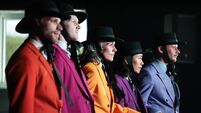
I have a work called Medea, a simple piece: I'm lying on a chaise longue, very beautiful, but I'm telling these dreadful stories in sign language about oppression, inequality, child abuse — so rough, but with a beautiful cover. He was excited by this piece of work so within the production of he recontextualized my
It was magnificent. It was such a learning process — to see how I could upscale a little solo practice into a much more rich, layered performance.

Teresa Deevy is a forgotten Irish playwright from the 1940s and ’50s. She went deaf when she was 19. In the 1930s, she had six plays at the Abbey. She was seen as the next big thing. The Abbey changed their director. Ernest Blythe came in and sent her a letter saying, “We're not interested in you anymore”. She was left out in the cold.
She turned to radio. was her first radio play. She wrote to the producer in RTÉ saying, “Could I watch the actors doing my play?” as she couldn't hear the radio. So, she came in and sat with the producer, looking through a studio window at the performance.
I'm taking that beautiful overcoming of the barrier of her ears not working, the taking back of power, standing and being seen, and doing it in sign language, a language that has been oppressed and marginalised for years.
Alastair MacLennan is a Scottish solo durational performance artist. His influence on performance art in Ireland is untouchable. He moved to Belfast in the ’70s. He was working in the Troubles. One of his most famous works is when he walked through the army barricades in 1977 with a target on his front.
In Manchester many years ago, he had a room full of abandoned, used pairs of shoes. The audience thinks of the Holocaust, it could think of a bomb explosion, all these left shoes. He's in the middle of the room with a huge broken branch of a tree. The audience thinks some disaster’s happened. “Why is this branch of a tree in this room?” All he does is just move incredibly slowly in the room.
Sandra Johnston is another profound artist. The Crawford Art Gallery has works of hers. A couple of years ago, she had a show where she put on a puffer jacket. Then she took a knife and she slit it. This simple everyday item — we all wear puffer jackets in the middle of the winter, but “Why the heck is she slashing it?”
You’re thinking about the representation of the body, and then what happened was all these white feathers flew out. I was blown away.

If I situate myself as a sign language user for equality in a hearing world, I can align with lots of other [minority] groups looking for social justice — LGBT+ rights, feminism, black civil rights in America.
So, Nina Simone is always a touchstone — the conviction, the truth, the musicality. Many of the works that I've done with Theatre of the Deaf have lifted lines from her, “You told me to wash and clean my ears”, or “Talk real fine just like a lady”, both from She’s incredible.
I ate up Doireann Ní Ghríofa’s book I gave it to everybody. It’s so incredibly beautiful. She's such a good storyteller. It's never a straight narrative. The reader has to do a bit of work, so it aligns with my practice as well. It's like, “Oh, where are we going?” It's so rich. I cannot wait to read her new book, She's a powerhouse.