My life with Caitríona Giblin: Why body painting is an art that leaves no room for mistakes
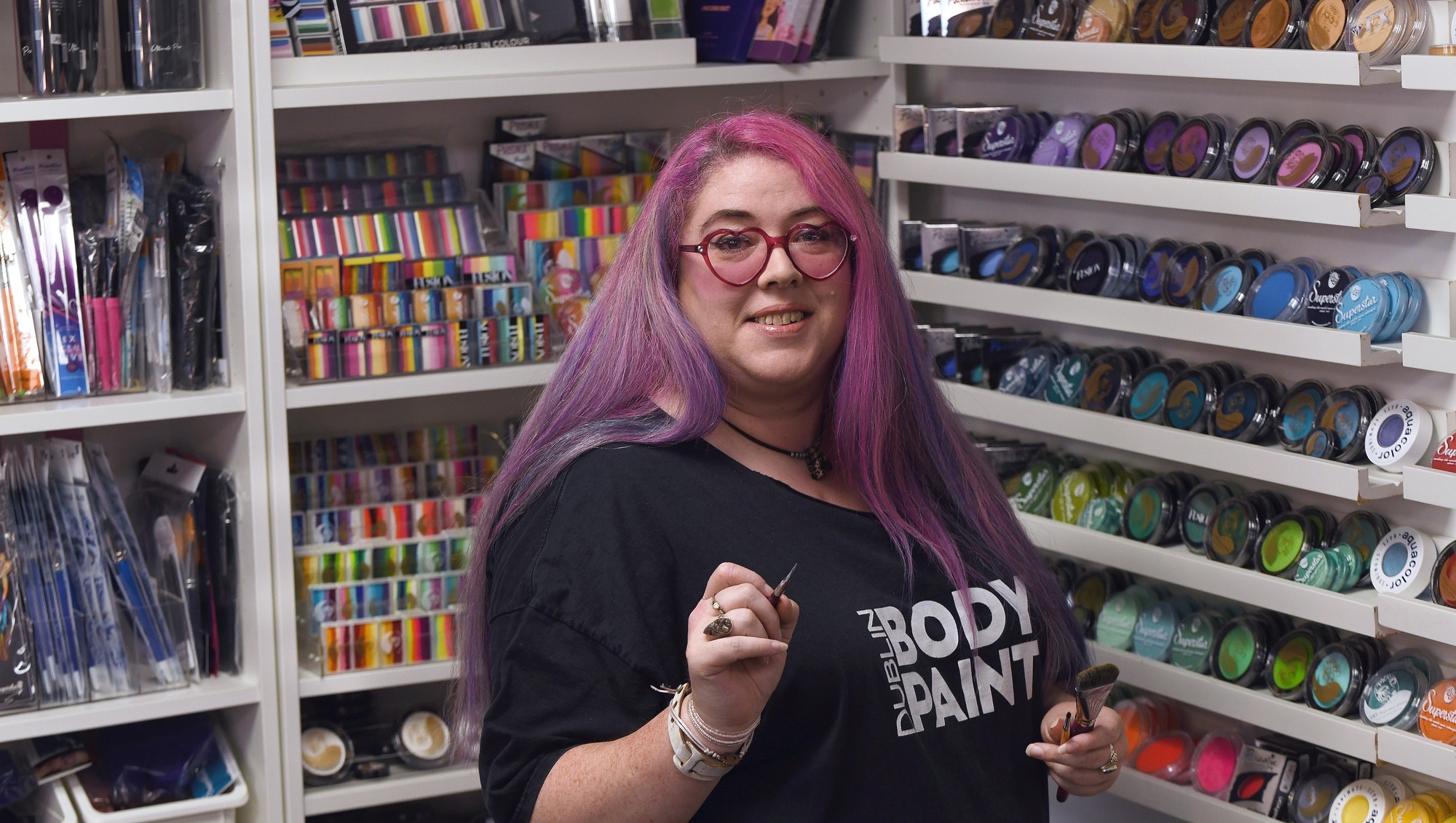
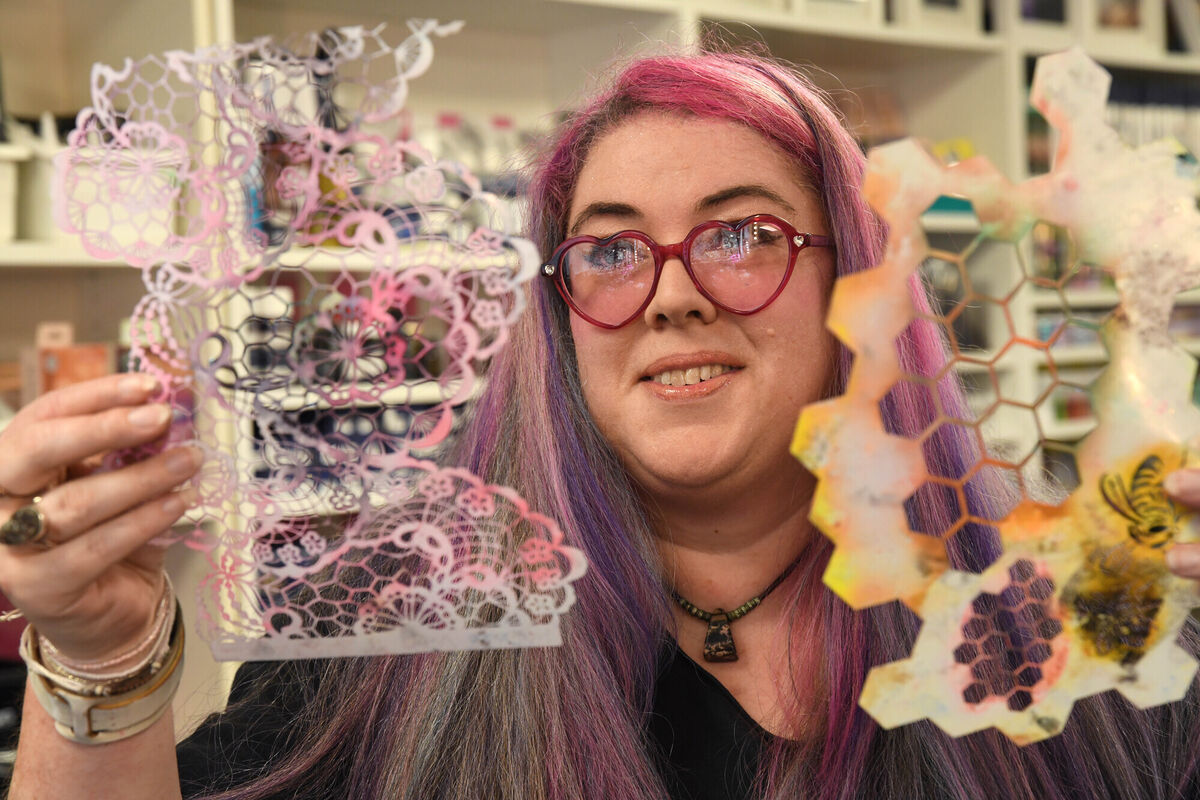
Caitríona Giblin, a professional body painter, at her studio in Shankhill. Picture: Moya Nolan
Face- and body-painting has played a part in my life for as long as I can remember.
I have been lucky enough to work with some really cool brands over the years, including Facebook and Amazon. However, my first introduction to the industry came courtesy of my dad.
My sister and I were never able to get our faces painted when we were children on account of our sensitive skin.
Dad never wanted us to miss out when going to birthday parties, so he made it his mission to find a special face paint suited to our skin types.
He didn’t trust the face paint at birthday parties, which left him with no choice but to do it himself. He probably had good reason to worry. This was the 1980s, and the paints being used were likely acrylic.
My dad must have been the worst face painter that ever walked, but he wanted to make his daughters happy. He had his own style, which usually meant a couple of triangles for a clown and some stripes for a tiger. His signature looks included vampires or witches, complete with thick eyebrows and green make-up.
In my latter years, I became a programmer and enjoyed doing make-up on the side. I completed training courses and co-ordinated photoshoots. Even years later, my sensitive skin couldn’t withstand the pressure. I was getting really bad eczema on my hands, which showed no signs of easing. Working on someone’s make-up while your hands are bleeding isn’t exactly ideal.
I wasn’t allergic to the face and body paint though, so shifting to these was a natural transition.
After being made redundant during the last recession, I became even more passionate about the industry.
I now specialise in face- and body-painting. When it comes to face-painting, I enjoy doing adults because they tell you what they want to feel. Children, on the other hand, tell you how they want to look, which is usually either like SpiderMan or a princess.
Highlights of my time body painting include competing at the World Bodypainting Festival in the brush and sponge bodypainting category four times, where I ranked 38th in the world in 2018.
Our shop Dublin Body Paint in Shankill was launched in 2017.
Customers from all walks of life come in to buy body paint. Back when I did the body-painting jams, I found there were a lot of people attending who might look older or very straightlaced, only to take off their clothes to reveal a patchwork of tattoos and piercings. I get a lot of drag queens in the shop, but there are also people going to festivals who might just like a cool tooth gem or neon eyeliner.
I’ve had some memorable body paint sessions over the years. One that sticks in my mind involved a good friend. She was going through a lot at the time, and there were several times that we both just stopped to cry. The body paint didn’t turn out very well as it failed to line up.
However, as soon as she stood in front of the camera it was like watching the art come to life. Because of the weird angles in the pictures, you didn’t really notice the mistakes.
Another memory that sticks in my mind is body-painting for The Late Late Show where people cycled bikes through the set fully nude.
I also really enjoyed working on RTÉ’s Dancing with the Stars. I was doing a lot of airbrush work and stuff they wouldn’t usually do on the show.
Like anything that’s worth doing, body-painting comes with its own challenges. I can remember having one model who just got up and started walking around the room when she was bored. I literally had to follow behind and try to paint her as she walked. Funnily enough, we ended up becoming really good friends after that. Most of the time, the process is very rewarding.
Body-painting requires a lot of patience. A model could be sitting for six to eight hours in a competition. With body painting jams, it’s usually about six hours.
It can go very wrong if the person is moving, or even if they sneeze.
Something as simple as a hand wobble can result in you having to wipe off a large area of paint. It’s very different to make-up with which you can make a mistake and just start over.
If you’re painting someone for an event, it might take a bit longer as you have to ensure that every spec of skin is covered. Photoshoots can be a different story, as the model’s back may not even need to be covered.
I’ve painted on canvases before and have even done paintings of landscapes and artwork on fabric. It’s the immediacy of body painting that really draws me in. There’s no going back to the studio afterwards to fix anything.
You just have to work with what is in front of you. You really can’t overthink it.

CONNECT WITH US TODAY



Be the first to know the latest news and updates