Growing problem: Why our food needs a bigger gene pool
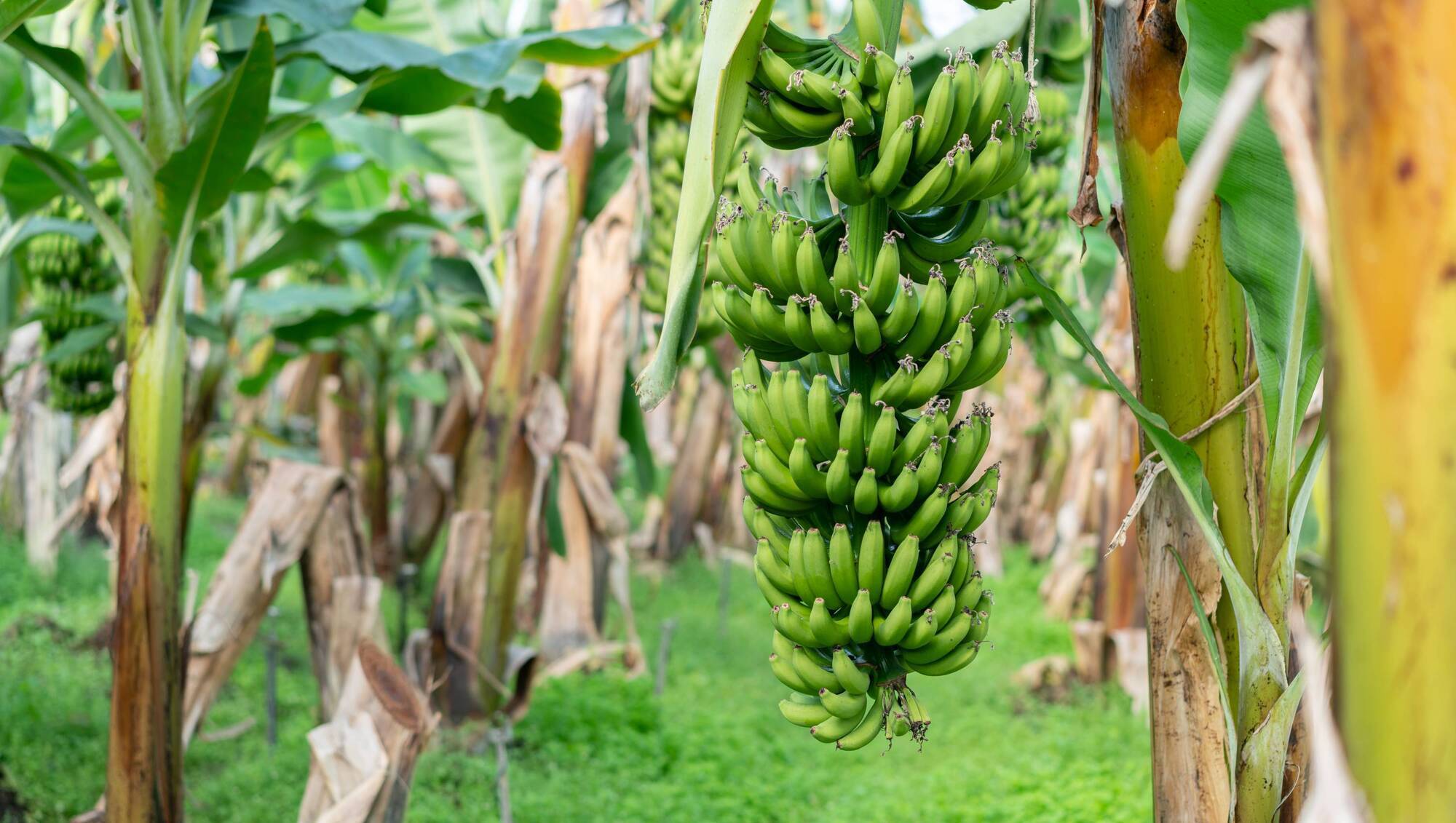
Cavendish bananas dominate international supermarket trade and are propagated as clones. Their consistency suits growers, shipping companies and shoppers. Unfortunately, it also suits pathogens. Picture: iStock
A supermarket offers twenty kinds of breakfast cereal, several of which appear to be the same cereal with a different animal on the packaging. However, wander over to the bananas and the choice becomes remarkably narrow. Behind that cheerful yellow display sits a serious question: have we made parts of our food supply dangerously dependent on plants that are far too alike? Genetic diversity is the variation within a species; the inherited differences that can help one wheat variety tolerate drought or another resist disease. When plants share the same vulnerabilities, a disease or weather extreme can hit them together. Diversity improves our chances of having something that survives. The banana is a particularly well-packaged warning.
Cavendish bananas dominate international supermarket trade and are propagated as clones. Their consistency suits growers, shipping companies and shoppers. Unfortunately, it also suits pathogens. Growing vast quantities of genetically similar, susceptible plants is rather like giving every house on the street the same front-door key. TheTropical Race 4, or TR4, a strain of the fungus responsible for Fusarium wilt, also called Panama disease. It attacks banana roots and water-conducting tissues, causing plants to wilt and die. And it can persist in soil for decades. The threat concerns plants and livelihoods, not the safety of eating bananas. This goes beyond protecting Irish lunchboxes. Bananas and plantains are staple foods in many tropical communities, as well as sources of income. A failed harvest can therefore remove both dinner and the money a family needs to replace it. We have been here before. During the twentieth century, an earlier form of Panama disease devastated plantations of Gros Michel, once the export industry’s favourite banana. Cavendish resisted that threat and replaced it. Gros Michel survived, but lost its commercial crown. Now TR4 threatens the Cavendish banana. This is an uncomfortable reminder that finding one replacement is not the same as building lasting resilience.
Ireland needs little introduction to the consequences of crop failure. Dependence on susceptible potato varieties helped leave crops exposed when late blight arrived in 1845. But the Great Famine cannot be reduced to a genetics lesson: poverty, land tenure and political decisions turned crop destruction into human catastrophe. Food security involves who can obtain food, as well as what survives in fields. Diversity can nevertheless make a measurable difference. In a study published in in 2000, researchers working with farmers in China’s Yunnan province mixed rice varieties. Susceptible rice grown alongside resistant varieties experienced 94% less severe blast disease than susceptible rice grown alone. This result applied to that particular system; it was not a universal promise for every crop. The principle is useful though. Interrupt the pathogen’s easy passage between vulnerable plants. However, scattering assorted seeds around is not automatically a solution. Varieties must suit the local climate and farming system. Mixing plants that all succumb to the same disease offers little protection. The relevant genetic differences matter more than the number of colourful names on seed packets.
Banana research offers fresh possibilities. In October 2026, Yelloway, a partnership between Chiquita and KeyGene, announced a fertile Cavendish breeding line called Yellowdish. The partners reported successfully crossing it with disease-resistant varieties. That could help breeders combine resistance with familiar commercial qualities. It remains a company-reported breeding advance, rather than proof that a replacement is ready for supermarket shelves. The significance is that cultivated bananas are notoriously awkward breeding partners as many are largely sterile. Their seedlessness makes breakfast convenient and matchmaking difficult. Another route has already produced QCAV-4, a genetically modified Cavendish incorporating a resistance gene from a wild banana relative. Australian authorities approved its commercial release in 2024, following field trials demonstrating strong TR4 resistance. Wild relatives and traditional varieties therefore represent valuable options for future breeding. A scruffy plant producing disappointing fruit may carry resistance that tomorrow’s harvest desperately needs. Conserving these resources means protecting habitats, supporting farmers who maintain diverse varieties, and funding gene banks. Seedless bananas need living collections, tissue culture or cryopreservation, rather than simply an envelope in a freezer.
Yet farmers cannot pay bills with theoretical resilience. A new variety must yield reliably, taste acceptable, survive transport and find buyers. Different ripening times can complicate harvesting; different qualities can trouble processors. Breeding takes time, and useful resistance can arrive alongside unwanted characteristics. Farmers need affordable planting material, advice and dependable markets if diversification is to become a practical choice. Nor will one resistant superstar end the problem. Pathogens evolve, and replacing yesterday’s monoculture with tomorrow’s monoculture can recreate vulnerability. Genetic diversity works alongside biosecurity, good agronomy and fair access to food. Our ambition should be a food system with more options when trouble arrives. We happily accept variety in the biscuit aisle. It is time we valued it in the fields that feed us, too.
- Reference:
- Zhu, Y., Chen, H., Fan, J., Wang, Y., Li, Y., Chen, J., Fan, J., Yang, S., Hu, L., Leung, H. and Mew, T.W., 2000. Genetic diversity and disease control in rice. Nature, 406(6797), pp.718-722.
CONNECT WITH US TODAY



Be the first to know the latest news and updates