Whose bright idea was it that the clocks should go backwards?
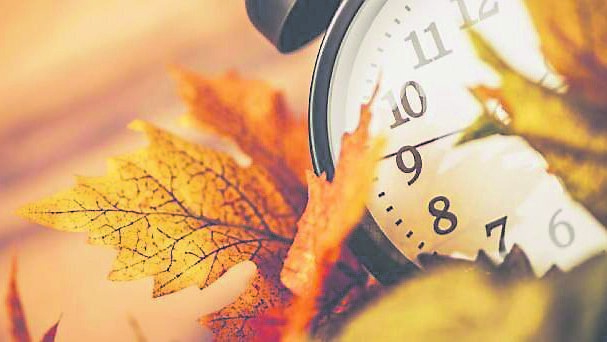
Autumn is time to turn back time.
Twice a year, we collectively agree to change the time, spend several days asking whether the clocks go forwards or backwards, and then discover that the car clock has been living in a different time zone since March.
On Sunday, October 25, the clocks go back one hour. At 2am, it becomes 1am again. We gain an extra hour in bed, although anyone with a small child or a dog expecting breakfast at its usual time may wish to dispute the word gain.
The reward is brighter mornings. The price is evenings that appear to end before the working day does. But why do we do this? And whose bright idea was it to start interfering with time in the first place?
The popular answer is farmers. Except that farmers did not invent daylight saving, and many originally opposed it. The idea has a much stranger history.
In 1784, Benjamin Franklin wrote a satirical letter suggesting that Parisians could save money on candles by getting up earlier. It was a joke about human habits, not a blueprint for changing the clocks.
A more serious proposal came in 1895 from George Vernon Hudson, a New Zealand entomologist who wanted more daylight after work to collect insects. His solution was to move the clocks by two hours. It is humorous to think that a century of collective sleep disruption can be traced, in part, to one man wanting more time with beetles.
Then came William Willett, a British builder who published a pamphlet in 1907 called . He was appalled that people slept through perfectly good summer mornings.
His proposal was not a simple one-hour jump but a series of 20-minute changes over four Sundays. Imagine trying to implement this system. However, Willett campaigned unsuccessfully.
It took a world war to make governments listen. In April 1916, Germany and Austria-Hungary moved their clocks forward to conserve fuel, hoping that lighter evenings would reduce the need for artificial lighting. Britain and Ireland followed in May 1916, just weeks after the Easter Rising.
And this is where Ireland’s history becomes particularly interesting. Before 1916, we had our own official time, which was called Dublin Mean Time, and was based on the longitude of Dunsink Observatory. It was precisely 25 minutes and 21 seconds behind Greenwich. In other words, when it was noon in London, Ireland was still enjoying the last 25 minutes of morning.
On the 1st of October 1916, as the first summertime experiment ended, Ireland also abandoned Dublin Mean Time and aligned with Greenwich. This meant Irish clocks went back by just 34 minutes and 39 seconds, rather than the full hour.
Even our first autumn clock change came with a complicated calculation. The decision was politically contentious. At a time when Ireland was fighting over independence, having its own time zone abolished was hardly going to improve relations with Westminster. Yet the change survived independence, and we have largely kept step with Britain ever since.

So, does moving the clocks actually save energy? Some, perhaps, but much less than its wartime supporters imagined. A 2018 meta-analysis of 44 studies found average electricity savings of just 0.34% during daylight-saving periods. That is a modest return for rearranging the nation’s sleep schedule, although effects differ by country and climate.
There is also the matter of our biological clocks, which are rather less obedient than the ones on our phones. Daylight helps regulate our circadian rhythms, which is the the internal system influencing when we feel sleepy and alert.
The spring change, when an hour disappears, can disrupt sleep and has been associated with short-lived increases in some health and safety risks. Sleep researchers generally favour keeping one time throughout the year, often arguing that permanent wintertime better suits our biology.
The European Union has been debating an end to the seasonal switch for years. In 2019, the European Parliament voted to support ending it, but agreement never followed.
Ireland raised a particular problem, in that abandoning the change without Britain could leave different times on either side of the border. The last thing we need is another border complication.
So, for now, the ritual continues. On October 25, we will dutifully turn the clocks back, enjoy the novelty of an extra hour and then complain that it is dark by dinner time.
We cannot manufacture an extra minute of daylight. We can only move it around. And after more than a century of changing the clocks, you would think we might have realised that moving the hands doesn’t give us any more daylight.

CONNECT WITH US TODAY



Be the first to know the latest news and updates