Enduring mystery: Giant crabs the latest lead in hunt for Amelia Earhart
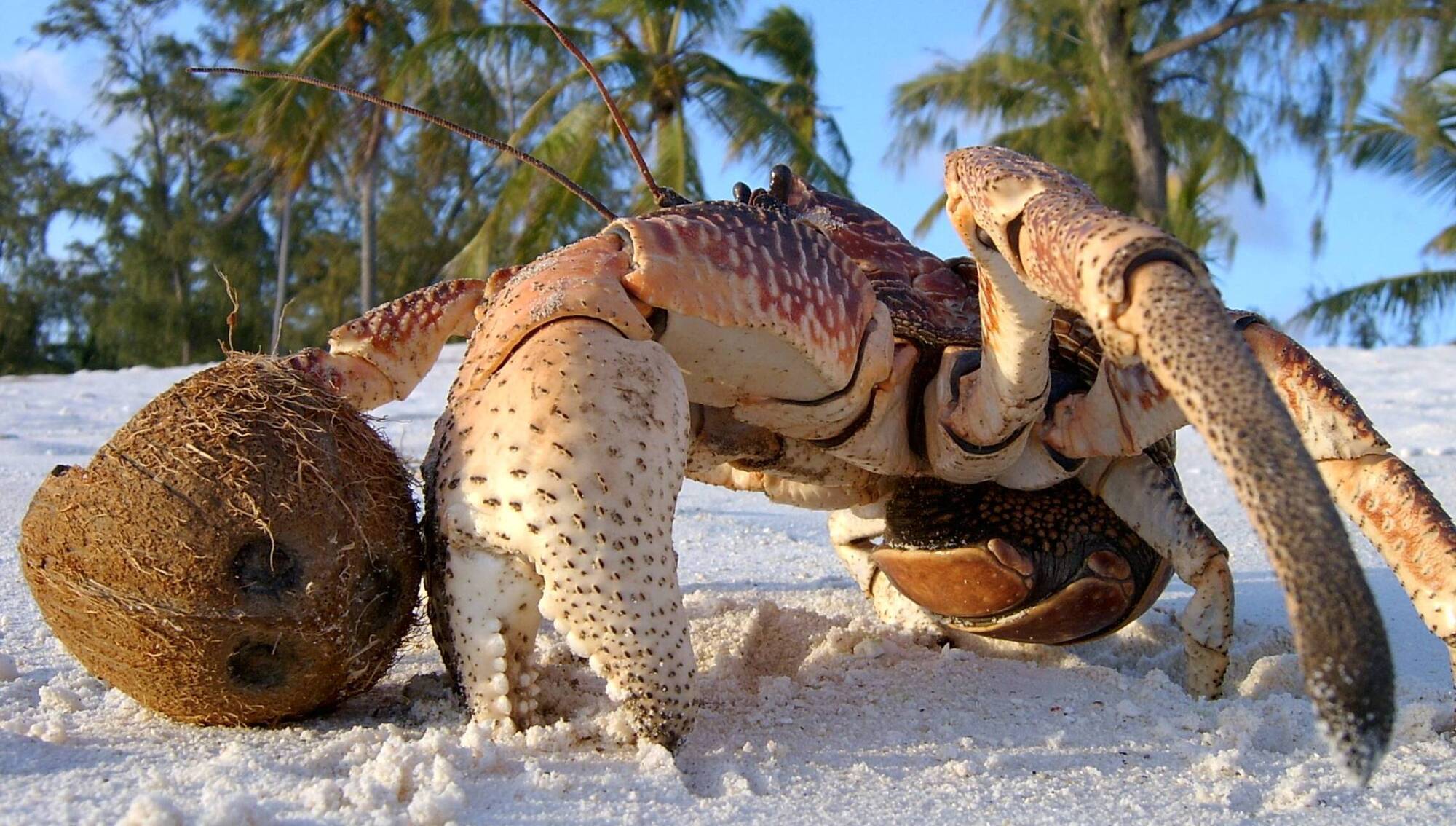
Coconut crabs are omnivorous scavengers that often feed on animal remains. That behaviour has prompted a rather unsettling question: could these enormous crustaceans help explain why Amelia Earhart's remains were never found? Picture: iStock
There are plenty of hazards you might expect when searching for a plane that disappeared over the Pacific Ocean nearly 90 years ago. Treacherous reefs, unpredictable weather and the small matter of finding an aircraft in one of the world's largest oceans. Giant crabs, however, probably wouldn't feature very highly on most people's lists. Yet on a tiny, uninhabited island in the Pacific, enormous coconut crabs have become an unlikely part of the latest effort to solve one of aviation's greatest mysteries: what happened to Amelia Earhart?
A 17-person expedition arrived at Nikumaroro, a remote coral atoll in the Republic of Kiribati, this week. Their mission is to investigate a possible clue to the disappearance of the pioneering American aviator. Their accommodation arrangements are rather less adventurous. Instead of camping on the island, the researchers are sleeping aboard their ship, partly because the local wildlife includes crabs large enough to make a grown adult think twice about a midnight trip to the toilet. And these are no ordinary crabs. Coconut crabs are the largest land-dwelling crustaceans on Earth. The biggest can weigh around four kilograms, with legs spanning nearly a metre. They can climb trees, have extraordinarily powerful claws and will happily scavenge dead animals. Not exactly the welcome party you would hope for on a deserted tropical island.
But before we get to the crabs, there is the small matter of an 89-year-old mystery. In 1937, Amelia Earhart was already one of the most recognisable women in the world. Five years earlier, she had become the first woman to fly solo across the Atlantic, challenging expectations about what women could achieve in aviation. Her next ambition was even greater. To fly around the world. On the 2nd of July 1937, Earhart and her navigator, Fred Noonan, departed New Guinea in their Lockheed Electra, bound for Howland Island, a tiny strip of land in the Pacific. They never arrived.
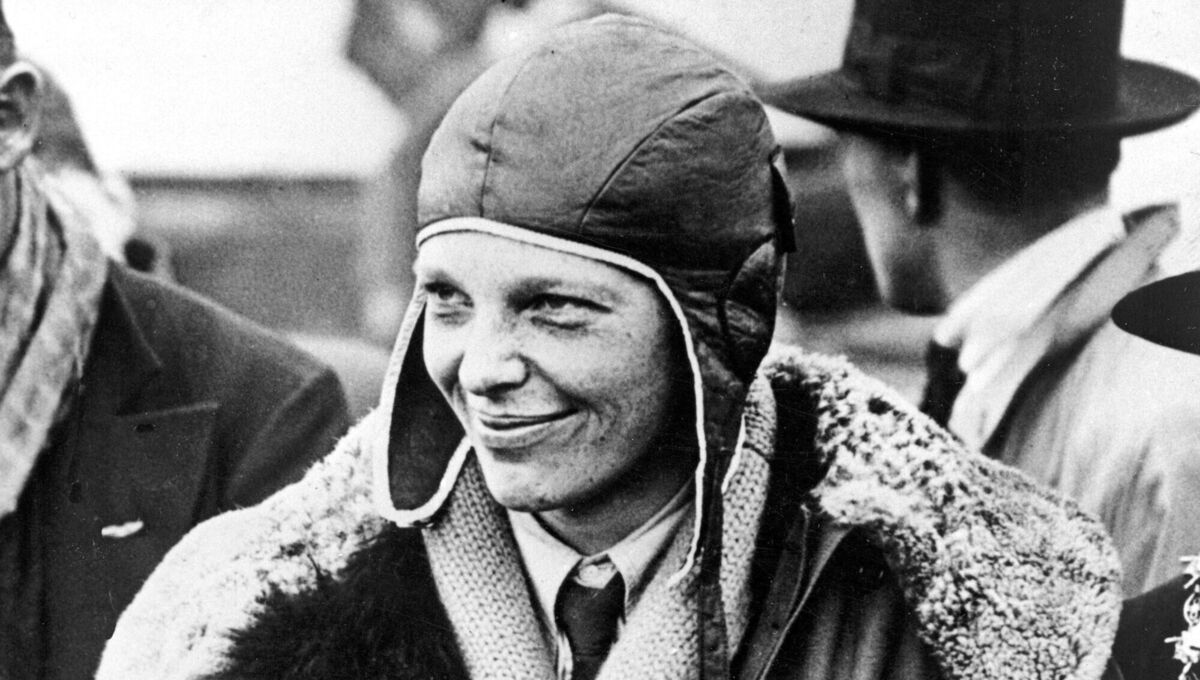
Their final radio messages suggested difficulties locating the island and dwindling fuel supplies. An enormous search followed, but no confirmed wreckage was found. The most widely accepted explanation is that the aircraft ran out of fuel and crashed into the ocean. Yet another hypothesis has persisted for decades. Some researchers believe Earhart may have landed on the reef surrounding Nikumaroro, roughly 650 kilometres south of Howland Island, where she and Noonan could have survived temporarily as castaways. The latest expedition is investigating a mysterious shape in the island's lagoon, spotted in satellite imagery and nicknamed the Taraia Object. Could it be part of Earhart's aircraft? Possibly. Could it be a fallen tree? Also, possibly.
The researchers hope that sonar, magnetic surveys and further investigation will finally establish what lies beneath the water. Meanwhile, back on land, the coconut crabs have their own rather extraordinary story. Scientifically known as Birgus latro, these creatures are relatives of hermit crabs. As youngsters, they protect their soft abdomens inside discarded shells. As adults, they develop a hardened abdomen, allowing them to abandon this rather restrictive housing arrangement. Their claws are particularly impressive. In 2016, scientists studying wild coconut crabs recorded pinching forces exceeding 1,700 newtons. They estimated that the largest individuals could exert around 3,300 newtons, an extraordinary amount of force for an animal weighing just a few kilograms. But it is their eating habits that have given them a more sinister connection to Earhart's disappearance. Coconut crabs are omnivorous scavengers. Alongside fruit, nuts and other plant material, they feed on animal remains. And on Nikumaroro, that behaviour has prompted a rather unsettling question: could these enormous crustaceans help explain why Earhart's remains were never found?
In 1940, a partial human skeleton was discovered on the island. The bones were examined and initially identified as belonging to a man, although later researchers challenged that conclusion. Unfortunately, the original remains were subsequently lost, leaving their identity unresolved. Researchers have also conducted experiments on Nikumaroro to investigate how scavenging crabs interact with animal carcasses. They found that crabs, including smaller land hermit crabs, could consume tissue and disturb bones, potentially scattering remains across the landscape. It is a fascinating example of how natural processes can complicate archaeological investigations. But it is not evidence that Earhart died on the island, or that coconut crabs dispersed her remains. Those possibilities remain speculative.
There is also something rather unfair about the crabs' newfound notoriety. Far from being villains, they are important scavengers, helping recycle nutrients in island ecosystems. They are also vulnerable to hunting and habitat destruction, with populations declining in parts of their range. For now, the researchers will continue investigating the lagoon, hoping that modern technology can finally provide answers to a mystery that has survived almost nine decades. And the coconut crabs? They were living on Nikumaroro long before Amelia Earhart disappeared and have carried on quite happily ever since. Whether the island holds the secret to her final flight remains unknown. One thing is certain. If the researchers do uncover the missing aircraft, they will have solved one of aviation's greatest mysteries while sharing the island with creatures that look as though they belong in a science-fiction film. Not bad company for a detective story. Although I'd still sleep on the boat.


CONNECT WITH US TODAY



Be the first to know the latest news and updates