Burning issue: What Europe’s wildfires can teach Ireland
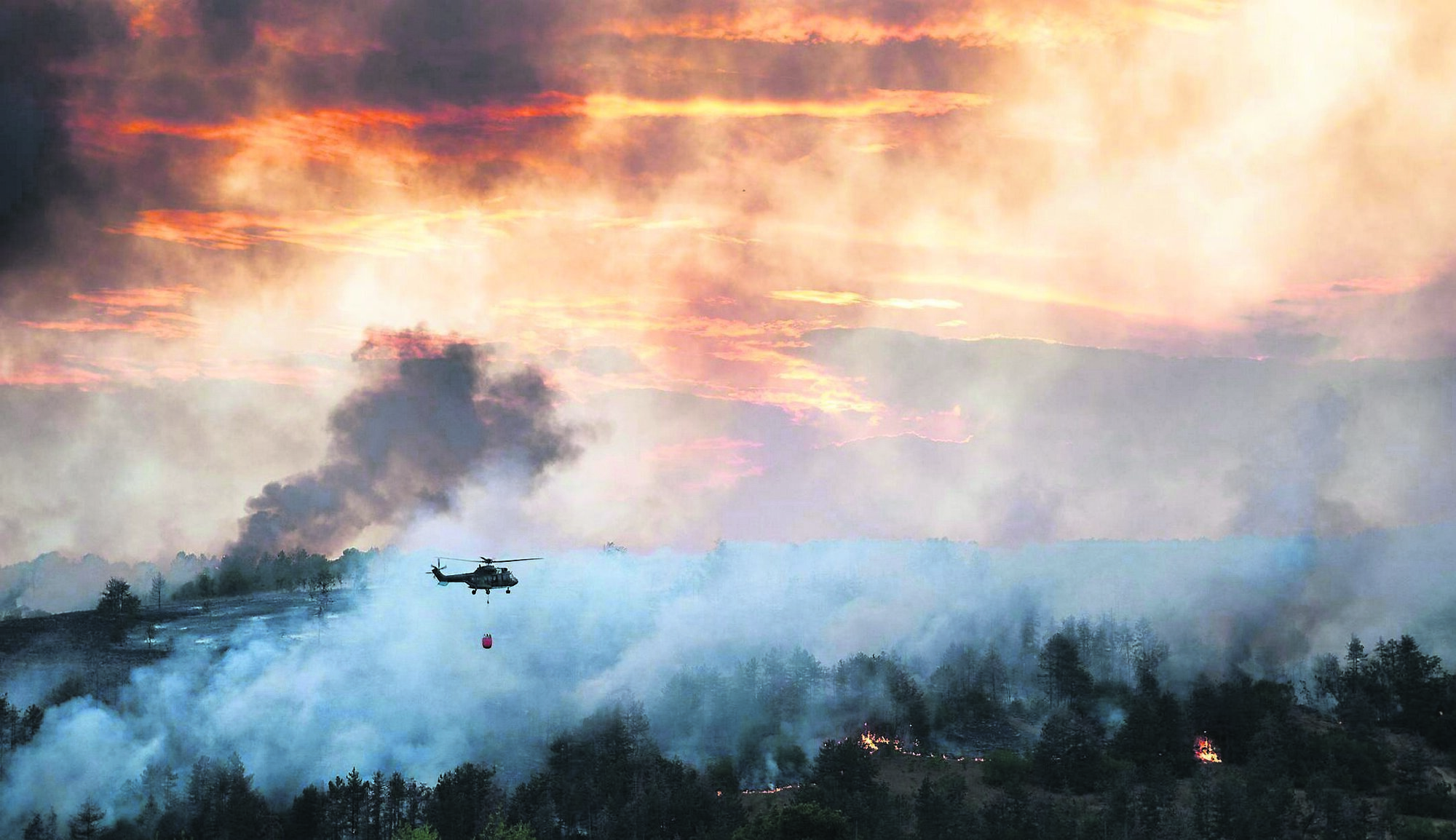
A firefighting helicopter flies over a forest wildfire, dumping water from a bucket to help tackle the blaze. Europe is warming faster than any other continent, and hotter summers are increasing what fire scientists call ‘fire weather’, periods of prolonged heat, dry vegetation and strong winds that favour rapid fire growth.
Every summer seems to come with the same unsettling images. Hillsides ablaze. Towns and villages evacuated. Firefighters working through the night while aircraft circle overhead, dropping water on flames that seem impossible to contain. This week has been no different, with wildfires affecting parts of France, Spain, Portugal and Greece after prolonged heat and strong winds created dangerous fire conditions. Watching from Ireland, it's easy to think of wildfire as someone else's problem. Mediterranean countries have always had hot summers. Surely this is simply what happens when temperatures climb above 40°C. The science suggests something more complicated.
Fire is, in many ways, a natural ecological process. Long before humans arrived, lightning ignited fires that shaped landscapes, recycled nutrients and influenced the evolution of plants. Many Mediterranean species are remarkably well adapted to periodic burning. Some pines only release their seeds after exposure to intense heat, while other shrubs quickly regenerate after fire. In the right place, at the right time and frequency, fire can even help maintain biodiversity. The problem isn't fire itself. It's when fire behaves in ways that ecosystems and communities struggle to cope with.

Scientists often describe three essential ingredients: fuel, ignition and weather. Fuel is the vegetation available to burn. Ignition might come from lightning, machinery, a discarded cigarette or an unattended barbecue. Most wildfires are still linked, directly or indirectly, to human activity. Weather is what determines whether a small fire burns itself out or develops into something much more serious. Heat dries vegetation. Low humidity removes even more moisture from leaves and branches. Wind supplies oxygen to the flames and carries burning embers hundreds of metres beyond the main fire front, creating entirely new fires. When these factors coincide, landscapes can become highly combustible. This is why climate change has become such an important part of the wildfire conversation. It is rarely accurate to say that climate change caused a particular wildfire. A spark is still needed. But decades of research show that a warming climate is increasing the frequency and intensity of the conditions that allow fires to spread. Europe is warming faster than any other continent, and hotter summers are increasing what fire scientists call "fire weather", where periods of prolonged heat, dry vegetation and strong winds that favour rapid fire growth.

One of the more interesting findings from recent wildfire research is that the biggest fire seasons are not always preceded by drought alone. A wet winter or spring can produce abundant grasses, shrubs and young vegetation. If that lush growth is then followed by weeks of exceptional heat and very little rainfall, it dries out and becomes fuel. In other words, a productive growing season can inadvertently set the stage for an intense fire season. Researchers have suggested that this sequence of events has contributed to the severity of some of Europe's recent wildfires. Climate, however, is only part of the story.
Across much of southern Europe, rural populations have declined over recent decades. Former farmland has been abandoned and gradually reclaimed by scrub and young woodland. While this often benefits biodiversity, it also creates continuous vegetation across large areas. Fires that might once have encountered grazed fields or cultivated land now have uninterrupted fuel. Ironically, decades of successfully extinguishing small fires have also played a role. Suppressing every fire allows leaf litter, dead wood and dense undergrowth to accumulate. When a fire eventually starts, there is simply more material available to burn.

So where does Ireland fit into all of this? Our landscape is different, and so are our wildfires. We are unlikely to experience the vast pine forest fires associated with southern Europe. But Ireland is far from immune. Every year, fires affect upland heath, gorse, forestry and peatlands, particularly during prolonged dry spells. According to the European Forest Fire Information System, almost 119,000 hectares had already burned across the EU by the beginning of July this year, well above the long-term average for this stage of the season. As someone who spends much of my working life researching peatlands, these are the fires that concern me most. A healthy peatland is naturally wet and remarkably resistant to burning. But many of Ireland's peatlands have been drained, cut or degraded over the past century. Once peat dries, it behaves very differently. Instead of flames moving quickly across the surface, fire can smoulder beneath the ground for days or even weeks, releasing carbon that has accumulated over thousands of years. Recovery is slow. The mosses that build peat grow by only a few millimetres each year, meaning the damage from a single fire can persist for decades.
The encouraging news is that many of the solutions serve several purposes at once. Restoring peatlands keeps them wetter and less susceptible to fire while improving water quality, storing carbon and supporting biodiversity. Managing vegetation appropriately, maintaining grazing where suitable and creating more diverse forests all help reduce wildfire risk while making landscapes more resilient to climate change.
There is also a role for all of us. During periods of high fire danger, avoiding disposable barbecues, burning garden waste and careless cigarette disposal can prevent a small mistake from becoming a major incident. Prevention rarely makes headlines, but it remains our most effective defence. The fires burning across Europe this summer are undoubtedly driven by exceptional weather. But they are also telling a longer story. One about climate, changing landscapes and how we manage the places around us. Ireland is unlikely to become the Mediterranean, but we are already seeing the effects of warmer, drier conditions on some of our most valuable ecosystems.
Perhaps the lesson is not that wildfire is becoming inevitable, but that resilience begins long before the first spark. Healthy peatlands, well-managed landscapes and informed decisions give us the best chance of keeping fire where it belongs. As a natural ecological process, rather than an environmental disaster.