Hikes and Trails: Following in the footsteps of The Liberator
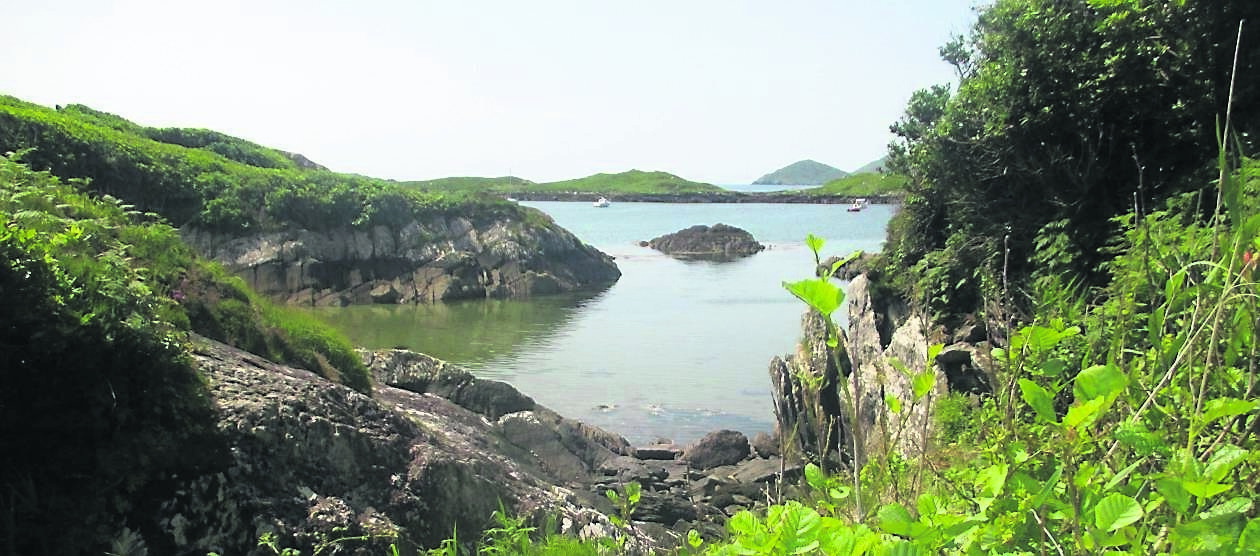
A secluded cove, the perfect place for Daniel O’Connell’s uncle to import tariff-free liquor, while out of sight.
An extensive Irish landlord while a devout Catholic, a pacifist who killed another in a duel, a committed husband despite rumoured infidelities, a high earner constantly in debt; Daniel O’ Connell is one of Irish history’s great enigmas. Born into a Catholic family in 1775, at Carhan, Cahersiveen, Co Kerry, just as the Penal Laws were being repealed, he was raised at elegant Derrynane House by his wealthy, childless and sometimes liquor smuggling uncle, Maurice "Hunting Cap" O'Connell.
Enabled by wealth to have an education that few Irish Catholics could aspire to in the 18th century, he was sent by his uncle to France and schooled by the Jesuits at the renowned Saint Omer College. Here, he witnessed the intense violence of the French Revolution and was eventually forced to flee from France. The trauma of this experience appeared to instil within him a lifelong hatred of mob violence. Afterwards, he consistently opposed bloodshed to achieve political ends by famously stating, “No political change is worth one drop of human blood."
Having studied law in London, he returned to Ireland, where fortune smiled benignly upon him. Legislation preventing Catholics from becoming lawyers was repealed in 1793 and this allowed O’Connell to qualify as a barrister and begin practising at the Irish Bar.
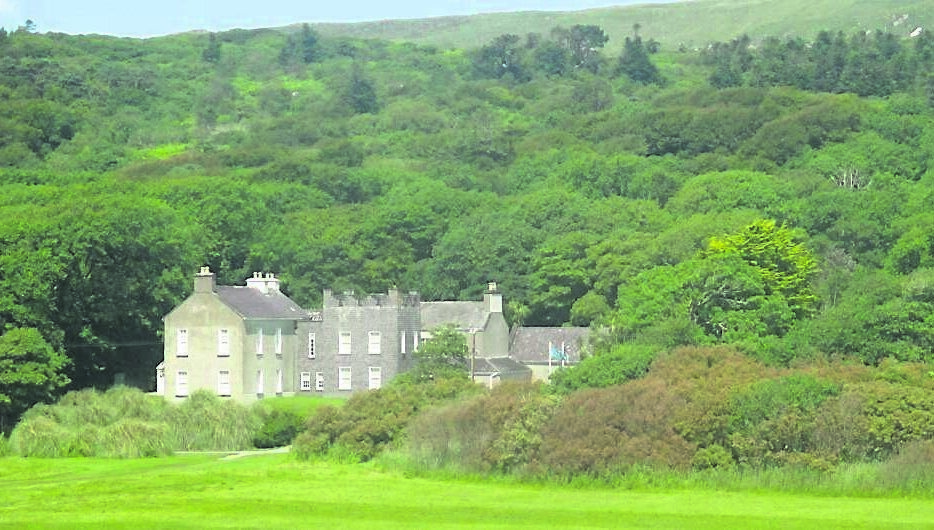
A brilliant advocate, orator, and defender of civil liberties, he pioneered peaceful mass protest as a means of achieving political reform. Later leaders, including Mahatma Gandhi and Martin Luther King, successfully adopted these non-violent methods to drive profound societal change. Known as “The Irish Liberator,” his greatest achievement was Catholic Emancipation in 1829. Restoring civil and political rights to Roman Catholics in Britain and Ireland, it also enabled O’Connell become the first Catholic MP in the British Parliament.
Despite a hectic lifestyle and the difficulties of travel in the early 19th century, Daniel returned regularly to Derrynane House, which he regarded as his spiritual home. Having inherited the Estate in 1825, he spent nearly every summer there to escape the unrelenting pressures of Dublin and London. As an antidote to political and financial stress, he enjoyed exploring with his hunting dogs, the dramatic landscape of Iveragh, which he described as “the wildest and most stupendous scenery of nature.” Today, the landscape he roamed is preserved as the Derrynane National Historic Park, where visitors experience the same tranquil woodlands, bays and beaches that so captivated The Liberator.
Arriving recently to follow in the footsteps of O’Connell, I set out from the carpark of Derrynane House to follow the Mass Path Loop. A green lane led me to coastal dunes adorned by a mass rock used in Penal times. Going right, I sauntered a breathtaking expanse of white chalk sand, which must surely be a contender for the title of Ireland’s most attractive beach.
In the past, Derrynane was a remote Irish-speaking area, which prompted me to reflect on yet another O’Connell enigma. Despite being a native speaker of Irish, he saw little value in maintaining the language. Happy to speak it when in Kerry, he nevertheless urged its replacement with English, which he regarded as the language of business and progress.
Next to capture my curiosity was the ancient monastic site on Abbey Island. The ebbing tide allowed me walk dry-shod to the small island for a visit to the O’Connell family mausoleum. While O’Connell himself is buried in Glasnevin Cemetery, this ancient burial ground is the last resting place of several family members, including Daniel’s beloved wife Mary and his uncle, Hunting Cap.
Recrossing to Derrynane Beach, I bid adieu to the happy sunworshippers
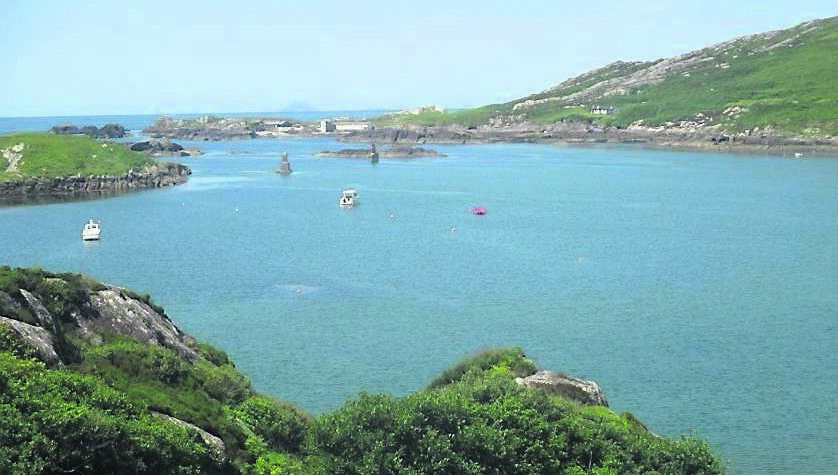
adorning the sand and continued along an enclosed track and a minor road leading to a secluded harbour surrounded by high ground. An ancient mass path now ascended through natural woodland before dropping to a most beguiling little cove, which immediately seemed like the perfect place for Hunting Cap to import tariff free liquor, while safe from the prying eyes of the law.
Afterwards, the ascent of a rocky slab led back to the Mass path and soon after to Bealtra Pier. In penal times, the faithful from the now uninhabited Scariff and Deenish islands would land their currachs here before walking to join the mainland community in prayer at the mass rock I had passed earlier.
It was uphill now on a minor road with great photogenic views unfolding over Derrynane and then dissolving into the dreamy mountains of the Beara Peninsula beyond Kenmare Bay. After about 1.5 km, a finger sign pointed right along the Kerry Way. This led past the poignant ruins of famine-era homesteads, before descending through luxuriant native woodland, to reach the Derrynane entrance road. Here, it was right and back to the great house for a welcome coffee after a moderate but lovely outing of about 7km.

CONNECT WITH US TODAY



Be the first to know the latest news and updates