Resourceful raptors: Sky dancing hen harriers are fierce survivors
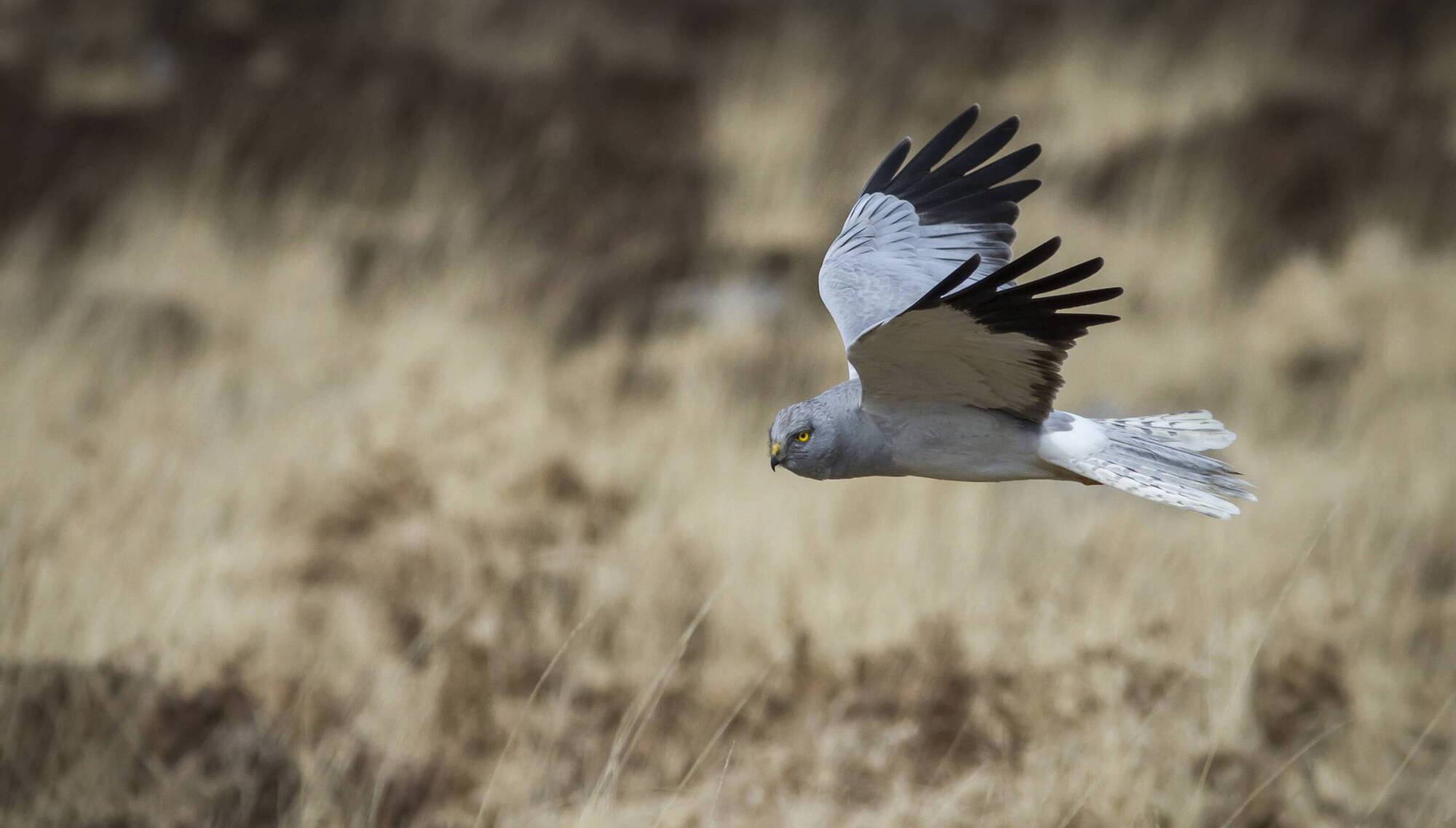
A male hen harrier, with its grey-white plumage and black wingtips, it resembles a gull in flight. Picture: Mario MacRory
–
The says that ‘harrier’ may derive from the Old English ‘hergian’, meaning ‘plunderer’, a term the Anglo Saxon Chronicle uses when referring to Viking raids on 9th Century monasteries.
The fox-hound packs of Oscar Wilde’s “pursuit of the uneatable by the unspeakable” are known as harriers. So too were the jump-jets of the Falklands War. For ornithologists, however, harriers are birds of prey.
Prior to the re-introduction of eagles and kites, the hen harrier was our largest hawk, apart from the buzzard. The sick man of the raptors, it has long been an endangered species. However, in a recent statement, minister of state for nature Christopher O’Sullivan sounded an optimistic note. The bird’s survival prospects, he believes, are improving.
Although accused of killing domestic chickens, the hen harrier is no marauding Viking. A low-level, leisurely flier, it quarters moorland habitat rather casually. Flapping its wings half a dozen times then gliding, it holds them in a deep V. This ambush predator pounces on mice, frogs, and ground-nesting birds. With its grey-white plumage and black wingtips, the male harrier resembles a gull in flight. The brown-plumaged female is larger than her mate, as is generally the case with birds of prey.
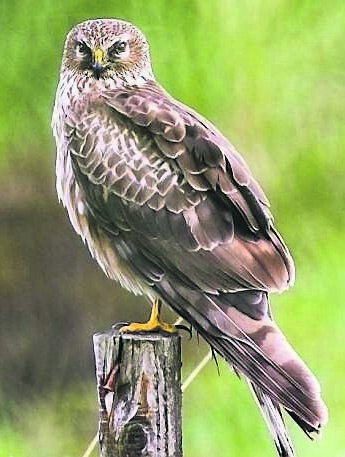
An préachán cearc has another name: “Sky-dancer”. Males, and occasionally females, stage aerobatic displays to potential partners. The ritual may culminate in a spectacular “food pass”, where the male tosses a juicy morsel to his mate.
The fortunes of Irish hen harriers have fluctuated wildly. In , Pat Smiddy and co-authors say that this was “a common resident” in the mid-1800s. Fifty years later, however, it had almost disappeared as a breeding species in Cork. Richard Ussher and Robert Warren, writing in 1900, claimed that harrier numbers were decreasing “in many mountainous districts”.
But the bird’s fortunes had improved by the early 1950s. In 1966, Robert Ruttledge noted that “breeding was known to take place in six counties” with “at least 34 pairs” nesting. Extensive afforestation was underway; the young conifer plantations offered ideal harrier breeding locations.
Regarded as vermin, birds of prey were still being shot. Game-keepers poisoned and cruelly gin-trapped these unfortunate birds. Decline set in again during the 1970s. As the conifers matured, forests no longer offered suitable nesting habitat. Poisons, such as the notorious DDT, were widely used. By the early 1980s, only three harrier breeding pairs remained in Co Wicklow.
Active persecution and poisoning are less of a threat nowadays, but our intrepid harrier faces new challenges. Its formerly remote moorlands are being visited increasingly by people, their dogs, and even the occasional motorbike. Harriers, however, are said to be relatively tolerant of disturbance. A Norwegian pair even nested within 10m of a railway line.
Climate change is a more serious threat. Rising temperatures lead to fires in forests and moorland. Windfarms are needed to help reduce our dependence on fossil fuels. The jury is still out as to extent to which slashing wind-turbine blades kill these birds.
But, against all the odds, this resourceful raptor has managed, somehow, to survive. Minister O’Sullivan may have grounds for optimism.

CONNECT WITH US TODAY



Be the first to know the latest news and updates