Anja Murray: Ireland’s seahorses and the seagrass meadows they call home
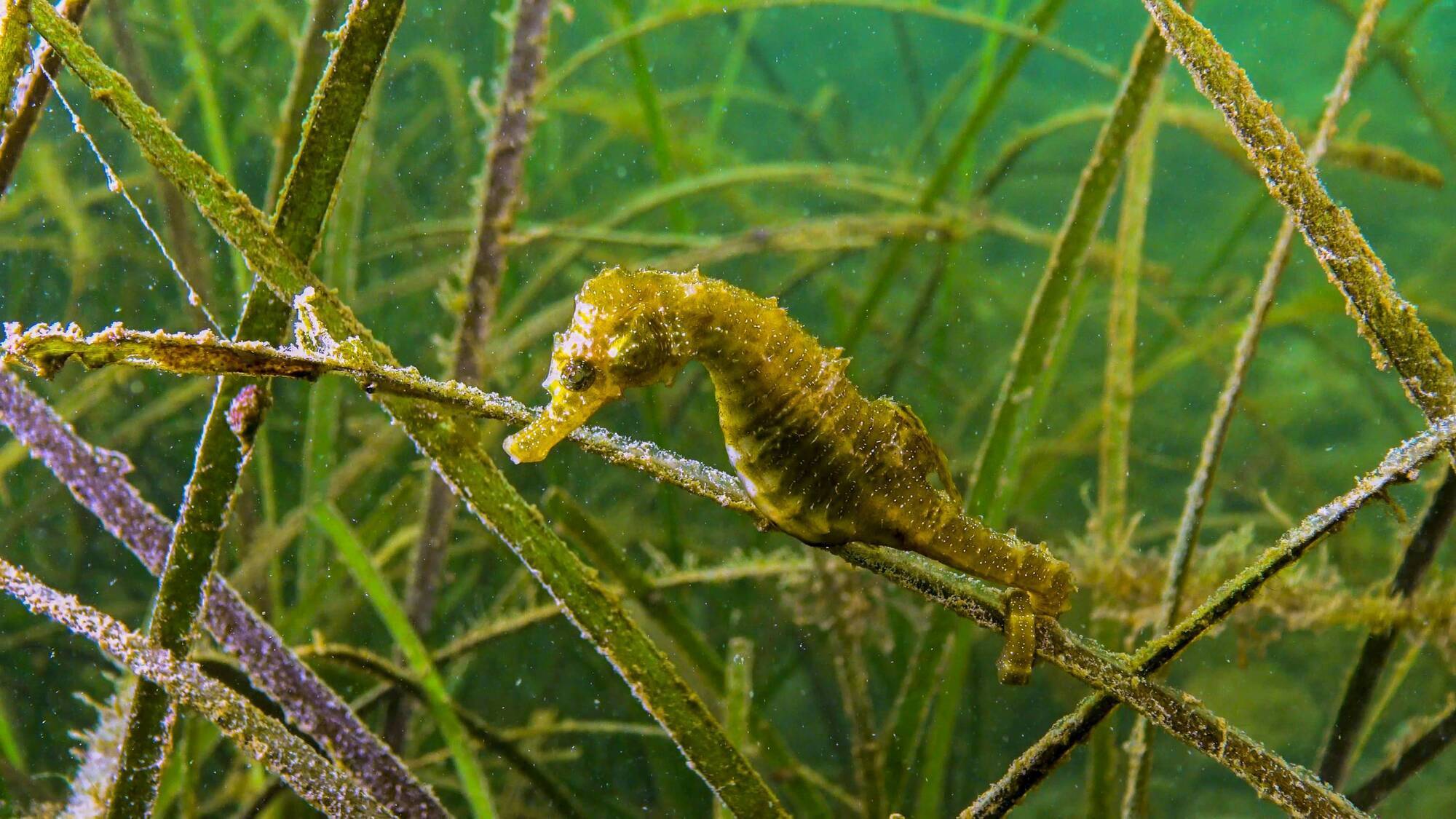
A short-snouted seahorse (Hippocampus hippocampus) in the thickets of sea grass in the Black Sea in Odessa Bay. There have been only seven records of the short-snouted seahorse here, the earliest from 1837 and the latest dates to 1956.
Seahorses are intriguing, familiar to most of us through television documentaries and captive breeding programmes. We know that they live in the seas around Ireland, though sightings are rare. Their name in Irish is Each Uisce, meaning “water spirit.” There have been only 7 records of the short-snouted seahorse here, the earliest from 1837 and the latest dates to 1956. Another species which might reasonably be expected to live in Irish marine waters, the long-snouted seahorse, has been sighted before but there are no official records of its presence here, until a few months ago.
In February, someone taking a stroll along Ballynamona Strand in Cork spotted something unusual washed up on the shore. Rita Mahon was enjoying a stroll along the beach, enjoying the break in the weather after weeks of winter storms. She spotted a small, skeletal thing washed up against the sand dunes as they returned to the car park, and decided to look more closely.
Fortunately, Rita submitted a photo to the citizen science online portal Explore Your Shore! Big Beach Biodiversity survey with details about where and when it was seen.
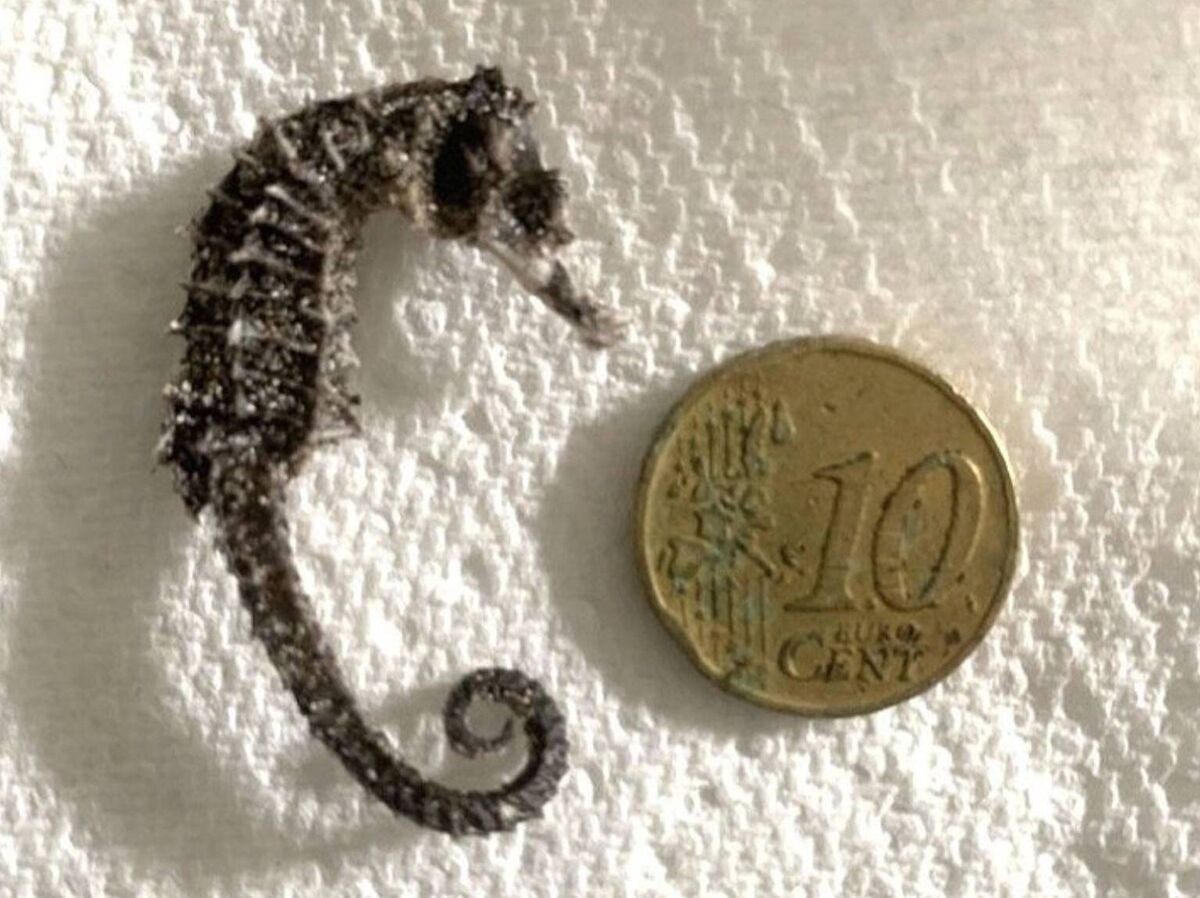
The skeleton turned out to be a dead seahorse. The record was validated by experts, who confirmed it to be a long-snouted seahorse. This is now the very first record of this species for the National Biodiversity Data Centre.
Now that more people are submitting records as part of such citizen science efforts, we can expect more exciting finds in the future. Another citizen science survey is highlighting the previously unknown extent of seagrass meadows around Irish coasts, which are the main habitat for seahorses. Thanks to exploration and mapping by volunteers with Coastwatch Ireland’s national seagrass survey, almost 100 previously unrecorded seagrass meadows have been recorded all around Irish coasts. These newly identified and mapped habitats are crucial repository of juvenile fish as well as storing huge quantities of carbon.
Seahorses are one of the creatures that live among seagrass meadows, a kind of fish, even though they don’t look or behave much like a fish. Unlike most fish, seahorses carry themselves upright. Instead of swimming through the water with sleek fish-like bodies, they spend most of their time clinging with curly tails to strands of seagrass or seaweed stems. They have no scales, but instead a protective armour of bony plates and spiky spines.
Seahorses are famously poor swimmers, moving awkwardly and slowly through the water. It’s no surprise that seahorses keep themselves mostly to the safety of sheltered seagrass meadows, where currents are muted and their food is easily accessible. Seahorses’ diet includes small crustaceans such as shrimp, zooplankton, and tiny fish.
To disguise themselves, seahorses are able to shift their colours to blend with the blues, greens and yellows of their habitat — or to impress a potential mate. Seahorses are renowned for elaborate courtship and for their famously shared approach to reproduction. Potential pairs approach each other; the male brightens, blushing yellow in a bid to attract her admiration. If she is interested, they may swim side by side, holding tails like we might hold hands.
The next step in their courtship is to both grip the same strand of seagrass and wheel around in unison at dawn. If the dance goes well and their bond is confirmed, the pair rise together from the meadow, spiralling toward the surface of the sea, snout to snout.
The female has the eggs, and once they are fertilised, she will place them into a pouch on the male’s front belly. He is the one who effectively carries the pregnancy, tending to the young in his pouch and ensuring they receive sufficient oxygen and nutrients. Each morning, she visits him, and each morning they reinforce their bond with colour changes, tail-holding and gentle dances. When the baby seahorses are fully formed and ready to be born, their fathers have muscular contractions to push them out in to their underwater world.
Seagrass meadows and seahorses are just two of the many reasons why we need Marine Protected Areas (MPAs) in Irish marine waters. Rich seagrass meadows have been destroyed by bottom trawling and dredging on the seabed, both activities that churn up the entire infrastructure of these habitats and release the stores of carbon that have lain locked away for centuries.
Pollution, including nitrate runoff from agricultural land, also degrades seagrass meadows. As these habitats decline, so too do the seahorses, now considered endangered, along with the myriad of other wild sea creatures that live there.
The means to implement protection for fish spawning areas, such as seagrass meadows, is by identifying the key areas, giving legal protection as MPAs, and implementing evidence-based strategies to restore habitats therein. Not only can this help reduce the chances of extinction for seahorses, but it also offers much needed protection for fish and bird populations along with giving marine economies the security they need to be viable in the future.
The Marine Protected Areas Bill that has been due since 2021 is still caught up in unexplained delays within government. The little seahorse washed up on Ballynamona Strand is a small reminder of the richness out at sea and the urgency of protecting habitats while there’s still something to protect.

CONNECT WITH US TODAY



Be the first to know the latest news and updates