Lack of urgency identified in preparing for weather crises
A recent survey found that one-fifth of EU homes do not have any household measures to protect against extreme weather
Lack of urgency identified in preparing for weather crises

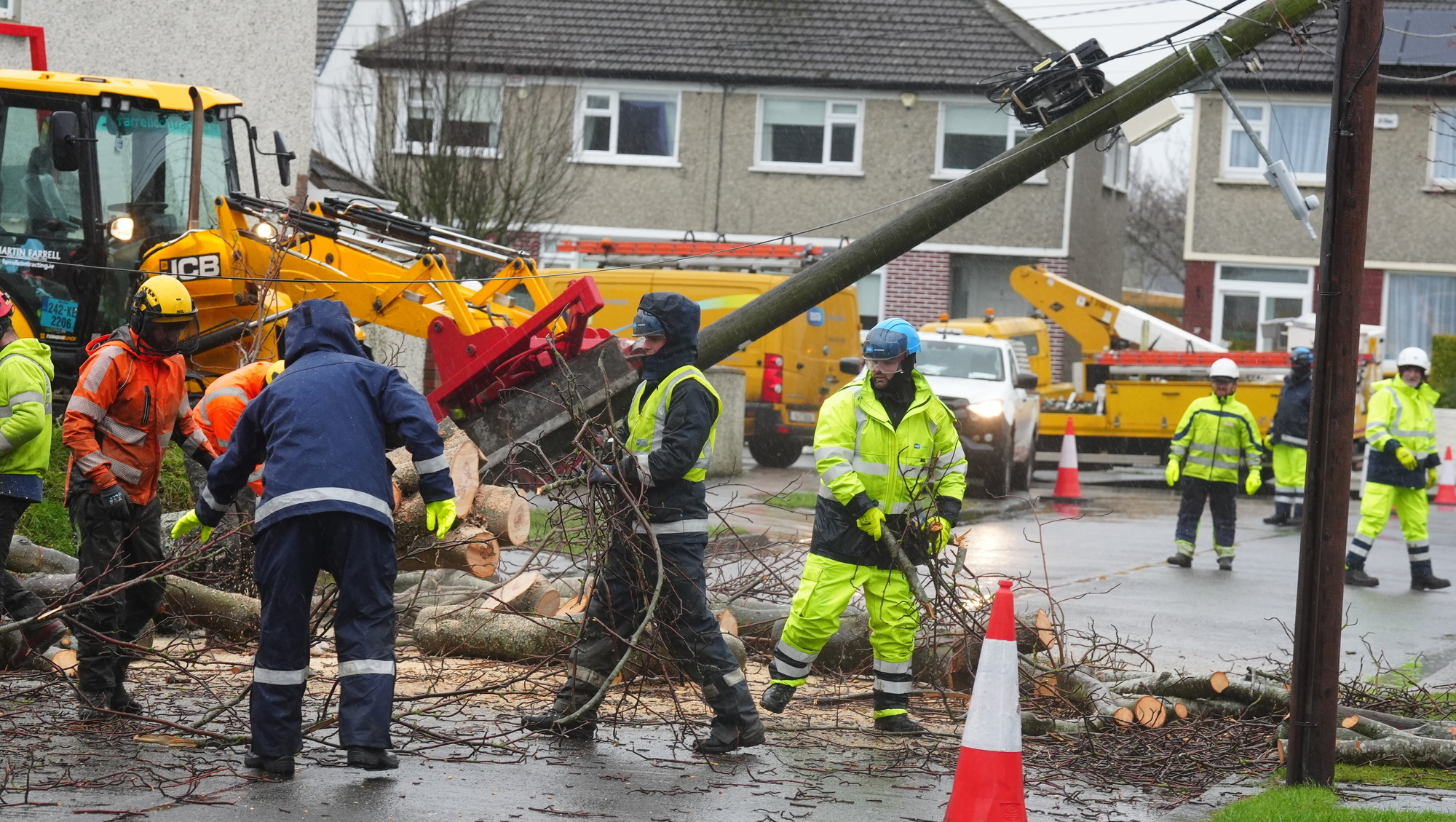
Workers clearing a fallen tree on Grove Park Drive in Dublin as ESB networks sought to reconnect homes and businesses across the country after Storm Éowyn wreaked havoc throughout the country in late January.

Searching questions remain about how seriously we’re taking the ever more frequent occurrence of so-called ‘extreme weather events’ in Ireland.

Prolonged heavy rainfall and consequent floods, already this year, have put the spotlight on damage to homes, businesses and land. More of the same is predicted due to climate change and, experts advise, people need to do much more in their homes.

Apart from obvious actions like improving insulation, securing roofs and keeping gutters free, we’re advised to use low energy demand (LED) lighting, to improve ventilation, to consider air conditioning and to get water collection tanks.

A recent survey found that one-fifth of EU homes do not have any household measures to protect against extreme weather.

So far during this exceptionally wet year, plenty of lessons are being learned. Terms like red and yellow alerts in Met Éireann weather warnings are becoming part of everyday conversation.

But, in various studies, one of the most pressing issues identified is the lack of urgency in preparing for weather crises. Climate change is often perceived by people as a distant concern rather than an immediate crisis requiring coordinated action.

Competing priorities

How are we going to cope with increasingly severe impacts, including rising temperatures, heavier rainfall, floods, drought and coastal erosion, to mention some?

Studies by the EPA and Dublin City University (DCU) find that necessary action competes with short-term political and economic priorities.

As well as that, there’s a need for more co-ordination between different agencies. You think, for instance, of storm damage and power cuts, early last year, caused by falling trees. That underlined the need for more cooperation between, say, the ESB, Coillte and others in forestry, as well as road/transport authorities.

 A huge fallen tree as Storm Bram passed through  Shannonvale, West Cork, in December last year which took down an ESB power line.   Picture: Andy Gibson
A huge fallen tree as Storm Bram passed through  Shannonvale, West Cork, in December last year which took down an ESB power line.   Picture: Andy Gibson

The country is underprepared for the challenges already here, according to the afore-mentioned studies. Costs of dealing with climate change issues are currently estimated at up to €800 million per year and are projected to rise into the billions by 2050.

Action is called for in three critical sectors: agriculture, flood risk management, and water services. For example, while there’s been an abundance of water so far this year, climate change will also result in lengthy dry spells.

We could be facing drought and water shortages, which brings into focus the need for water harvesting (storage).

The latest EU report shows that Europeans are underprepared for the increasing frequency and magnitude of heatwaves, flooding and water shortages in their homes.

“Climate change has an impact on the lives of four in five EU citizens, but only a quarter of them are equipped with appropriate measures to cope with it,’’ says European Environment Agency executive director Leena Yla-Mononen.

CLIMATE & SUSTAINABILITY HUB

More in this section

Revoiced

Newsletter

Sign up to the best reads of the week from irishexaminer.com selected just for you.

Cookie Policy Privacy Policy Brand Safety FAQ Help Contact Us Terms and Conditions

© Examiner Echo Group Limited