Damien Enright: Encountering a flock of whimbrels at Dunworley, West Cork
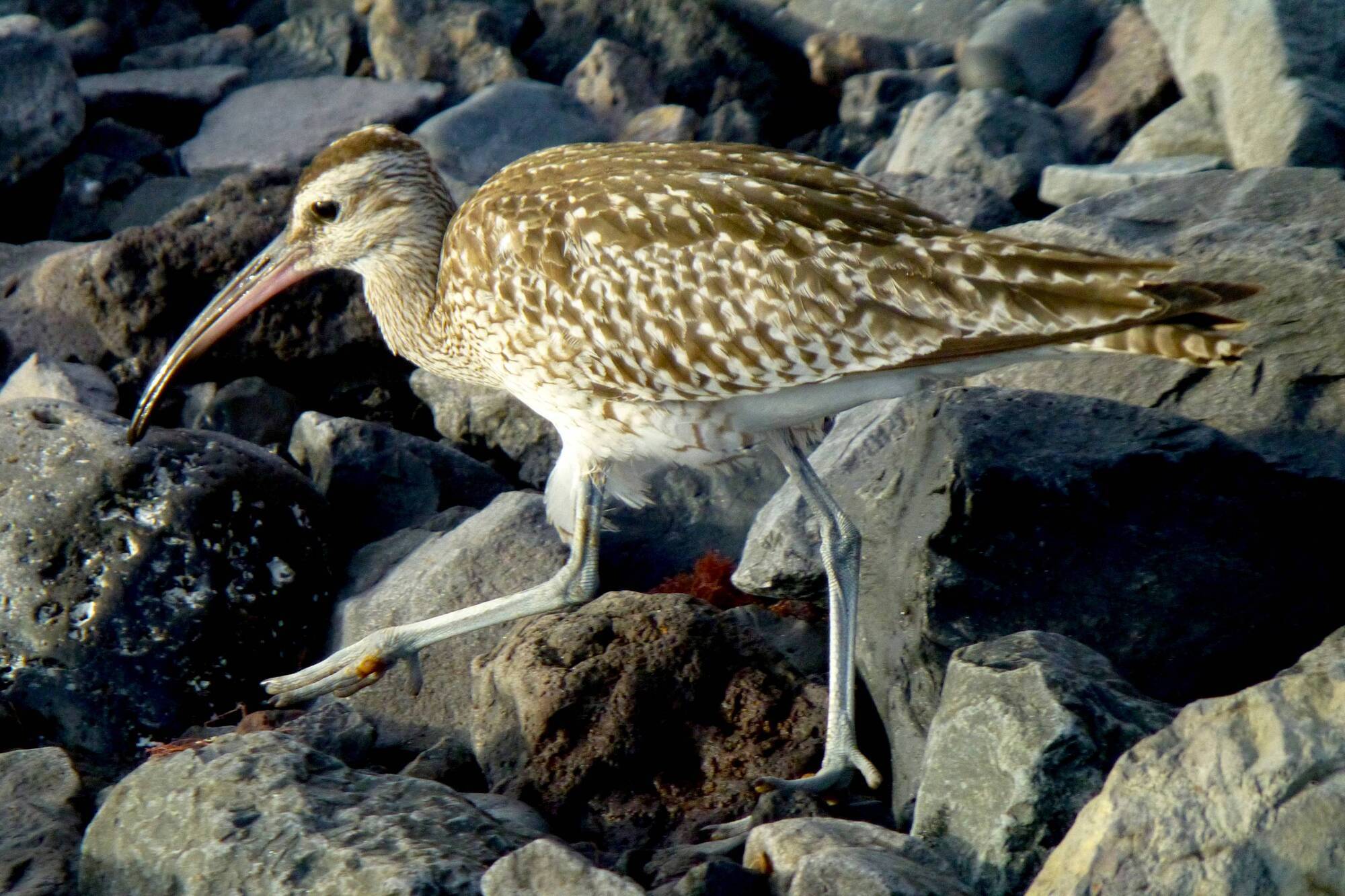
A young whimbrel on migration from Arctic or Icelandic breeding grounds to Africa.
April has stepped aside for May and so far, it's the same-old-same-old, thank the Gods. Yes, there have been declines in nature everywhere but I see here in front of me on the great empty canvas of Courtmacsherry Bay, the same birds as always: the shelduck, gorgeous in breeding colours and the godwits, sporting red breasts, and the whimbrels stopping off on their flight from west Africa to Iceland where they will scrape out a nest on the tundra and hatch their clutch of eggs. We'll see them again in August and September and here, in temperate West Cork and Cork Harbour, individuals increasingly overwinter with us.
On Thursday evening, my wife, walking with a friend at Dunworley, West Cork, saw a small flock of birds on the clifftop overlooking the beaches and wondered what they were. The sun was setting behind them; their plumage, vivid in the evening light, was brown and fluffed up, almost farmyard-hen like; they were long-legged, with long necks, but she couldn't describe the beaks, impossible to see with the strong sun behind them. The flock rose and flew to a field (on which the loneliest ex-pub in Ireland is currently for sale) on the opposite of the road. I went to check them out the next day. They weren't there.
However, walking along the edge of the bay, I couldn't but notice an unusual number of whimbrels foraging everywhere along the shore and in the shallow channels made by the receding tide. Brown specks on the sand bars and water, there were hundreds within view on the area of the bay I could see, perhaps a fifth of its entire extent. The birds at Dunworley were, almost certainly whimbrels. They may well have just arrived having flown from wintering habitats in west Africa or as far south as Namibia. They are heading for Iceland or the northern Norwegian fjords where they will breed. Ireland and Britain are grub-stops where they rest and feed for a few days en route.
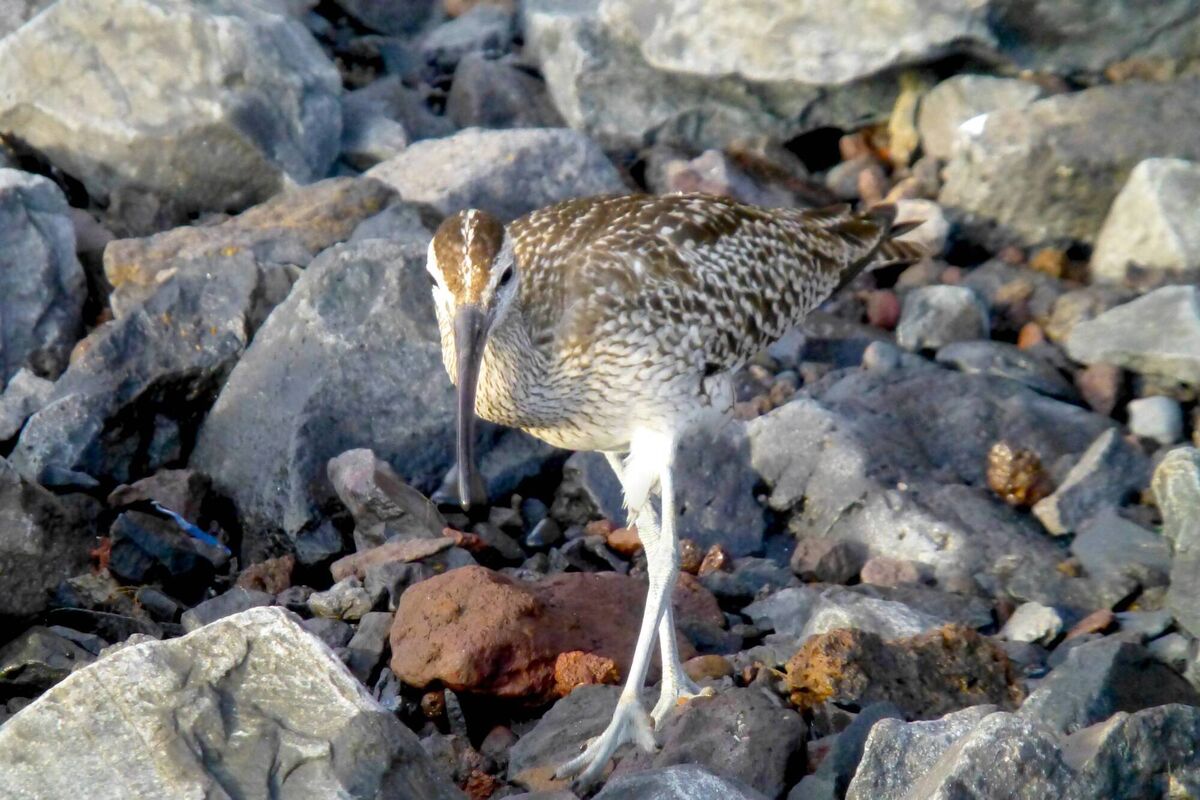
They are graceful birds and likely to be less spooked by our attentions than the small redshanks and greenshanks seen in the same environment. Smaller than curlews, but having a similarly long, down-curved bill, they stalk the mudflats and seaweed-covered rocks for sandhopper and shrimps and small crabs. They can be distinguished from curlews by their lighter build, and a dark line through the eye.
From curiosity, I searched through columns I wrote about my immediate environs on May 2 in the past, thinking it interesting to compare the 'Then and Now' of the same environment.
For May 2, 2005, I wrote "The light on the estuary is grey, and the water still. When the evening sun breaks through and dyes it pink, shelduck cruising in the shallows are all lit up, like painted ships upon a painted ocean. Nearby, the mud that edges the channel is patrolled by ranks of black-tailed godwit, very elegant on their long, thin legs, with some now dressed in brick-red breeding plumage. There are dunlin too, scurrying along in dense little groups, heads down, probing the mud, intent and busy, as if they don't have a moment to loose. One or two are also in mating colours, black breasts and chestnut backs.
"There are at least one hundred whimbrel roosting along the salt marsh edges, on their way from Africa to Iceland; they are like small curlew, with shorter bills and three dark stripes running horizontally along their heads. Their call is a sequence of seven whistling notes, equal in length and volume, and not hard to imitate. I'm told they can be easily attracted by anyone who can mimic them, which I can't. Sometimes, they are heard over Cork Harbour at night, as flocks pass on migration.
"Our wood is full of bluebells and ramsons, but I found a wood not far away entirely colonised by celandine, stretching like a field of gold under the trees. There were few bluebells and no ramsons. Badgers had a made a playground amongst the celandine, an area of large holes, fresh mounds of earth and flattened flowers. They are immensely industrious. They seem to be constantly excavating new setts, and the amount of earth they move is prodigious, like furry JCBs.
"With the sun and rain, everything is fresh in the hedges and ditches, so many shiny things, young ivy and harts tongue ferns, and the faces of buttercups that shine as if sprinkled with gold powder and varnished."
Last week, we had exceptionally lovely weather for late April, albeit with a touch of a scaraveen, a cold wind, a 'garbh shion na gcuach', which means 'the rough weather of the cuckoo'. Like the exceptional spring in 2019, global climate change is the likely cause.
CONNECT WITH US TODAY



Be the first to know the latest news and updates