World first — hippopotamus has cataract surgery in Dublin
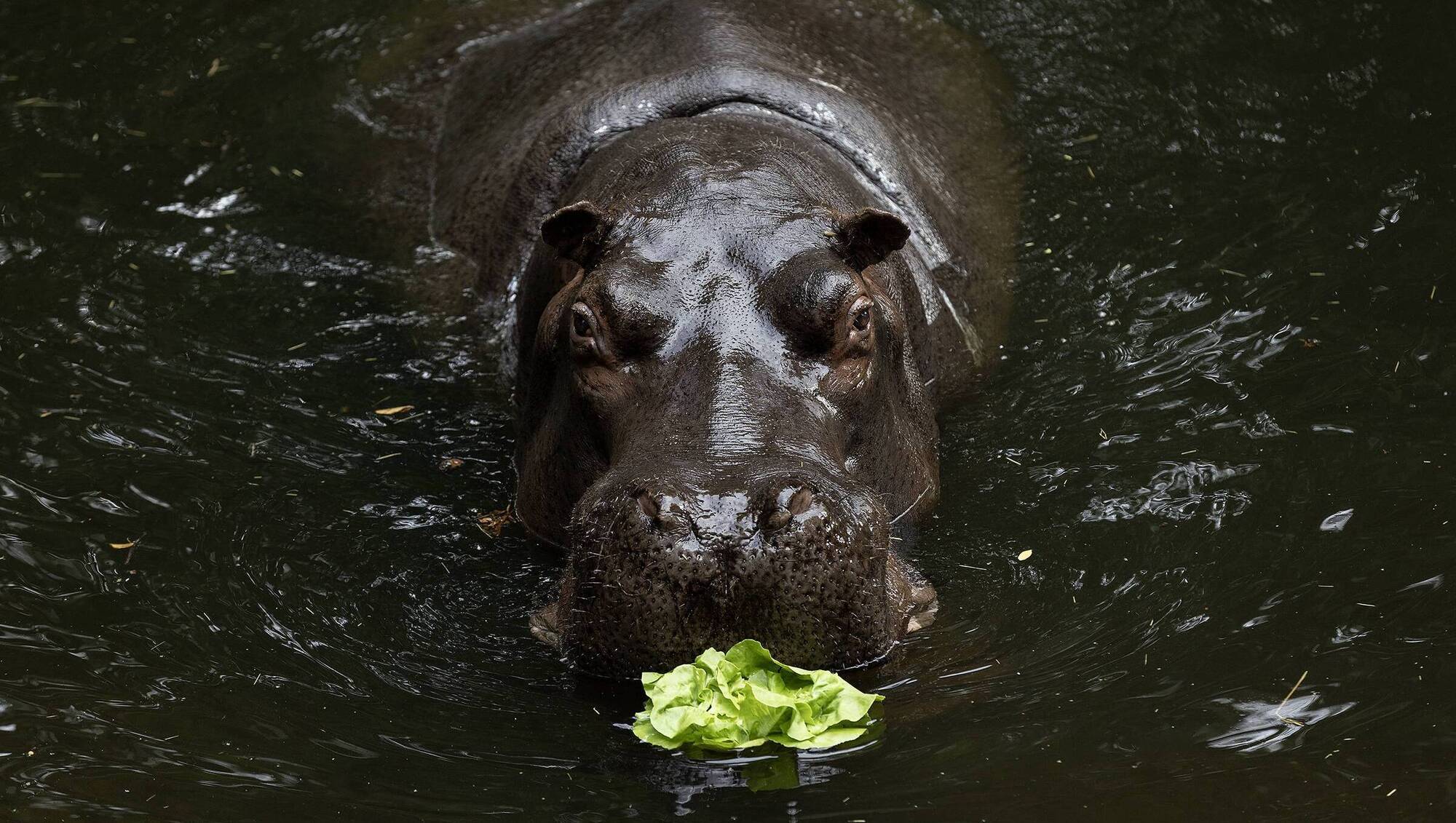
Imani, the 18-year-old female common hippopotamus at Dublin Zoo. The hippo successfully underwent the first recorded cataract surgery on this species worldwide, performed by Dublin Zoo’s animal care team. Pictures: Patrick Bolger Photography
An 18-year old hippopotamus at Dublin Zoo is back navigating obstacles with ease and even running following successful — and historic — cataract surgery.
Dublin Zoo’s animal care team has successfully undertaken the first recorded cataract surgery to be performed on a common hippopotamus worldwide. The procedure represents a major achievement in veterinary medicine.
Imani the hippo has a long-standing visual impairment, and this procedure was performed by a collaborative team of Dublin Zoo and external veterinary experts to give her vision in her left eye and improve her life. The successful operation was the culmination of months of planning and preparation to ensure Imani was ready for the life-changing procedure.
Imani had adapted remarkably well to her condition, navigating her environment by using her muzzle or lips and the distinctive pink feet that have helped make her a firm favourite with Zoo visitors.
However she naturally encountered difficulties due to her lack of vision. And because she had difficulty reacting to obstacles, she tended to move very slowly and carefully.
The Zoo’s animal care and veterinary teams have been monitoring Imani closely since the surgery, and there has been a noticeable positive change in her behaviour since her eyesight markedly improved. She now responds to visual stimuli, navigates obstacles with ease — and, the biggest indication of success, she is much more confident in her movements, even running.

As part of Dublin Zoo’s monitoring of Imani, she is wearing a bespoke sensor bracelet on her front leg to monitor her movement and welfare post-surgery. The sensor is an accelerometer and gives a real-time summary of Imani’s activity over a 24-hour period, helping staff to understand her normal behaviour patterns and assess any variations that may indicate issues.
This is another first of its kind welfare innovation for the species, with Dublin Zoo working with colleagues in l’Oceanográfic marine park in Valencia and the Spanish Autónoma University in Madrid to build an algorithm which is validating the sensor data by cross-referencing it against live behavioural observations of Imani.
Imani’s case will be documented for publication in peer-reviewed veterinary literature to educate and inspire other zoological organisations worldwide, hopefully paving the way for other zoos to use the same sensors with animals in their care.

Frank O’Sullivan, veterinary surgeon at Dublin Zoo said: “This is a ground-breaking operation, and an extra-ordinary technical achievement. However, our primary concern was always Imani’s welfare. An enormous amount of time and care went into preparing Imani for the surgery, and seeing the marked improvement in her quality of life has made it all worthwhile. We don’t believe there is a record in scientific literature of any such operation, much less a successful one, being conducted on a hippopotamus anywhere in the world.”
Lucy Stratford, behaviour and welfare scientist at Dublin Zoo said: “Imani has made remarkable progress post-surgery. Dublin Zoo’s animal care, veterinary, and conservation and science teams have been observing her closely, with the help of an innovative bespoke sensor bracelet to monitor her movement and welfare."
"Given her visual impairment, Imani was understandably very cautious in all of her movements and behaviour before this intervention. Now that she has improved sight, it’s been great to see her become much more confident and active. It’s a powerful example of Dublin Zoo’s commitment to providing world-leading animal welfare," she added.

Imani is a 'common hippopotamus'. Common hippos live across sub-Saharan Africa in rivers, lakes, and swamps with reliable year-round water. Their nightly grazing shapes grassland structure, helping maintain open habitats, while their defecating in water introduces nutrients that support aquatic food webs, benefiting algae, microbes, and fish.
Common hippos are listed as Vulnerable (VU) on the IUCN Red List, facing a high risk of extinction due to habitat loss, poaching, human–wildlife conflict, and changes to water systems from dams and climate change. Populations have fallen by more than 30% in recent decades.