Damien Enright: La Gomera gives a taste of an older, simpler Canarian world
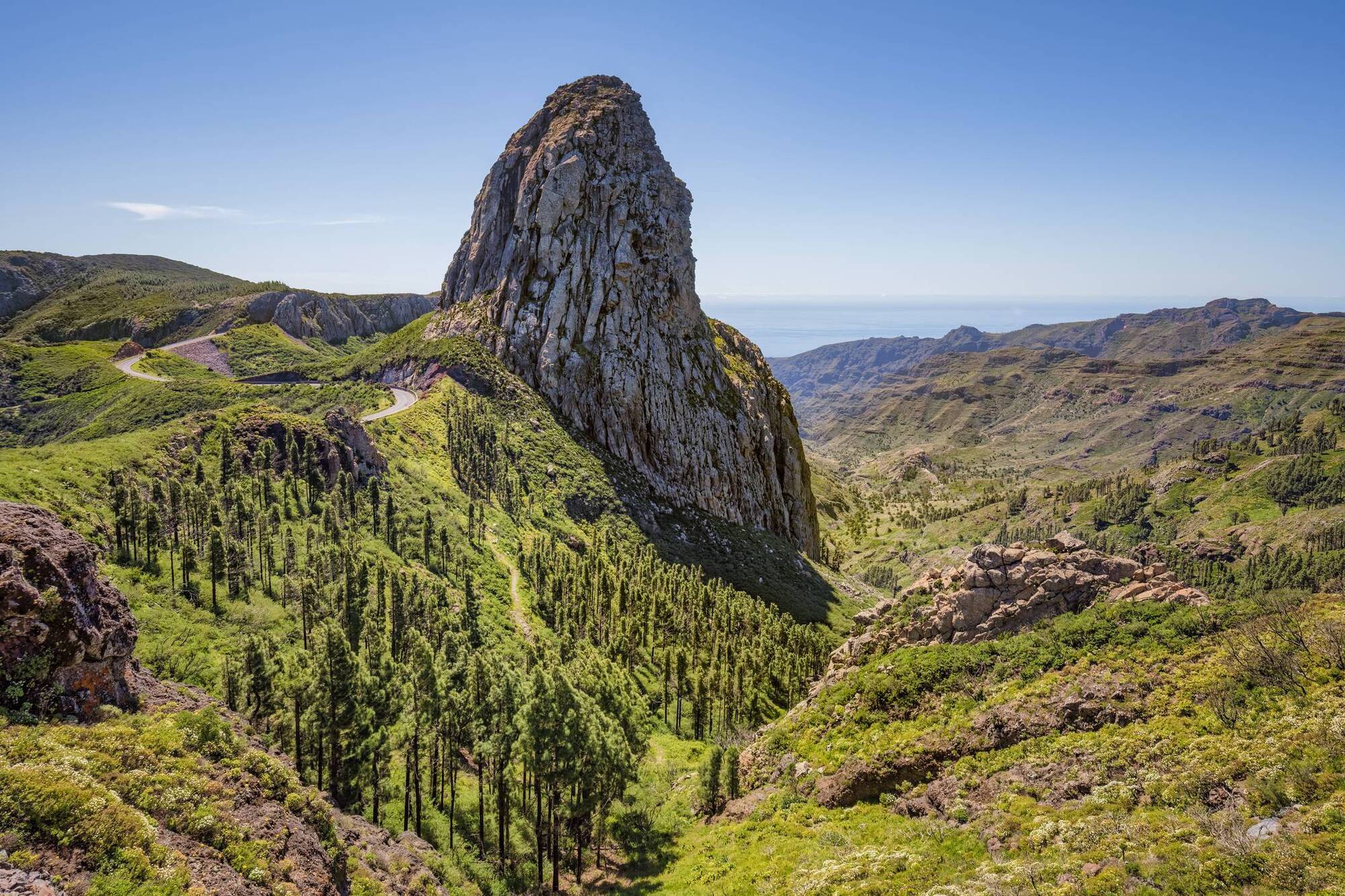
Roque de Agando is one of La Gomera's most striking features and is frequently used as a symbol for the island.
In West Cork three times over the Easter weekend, I was approached by visitors asking me about the island of La Gomera, this as a result of my annual columns and photographs of the island published in the Irish Examiner. I greatly enjoyed chatting with them. They had read about Gomera in my columns over the years. I'm told that this is the 188th column I have written about the Gomera and other Canary islands. I haven't counted them myself.
Two of those with whom I chatted over a drink had already spent holidays on the island and would be spending more. What I'd said about it had prompted them to go in the first place and, clearly, they hadn't been disappointed. People ask me about the island regularly, so, here's the full skinny as I know it...
For holidaymakers to Playa Las Americas and Los Gigantes in South Tenerife, Gomera is the smaller, less-well-known island behind which the sun sets in the western sea. It's an hour's ferry ride from Tenerife. There is an airport but from South Tenerife, it's quicker by boat. Nearest to Tenerife, the island's northwest was historically the most developed, with the small, attractive towns of Agulo, Hermigua and Vallehermoso retaining some fine old buildings. The island has a population of about 22,000.
For visitors seeking a break from 'packaged', high-rise Tenerife, crossing to Gomera for a day-outing or a few nights' stay will provide a taste of an older, simpler Canarian world. San Sebastian, the port town, has a gentle, 'colonial' quality. Buses radiate to all points, an excellent service used especially by walkers to reach the miles of forest and trails in the World Heritage Park on the long-since extinct volcano at the island's centre. In the town park, the first-ever building still stands, a tower where Christopher Columbus dallied with the black widow, the Condessa Bobadilla, the island's mistress. Later, before setting off to 'find' America, he heard mass in the town church, built a decade later and still extant.
The scenery of Gomera is everywhere awe inspiring and unavoidable. To go anywhere, one must ascend, and the roads are full of dramatic views. The roof of the island is Garajonay National Park, a World Heritage Site of vast, uninhabited cloud forests. Deep, green ravines ('barrancos') fall away, broadening and opening onto the sea.
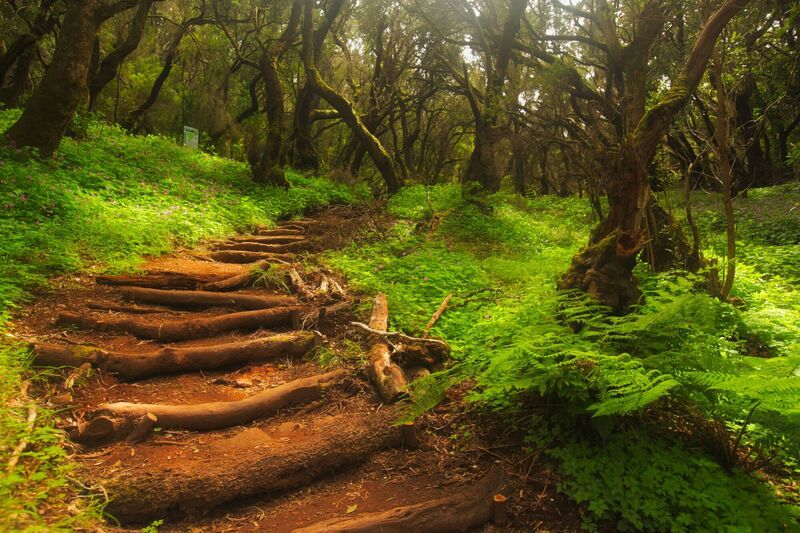
The island is a walker's paradise. Few motor routes existed until the 1950s and so there is a historic legacy of well-laid paths descending into the barrancos, each one a world unto itself, the slopes terraced with small fields of vines, maize, potatoes and vegetables, the valley floors spread with plantation of bananas, mangos and avocados. The few houses in remote hamlets may be seen as white dots from paths a thousand metres above. Wild flowers abound, the air smells of herbs, and there is perfect peace.
On the south west of the island, 30 miles from where the Tenerife ferry docks, is the massive southwestern canyon of Valle Gran Rey looking out at El Hierro and La Palma, site of the volcanic eruptions seen on TV screens worldwide six months ago. In 1981, when Valle Gran Rey was remote, with only a handful of foreign visitors, my wife and I and our first son lived there for a year, our accommodation a primitive but beautiful farmhouse on a verdant terrace. That was the first of our 40 years of extended visits. We notice how much has changed in the valley since.
While there are three times as many houses on the terraces as there were then, the scenery remains mind-boggling, spectacular and beautiful. The new houses are anything but an eyesore. Almost all are locally owned and lived in by Gomero farming families. They are beautifully kept, albeit very different from the few old houses and romantic ruins still to be seen.
It comes as a surprise to visitors to see them; how wealthy these farmers must be! However, the land they are built on was always family-owned, and often the sites of houses before them. The fact is that the Gomeros who built them are far from being peasant farmers. Decades ago they or their parents left the island and emigrated to Venezuela in the pre-tourist times when tomatoes or bananas were the island's only source of income and extensive plantations were owned by only a few. Happily, these emigrants made the wise decision to return before Venezuela's financial crash in 2010. For 40 years before, that country had been a booming petrostate but, unfortunately, it had a disastrous dependence on natural resource and neglected any sustainable economy in other sectors. Happily before Venezuela went bust, wise Gomeros returned with pockets full of money.
With this capital, they demolished or renovated the ruins they'd left behind them and replaced them with neat, three- or four-bedroom houses, all interestingly different to match the contours of the terraces on which they were built and only rarely more than one or two storeys tall – sensible planning laws prohibited the high-rise buildings on mainland Spain and on other islands. The gardens around the dwellings are – thanks to the climate, industry and historical connection of the land with the people – spectacular at all times of year, not only for flowers and shrubs but for fruit trees and vegetable plots laid out in perfect harmony.
Gomeros take great pride in their island and in their homes. My family takes some pride in being welcomed there.

CONNECT WITH US TODAY



Be the first to know the latest news and updates