‘I gave up hope of more children to save my life’

Sinéad O’Reilly was a young mum of two when blood in the toilet led to a shock diagnosis and a stark choice
‘I gave up hope of more children to save my life’

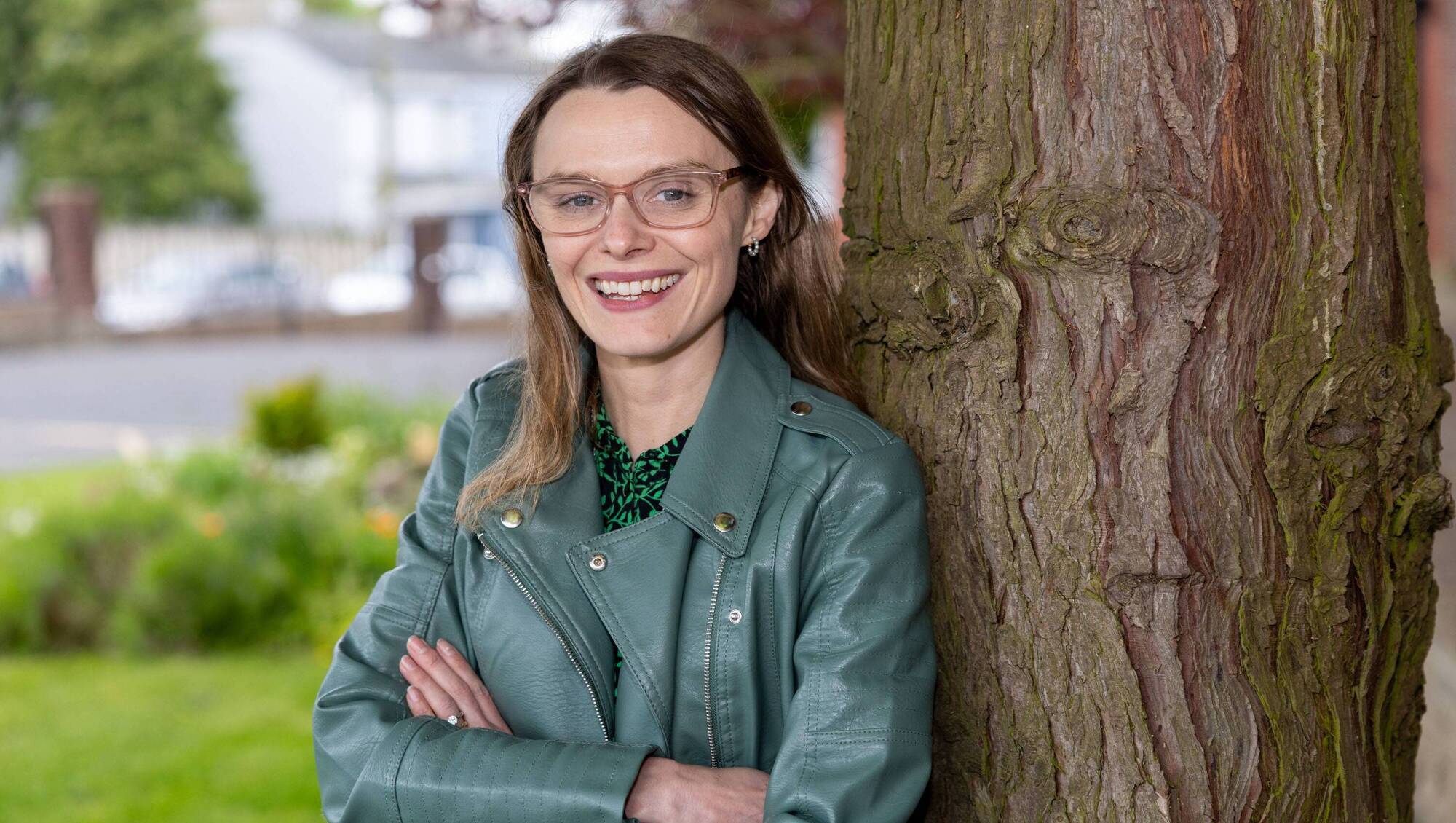
Sinéad O’Reilly has Lynch syndrome, which predisposed her to bowel cancer. Picture: Alf Harvey

For many years, Sinéad O’Reilly, who lives in Dublin with her husband, Alan, and their two sons (aged three and five), had noticed occasional light bleeding when going to the toilet. But it wasn’t until the blood turned dark that she began to get somewhat concerned — and as it coincided with stomach pains, she went to her GP to find out what the problem was.

“Two years ago, I had a bit of a health scare regarding my memory, but had an MRI, which came back clear,” she says. “Looking back, it was probably my body telling me that there was something wrong, because in August 2024, I began to notice dark blood when I went to the bathroom, and was a bit alarmed. I went to the GP, who thought it might be a tear or dietary-related and told me not to worry. He is a very good doctor, but I still had a nagging feeling that something more serious was wrong.

“I left it for a couple of weeks to see if it would improve, but the stomach pains and bleeding intensified, so I went back to the doctor and was referred for a colonoscopy. I also had blood taken and did a stool sample.”

She eventually underwent a colonoscopy in February 2025: “It was a long time after going over and back for appointments and blood tests.”

She attended the procedure on her own, as her husband was working and her parents were minding their children.

When it was over, I was told that I had to have a CT scan the next day as a follow-up. But the doctor then came over and told me that they had found a tumour. I just burst into tears, and he told me not to cry as they didn’t know what type it was yet.

“While I was very upset to start with, my faith has always been very important to me, so I just told myself to hold on to that and to trust in it. At that moment, I came to a place of acceptance and just told myself that I would be able to deal with it.”

The 36-year-old, whose children were aged two and four at the time, says that doctors told her that she could have been living with the tumour for years.

“I had also been living with terrible tiredness, so much so that I couldn’t stay up after 8pm at night,” she says. “And I had a pain in my back all the time, I was like an old woman. But every time I had blood taken, nothing showed up.

“When I found out that it was cancer, I was told I was going to be fitted with a colostomy bag and then would have immunotherapy, which would reduce the tumour, so they could operate to remove it and reverse the colostomy.”

Following further testing, it was discovered that she had Lynch syndrome, an inherited genetic condition that increases a person’s risk of certain cancers, particularly of the bowel and womb. With so much new information to take in, the next few weeks became even more fraught as she was rushed to hospital with severe pain, which turned out to be an abscess on her ovary and led to sepsis. Once recovered, the temporary colostomy bag was fitted, and six weeks later she began immunotherapy treatment, which lasted for six months.

Due to adhesions between the bowel and the uterus, she had to decide whether to undergo a hysterectomy to ensure all the cancer was removed.

This procedure would not only put an end to her having more children but would also cause early-onset menopause. She decided to go ahead with the operation, saying it was “more important to stay alive for my children”.

“Initially, I was devastated about having to put an end to having another baby, but the children I already had were more important than that,” she says. “Going into early menopause was difficult, but I got a lot of help from the early onset menopause team [at the hospital] and was on HRT within a week of my operation, which really helped with symptoms. I’m still dealing with some issues, but otherwise I’m doing fine.”

The signs and symptoms

Knowing the symptoms of bowel cancer is crucial, and Dr Emily Harrold, consultant medical oncologist at the Trinity St James’s Cancer Institute, says that if anyone has concerns, they should seek medical advice, as it can happen at any age.

“We are asking people to familiarise themselves with the signs and symptoms,” she says. “Often, these symptoms are caused by something other than bowel cancer, but it is vital that you get checked by your GP if you’re concerned.

“Sinéad O’Reilly is sharing her story of bowel cancer at a young age to highlight a situation that is too common — dismissal or lack of awareness of the symptoms, particularly in younger patients. She is also highlighting the importance of awareness of family history, as her risk was increased due to an underlying genetic cancer predisposition —Lynch syndrome.”

Harrold says that it is also important for anyone diagnosed with colorectal cancer before the age of 50 “to be referred cancer genetics service for consideration of genetic testing”.

“Colon cancer is the leading cause of cancer-related death in men and women under the age of 50 in the US, and this is a trend we are seeing globally for reasons that are not yet fully clear,” she says.

“In St James’s Hospital alone, we have seen a doubling in the number of patients presenting with early-onset colon cancer when we compare 2024 to 2025.”

Some young-onset cancers are linked to an underlying predisposition, which has implications for the patient’s treatment and ongoing screening, as well as for other family members.

“Many of the patients we are seeing, however, do not have an inherited genetic reason for the development of early onset cancer and research efforts are ongoing to [determine] why this is happening,” says Harrold.

Patients can benefit from tailored care through the young-onset cancer programme at St James’s Hospital. “The programme aims to provide a framework built on international best practice for the care of young adult patients with colorectal, upper gastrointestinal, hepatobiliary, and head and neck cancers, diagnosed between the ages of 25 and 50. The programme commenced in January 2025, and has so far processed more than 100 patient referrals, which highlights the real need for a programme like this in an Irish context.”

About Lynch syndrome:

It is an inherited genetic condition that increases the risk of developing certain cancers;

People with Lynch syndrome are more likely to develop bowel (colorectal) and endometrial (uterine) cancer, often at a younger age than usual;

Other cancers linked to Lynch syndrome include: Ovarian, stomach, prostate, and urinary tract;

Approximately two to five in every 100 people diagnosed with bowel cancer have Lynch syndrome;

It is diagnosed through genetic testing, which looks for inherited gene mutations linked to the condition.

“It is very important to highlight that not everyone with Lynch syndrome will get cancer, and it is extremely important to attend routine screening, as advised by your doctor, if you harbour the Lynch syndrome gene mutation,” says Amy Nolan, the Irish Cancer Society’s director of clinical affairs.

x

More in this section

Lifestyle

Newsletter

Eat better, live well and stay inspired with the Irish Examiner’s food, health, entertainment, travel and lifestyle coverage. Delivered to your inbox every Friday morning.

Cookie Policy Privacy Policy Brand Safety FAQ Help Contact Us Terms and Conditions

© Examiner Echo Group Limited