I gave up meat for a month — here's what I learned

Helena Ni Chonchuir, Slán go Feoil. Helena at An Capall Dubh. Daingean Uí Chúis. Ronin Films for RTÉ
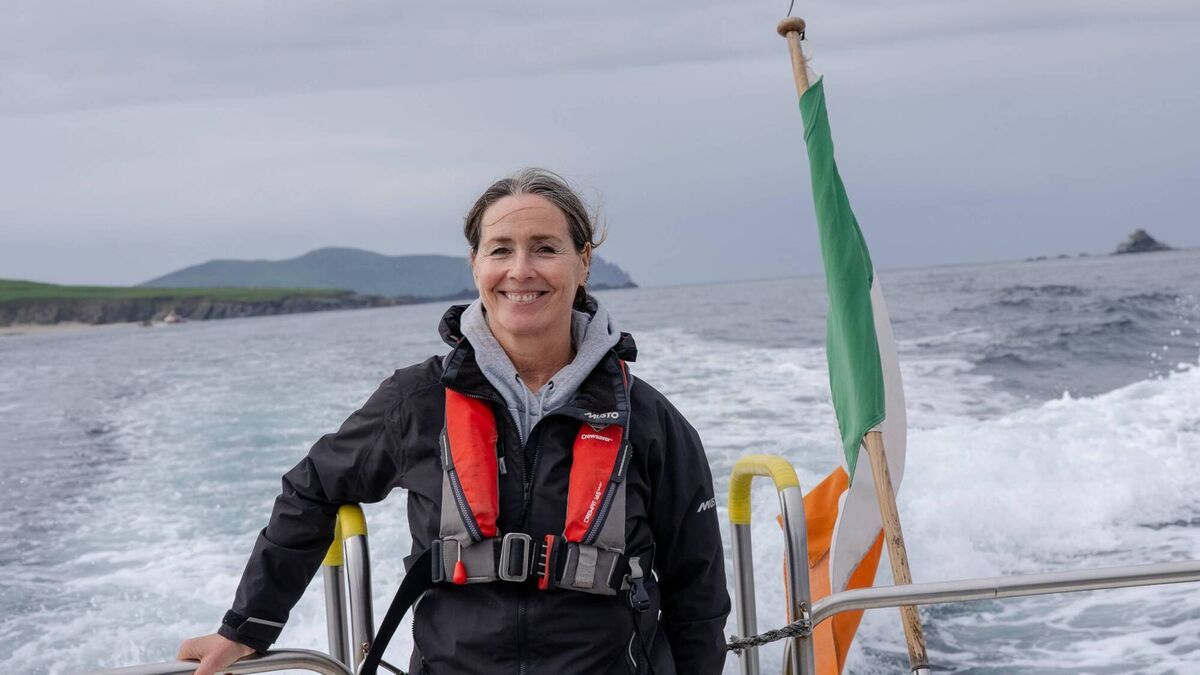
For Helena Ní Chonchúir from Cill Maoilchéadair in the Kerry Gaeltacht, food has always been central to her sense of place and community, a way of sharing with family, friends and neighbours.
“We’ve always had meat,” she says. “I was reared on a farm, so it was just natural that we had the best meat and the best fish available. We were just used to that.”
A fluent gaeilgeoir with that lovely knack of incorporating both Irish and English in her stories, she’s a compelling voice in , a four-part series currently showing on Monday nights at 8.30pm on RTÉ One and available on the RTÉ Player. It follows seven meat-eating participants from Kerry, Belfast, and Donegal, documenting their reasons for and responses to giving up meat for a month.
Having grown up on Corca Dhuibhne, the Dingle peninsula, in a farming family, Ní Chonchúir struggles to think of a time in her youth when she didn’t eat either meat or fish. “Our freezer would be full. My father would kill a lamb, maybe two lambs. I remember we fattened a pig on a number of occasions,” she says.
When in season, local seafood was similarly plentiful. “The local fishermen would bring up a bag of crab claws to my father. He’d wait until the fire died down in the front room and he’d throw them into the ashes. So there was no such thing as actually boiling them. That’s the best way to have crúbóga, crab claws, and there’d be fierce excitement in the house. And as soon as the mackerel was in season, you’d get mackerel. We just had this accessibility always in our lives. So I suppose there’s always been a grá for food.”
It has been a constant throughout her life and is also part of her work: Ní Chonchúir, who owns hospitality business An Capall Dubh in the centre of Dingle, is just after saying goodbye to the latest group of visitors when we speak. The B&B is in the same building that once housed her husband’s family butcher shop. Patrick grew up in the business, learning his trade in the on-site abattoir from an early age.
When it became unviable to have a butcher’s abattoir operating in the middle of a town, the couple turned the space into a popular B&B where they serve up grilled breakfasts of Mallon’s sausages, Annascaul Black Pudding and “good Irish bacon,” says Ní Chonchúir, although she points out that less meat-focused options like French toast and omelettes are also popular.
Being conscious of her health and wellbeing — she’s a sea swimmer and regularly attends Pilates classes — Ní Chonchúir had noticed over the years that she was eating less meat. It wasn’t a huge leap for her to make the decision to give it up for a month.
Nóra Ní Fhlannagáin, a registered dietitian and sports nutritionist at Atlantic Technological University, Galway, was involved in the programme, explaining the nutrients that a diet without meat might lack and how to get them from other sources.
Jens Walter, professor of ecology, food and the microbiome at University College Cork, was also on hand to describe how diet can shape and change the microbiome, the community of microbes that lives in our guts and has a direct effect on our health.
For the month gan feoil, Ní Fhlannagáin noted that participants had to be particularly conscious that they didn’t miss out on iron and vitamin B12. This was already something that Ní Chonchúir was aware of: “I listen to my body. I know that I have often had a craving for liver and I would just go down to the butchers in Sheehy’s [Supermarket]. They have the best liver. So I have to keep an eye on my iron and I’ve learned over the years that my B vitamins and my iron, they’re all linked.”
Nutrient-dense liver is a rich source of protein, minerals — including iron — as well as vitamins B12 and A. While Ní Chonchúir needed to keep an eye on her nutritional intake, levels while leaving the liver behind, she wasn’t daunted by cooking food that put vegetables as the centre of the plate. “It was the height of the summer [when we were filming],” she says, “and I felt confident in the fact that it’s a wonderful time of the year with your fruit and veg and everything. Plus, I was willing to ask [for ideas] and I have learned so much by questioning people and asking, ‘Would you have any good recipes without meat?’”
Like some of the other participants in the programme, her husband Patrick was a bit concerned: “I’d say he was afraid there’d be nothing up on the plate for him,” says Ní Chonchúir. “But he was willing.”
He had, almost unbeknownst to himself, already eaten vegetarian meals cooked by their daughter, Ali Curran, after her return from travelling in India. “She’s a great woman for spices,” says Ní Chonchúir. “She brought back so many spices from India, and we made dhal and different things. I was making them at home for Patrick. He wasn’t even aware there was no meat.”
Ní Chonchúir also had family support from her daughter-in-law Claire Aherne, who runs Nourish organic bakery and café in the courtyard of An Capall Dubh. “What saved me during the challenge was the fact that Nourish was on my doorstep. We’re blessed that Claire opened the business here. Her ethos is to keep it as organic as possible and she has a lot of vegetarian options, yummy fortifying homemade soups and egg salad sandwiches [that] wouldn’t have you missing a meat option.”
The month of fasting from meat for Ní Chonchúir was also a time of reflection. “It was an emotional time because of [what] was happening all around us in the world. And there were days when I thought, I am blessed. I’m blessed to have food in the cupboard, food in the fridge, clean water. We have to honour it and appreciate it and enjoy it,” she says.
While Ní Chonchuir didn’t turn into a vegetarian, during the course of the programme she “learned so much. It was a great challenge. I learned how to make my dishes more imaginative. I got great guidance and I don’t panic now if I don’t have a piece of meat. I had meat yesterday. I might not have meat today,” she says. “But I am also aware of how important it is for women’s bodies. And when my body tells me I need meat, I’ll go and I’ll get it.”
- Slán go Feoil is on RTÉ One on Mondays at 8.30pm and on the RTÉ Player
Read More
CONNECT WITH US TODAY



Be the first to know the latest news and updates