New movie Materialists explores the hollow world of high-end dating — but is modern dating merely transactional?
Is modern dating, as depicted in a new movie, more like a shopping trip, with financial wherewithal at the top of the checklist?
New movie Materialists explores the hollow world of high-end dating — but is modern dating merely transactional?

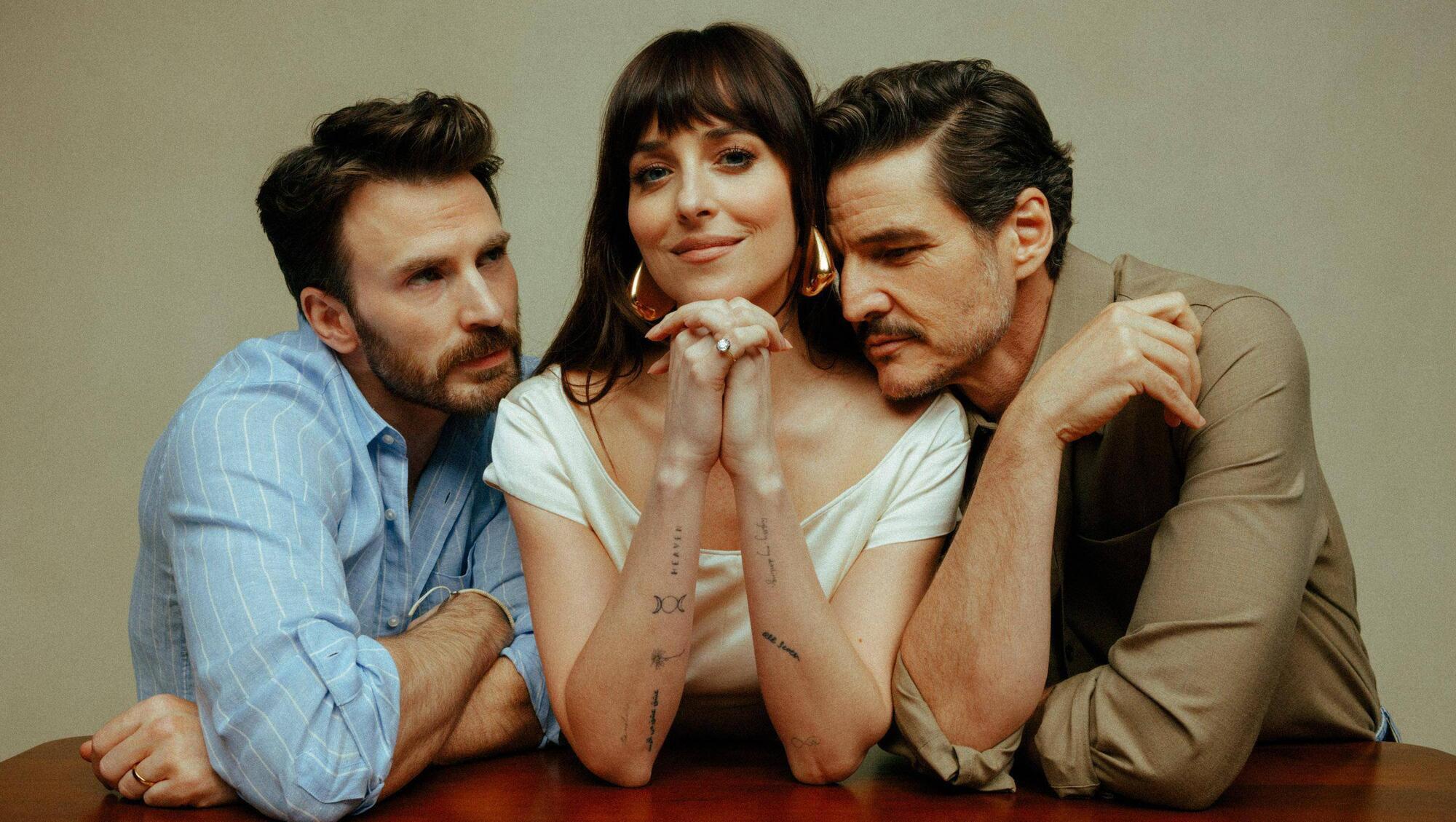
Decision time: Dakota Johnson’s matchmaker Lucy is in a love triangle with failing actor John (Chris Evans) and hedge-fund manager Harry (Pedro Pascal) in ‘Materialists’.

What’s love got to do with it?

In a new film about a New York matchmaker, in the glitzy, hollow world of high-end dating, not being rich rules you out as a contender, no matter how hot, charming or clever you are. Materialists, directed by Korean-American writer and director Celine Song, stars Dakota Fanning, Pedro Pascal, and Chris Evans and is based on Song’s experience of working as a matchmaker in her early 20s.

She quit to make her first film, 2023’s quietly magnificent Past Lives, which was nominated for two Oscars — it’s about a South Korean woman, married in the US, who emotionally reconnects with her Korean first love — but has revisited matchmaking in her second film to explore the disconnect between dating and falling in love, and how relationship economics depersonalise.

This is a people economy where individuals repeatedly sell themselves to each other, while keeping tight hold of the receipt. People in Song’s film have lists, non-negotiables, tick-boxes: “Nobody with an over 20 BMI”; “Nobody who likes cats”; “An income over 500 grand”.

Song is deeply invested in love, asking rhetorically in a New York Times interview, “What’s more important?”

People, she says, are her “drug of choice”, but she’s happily married to a man with whom she shares many connections.

She thinks that, unlike dating, love is easy. Especially compared to American dating, where it’s not just accepted, but expected, to be transactional and materialistic, to turn falling in love in to a business deal.

In her 2011 book Honey Money: The Power Of Erotic Capital, Dr Catherine Hakim — a sociologist at the London School of Economics — urged women to harness their erotic capital, which she defined as a combination of “beauty, social skills, good dress sense, physical fitness, liveliness, sex appeal, and sexual competence” — to attract a high-quality mate. How very Jane Austen. But had we not left such Mrs Bennett-type activity in the past?

Survival of the ‘fittest’

Today, although women are financially independent, pregnancy requires us to take time off work, which puts us at a financial disadvantage.

Even now, in 2025, our careers and incomes continue to suffer when we pause to have children, hence the need to have a partner to share the responsibilities. This has been the basis of human reproductive relationships since the dawn of time.

“Attraction to financial stability in partners does have evolutionary roots,” says psychologist Dr Malie Coyne.

“Historically, financial status was always important in mate selection, because, for our ancestors, a partner’s ability to provide resources, like food, shelter, and protection, was directly linked to survival and the wellbeing of offspring.

“This financial stability remains relevant today, as it provides long-term security and stability, but, obviously, it shouldn’t overshadow the emotional and interpersonal compatibility.

“In terms of the increase in the cost of living, particularly in areas of housing, education, and healthcare, it has made this financial stability more of an immediate and practical concern in forming relationships — maybe more so than a few years ago. In a world where people are facing rising expenses, economic stability becomes less of a luxury and more of a basic necessity for many, which will then likely contribute to this increased emphasis on financial compatibility in modern relationships…to avoid future stress or financial strain.

“We are looking for compatibility in all areas of life with a prospective partner, and financial stability is just one of those areas.”

Dakota Johnson as Lucy and Pedro Pascal as Harry in Materialists.

Song highlights how dating, with its lists and its demands, is all about control, even though falling in love with another person is one of the few things over which we have very little control: It just happens. Whether you’re rich enough to afford a matchmaker or, like the majority, make do with swipe apps, dating has been reduced to an activity akin to shopping.

“The ease of online dating and the emphasis on shopping lists, which is more the Tinder culture of swiping through profiles based on material attributes, have intensified this focus,” says Coyne.

“Online dating promotes snap judgements, narrowing the scope for proper connection.

“People might overlook potential chemistry due to these surface-level factors, like financial status.

“The rise of individualism and financial independence has also altered how we view financial compatibility. In earlier times, a partner’s financial situation would have been more critical because women were dependent on men for their security.

“The cultural shifts towards more transactional relationships, where qualities like financial status are weighed more heavily, are partly a response to the modern pressures we face. But it’s important to note that relationships have always involved exchanges: Emotional, social, financial. Relationships involve exchanges, which sounds less romantic.”

Unless, of course, you’re only interested in sexual connection, in which case someone’s financial status isn’t important. It all depends on your priorities.

Love not a set of criteria

Rather than writing lists of your ideal partner’s qualities and attributes, actual dating is the best way to find out if they are suitable. 

I went out with someone who didn’t have the price of a cinema ticket, followed by someone who owned five houses; neither relationship worked long-term. We were out of sync.

Financial values extend beyond how much you have in the bank; they are about attitudes to work, use of time, and how you want to live.

“Face-to-face interactions allow for a fuller, more authentic connection, like humour and warmth, which may not be captured online,” says Coyne. 

“To counter the transactional, surface-level nature of online dating, meeting in person allows for an organic discovery of compatibility. 

"The goal is to embrace vulnerability and make space for unexpected emotional connection, which might transcend the shopping-list mentality. I’d suggest becoming friends with your partner beforehand and seeing if your values align. Finances will not be the main thing.”

Or, as Song reminds us, if we are too hung up on someone’s bank balance or height, what happens if they change their job, or grow old and shrink?

However, there’s a big difference between expecting a prospective partner to be a 6’4” fintech squillionaire with a six-pack and a penthouse and disempowering yourself by partnering with someone to whom you cede financial control.

“Who holds the purse strings often holds the power in the relationship, even when it comes to booking and paying for couples therapy,” says Orlagh Reid, a psychotherapist and Gottman method couples therapist.

“Traditionally — and sadly still the case across Ireland — we know that women earn far less than their male counterparts as they tend to dedicate time to raising families, caring for elders, and are less financially secure.

“As a result, money can become a bargaining tool when things begin to decline in relationships and marriages. For women, in a world of gender inequality, it should be high on their priority list to be financially stable, secure, and compatible when it comes to money matters.”

Money is one of the top-five causes of relationship breakdown. “Finances — including attitudes and values towards money and wealth, which may include work ethic and education — should be relatively high on the list of priorities when choosing a life partner,” Reid says.

“I have seen first-hand in my practice how many men resort to financial, coercive control of their partners. I believe it’s probably the most prevalent form of abuse and control in modern-day relationships.

“Sadly, money does still equal power and freedom, so I would encourage younger women and men to become financially independent and focus on their professional lives first, before investing in any long-term relationship, to ensure equality and stability later in life.”

Like Coyne, she urges us to remember that while compatible financial attitudes are important — even if you earn the same, if you’re a saver and your partner’s a splurger, or vice versa, this can be tricky — long-term compatibility extends far beyond money.

“Healthy, sustainable relationships depend on different aspects of compatibility,” Reid says. 

“Communication styles, emotional compatibility and intelligence, values, equality, respect, family values, gender roles and fundamental similarities rather than differences.

“Money may not be initially an important topic, while chemistry and desire are running high, but it should be a non-negotiable topic to discuss at length to establish compatibility for long-term relationship success. 

"Attitudes and values towards money, saving, spending, investing, planning, and making life dreams come true are all important.”

So, while you may find the idea of an American-style shopping list ridiculous, do yourself and your prospective life partner a favour and have the money talk before you make any big decisions together.

  • ’Materialists’ opens in cinemas today

x

More in this section

Lifestyle

Newsletter

The best food, health, entertainment and lifestyle content from the Irish Examiner, direct to your inbox.

Cookie Policy Privacy Policy Brand Safety FAQ Help Contact Us Terms and Conditions

© Examiner Echo Group Limited