I'm a Cork beekeeper — here's how you can help native Irish honeybees

Important for biodiversity, ecosystems and pollinating crops, bees work hard at achieving the UN Sustainable Development Goals so don't swat them even if they come buzzing into your house! Cork-based beekeeper Hanna Bäckmo talks about the importance of our native Irish honeybee and how we can help
I'm a Cork beekeeper — here's how you can help native Irish honeybees

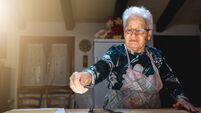
Hanna Bäckmo, founder of Hanna's Bees. Picture: Andres Poveda

“Sun is shinin' in the sky / There ain't a cloud in sight…”

Electric Light Orchestra’s 'Mr Blue Sky' got it right: when the sun shines, we all want to be out to play. We’re not the only beings to appreciate the warmer weather however: native Irish honeybees are also out there, making the most of sunshine, flying busily from flower to flower in search of nectar and pollen, and pollinating as they go.

Occasionally, however, they may get a little distracted and blunder indoors. But before you panic and start swatting, just take a moment. Bees have far more to lose than you do if it comes to a stinging situation. Allergies aside, a bee sting is rarely fatal to anyone — except the bee itself — and these hard-working insects are already under threat from habitat loss, use of pesticides, and imported non-native honeybees.

“Bees are not attracted to human food,” says award-winning beekeeper Hanna Bäckmo of Cork-based Hanna's Bees.

“If something is interested in your food, it’s probably a wasp. A good way to tell them apart is that the wasp has yellow legs, while a bee has brown or black legs.”

CLIMATE & SUSTAINABILITY HUB

It might be a little difficult to focus on their legs while you try to protect your sweet treat but these creatures deserve more calmness than combat.

“The bees may have just strayed into your house and got lost,” says Bäckmo.

“There’s nothing that would attract them, unless you have honey in the kitchen or are melting beeswax.”

Gently shepherding bees towards the nearest window can easily rescue the situation... they have even less interest in being in your space than you have in keeping them there.

And we need all those bees on active duty.

Despite their diminutive size, they work hard at protecting biodiversity in ecosystems — the variety of plants and animals in a particular region — through pollination. According to the World Wildlife Fund, one in three mouthfuls of food that we eat depends on pollinators such as bees. Those little insects also contribute to the achievement of many of the UN Sustainable Development Goals (SDGs), especially food security, biodiversity and even helping cities and communities to be sustainable. It makes Bäckmo’s fascination with bees very easy to understand.

Hanna Bäckmo of Cork-based Hanna's Bees. Picture: Claire Keogh

Originally from a small island in Sweden, Bäckmo moved to Ireland in 2001, spending almost 20 years as a self-employed wedding dress designer.

“Beekeeping came about accidentally,” she laughs.

She bought a cottage on a half-acre plot in East Cork’s Little Island and started gardening. “I've always been interested in growing my own food and there are so many things that we can grow here that we couldn’t grow at home [in Sweden]. Ireland is absolutely fabulous for growing food all year around. I planted lots of normal things — like potatoes and cucumbers — but also peaches and nectarines, then realised that they flower so early in the year that pollinators are hibernating.”

For Bäckmo, there was a simple solution: “The only way for me to get peaches was to get honeybees. The native Irish honeybee is a really reliable bee in our climate — they have evolved to survive here — and they’re out pollinating even in the winter.”

She did a beginner's beekeeping course in 2014, got her first hive in 2015, added another, and then just kept going. Her passion for bees has continued and Bäckmo now owns 70 hives: “It became an obsession! For me it started with pollination, it was not about honey — I never really had a sweet tooth — but bees are fascinating creatures.”

In 2019, she decided to make the jump from designing dresses for Cork brides into working full-time as a beekeeper. It was a prescient time to leave the wedding world: with the arrival of Covid lockdowns in 2020, that market collapsed overnight.

Bäckmo doubled down on her bee business, harvesting raw honey, beeswax and propolis — a natural resin-like mixture made by bees which has been shown to have anti-microbial and anti-viral properties — from her hives to produce a range of products including reusable, eco-friendly beeswax wraps for food storage, raw honeys from different flowers, pure beeswax candles, bee pollen and propolis tincture.

“! wanted to develop a range of products that are all coming from the bees and are helping people to stay healthy in a very natural way.”

 Hanna Bäckmo, Hanna's Bees. Photo by Andres Poveda
Hanna Bäckmo, Hanna's Bees. Photo by Andres Poveda

Raw Irish honey from native Irish honeybees isn’t cheap — one of Bäckmo’s 340g jars of raw softset Irish honey is €10.50 — but recent publicity about adulterated imports has made people realise that it’s worth spending money for the real deal. In a report from The Institute of International & European Affairs (IIEA) last year, researchers revealed that nearly half — 46% — of the honey imported into the EU was adulterated by sugar syrups.

Now, Bäckmo says: "People want to be sure that they’re getting real Irish honey and they are willing to pay the price for it. That's really uplifting.”

When she initially started out, people just didn’t understand why her honey cost so much compared to imports. The real question, as she points out, is why imported honey is so cheap. The real thing is priced to reflect the work: “It takes a lot of effort to produce honey in Ireland,” adds Bäckmo, both from the native Irish bees battling our frequently inclement weather and from the beekeeper.

We can help these fuzzy foragers out by planting with them in mind.

“Go for open flowers. With something like fuchsia, or even brambles, the nectar is protected from rain,” says Bäckmo.

“And don’t use herbicides, fungicides or pesticides. We need to look at what we’re doing, why we're doing it and make it better for all insects so that we can safeguard the means of food production.”

Another simple thing you can do is to pick up a jar of honey made by native Irish bees from your local beekeeper so that when you spread honey across your breakfast toast, you can do so in the realisation that you’re supporting pollinators in a most delicious way. And, always, think before you swat.

  • Learn more about native Irish bees from Hanna Bäckmo at this year’s Cork on a Fork Festival, where Hanna’s Bees are taking part in talks and events including a teddy bear’s picnic, a producers' bus tour and a beekeeper’s picnic.
  • More at hannasbees.ie

x

More in this section

Lifestyle

Newsletter

Eat better, live well and stay inspired with the Irish Examiner’s food, health, entertainment, travel and lifestyle coverage. Delivered to your inbox every Friday morning.

Cookie Policy Privacy Policy Brand Safety FAQ Help Contact Us Terms and Conditions

© Examiner Echo Group Limited