7 ways to get your hands on free plants
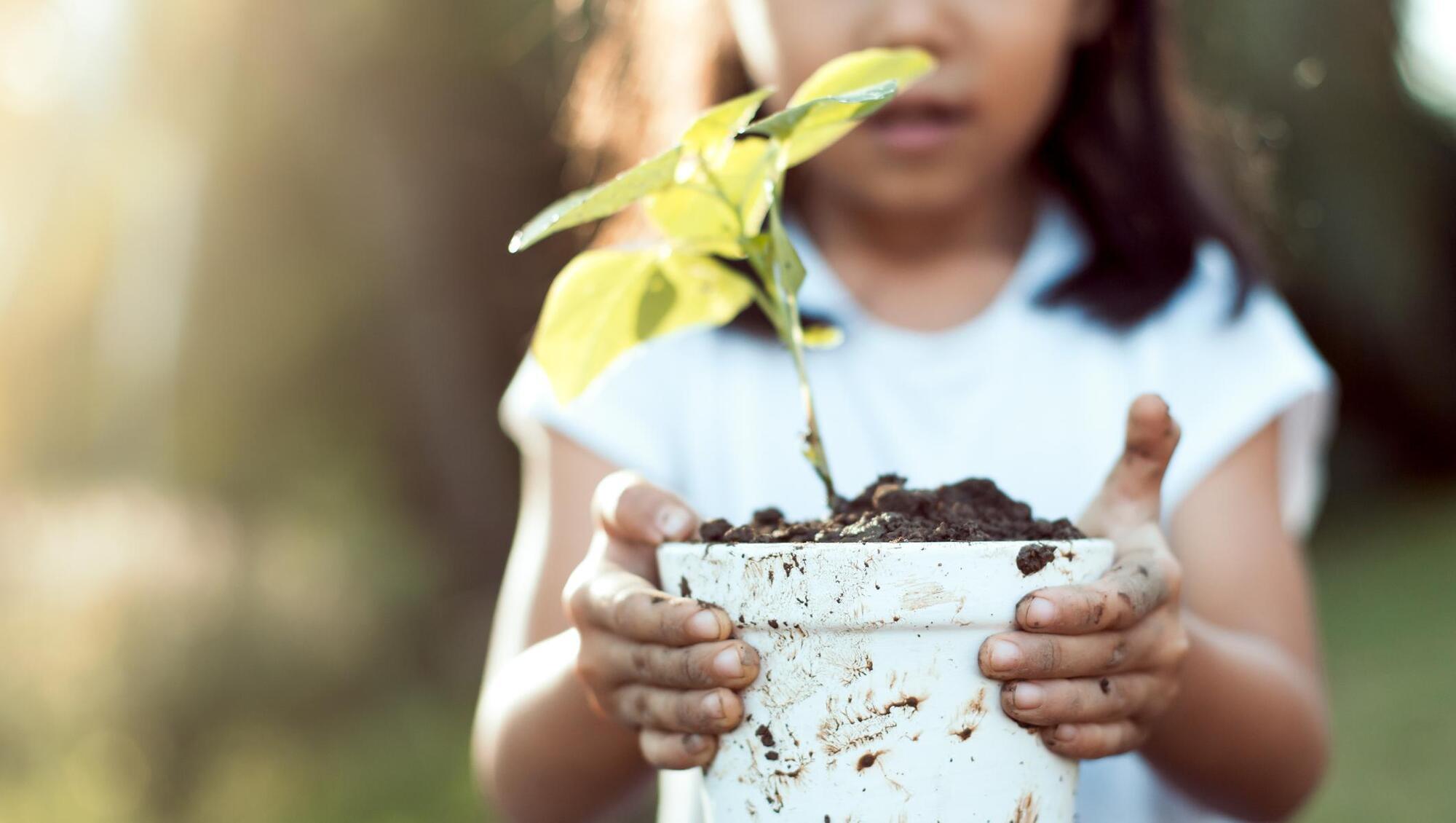
Child holding a plant (iStock/PA)
Beginner gardeners are often encouraged to start small, which normally means cheap. You don’t go straight out and buy a massive banana tree, or hand over £50 for a stylish, relatively well established fiddle-leaf fig.
Instead, especially with children, it’s cress seeds in eggshells, or a runner bean bravely sprouting out of a yoghurt pot. Once you’ve graduated to digging your own plot or filling your home with glossy-leaved succulents though, it can become an increasingly expensive habit.
But there’s no need to forget those frugal – and rather charming – roots. In fact, with experience often comes savviness, and in the world of gardening, that can translate to free plants – and no, we’re not encouraging clandestine plant theft from botanical gardens, local parks and woodland (that’s illegal, and hugely endangers habitat, biodiversity and plant species’ survival).
From dividing plants to collecting seed and regrowing salad leftovers, here are some safe, sustainable and satisfying ways to get yourself some free plants…
Start by assessing what plants you already have, and consider which you’d like more of. Right now is prime time for taking rosemary, verbena and lavender cuttings, as well as berry bushes like red currant and gooseberry. It’s simply a matter of working out which plants suit a stem, leaf, root or tip cutting.
“Some plants are easier to propagate than others,” says Gena Lorainne, a gardening and plants expert at Fantastic Services (fantasticservices.com), noting that cactus and succulents like kalanchoe tomentosa (panda plant) and sansevieria are easy to propagate through leaf cuttings, while begonias suit stem cuttings, and geraniums, tip cuttings.
Slicing through or teasing apart the roots of a plant and dividing it into multiple plants, may seem brutal, but is actually advisable in many cases. “Most perennials actually benefit from division every once in a while,” says Lorainne. “This helps improve the plants’ health and vigour. It also increases the number of plants you have.”
She recommends dividing perennials – like salvia, delphinium, anemone, hosta, iris and agapanthus – once every year or two. The RHS confirms that “all clump-forming herbaceous perennials, including ornamental grasses” can benefit from being divided.
Step away from the supermarket bagged herbs and pick up a living pot of basil or thyme instead next time you do a food shop.
If you look closely at your basil plant, you’ll notice it’s not one single basil plant at all, but multiple, all squished together to appear frothy, green and full of vigour. You might get a few weeks’ worth of leaves off the original bunch, but separate the individual plants out into their own pots and you’ll get significantly longer – and significantly more pesto – from them.
When it comes to collecting and storing seed for new (free) plants, all you need is a little patience and some brown paper envelopes. Once plants have gone to seed – be it nasturtiums by the back step, or parsley on the kitchen windowsill – let the seed pods dry out in a cool, dry place, before either sowing now if suited to autumn sowing (there’s still time to grow parsley for instance, for pickings through winter) or popping them in a labelled envelope ready to sow next spring.
It’s even possible to collect seed from leftover shop-bought or homegrown veg, like tomatoes, chillies, cucumber and strawberries, says Holly Morris, aka The Goodness Gardener (thegoodnessgardener.co.uk). “It’s a chance to experiment,” she explains.
With cucumbers, Morris says to “remove the watery jacket from the seeds and leave them on a chopping board to dry, then pop them in a brown paper envelope and label”. The same goes for strawberries and tomatoes, “with those put them on a piece of kitchen roll to dry out before storing”.
And don’t even think about chucking out your Halloween pumpkin innards. Dry them and save the rest to grow next year’s jack o’lantern.
If you’ve ever owned a pilea, you’ll know just how exciting it is to spot baby pileas springing up all around the base of the original plant – and it’s not the only houseplant to spawn.
“A lot of succulents such as haworthia, aloe and sansevieria produce small pups on their own. Once these grow a bit in size, they can be repotted and looked after separately,” says Lorainne. “I currently have a small haworthia I’m looking after which has already produced two tiny offspring all on her own. That’s the magic of succulents.”
From celery root and pak choi, to turmeric and spring onions, it’s possible to literally regrow veg and salad leftovers.
Morris currently has ginger regrowing on her kitchen windowsill and says she has “loved growing avocado pips”. While to bear fruit they need a Mediterranean climate, you can produce beautiful leafy avocado plants from an avo stone leftover from lunch. Just “wash them off, use three bbq skewers in a triangle formation to suspend the pip in a jam jar of water,” explains Morris. “Once it has a root system and its first leaf, pot up in soil as a houseplant.”
The age-old way to boost your plant collection is to swap and share with friends and family – because who doesn’t like free plants?
“It’s really about talking to your community, chatting to your neighbours and sharing, because what grows well in your garden will grow well in your next door neighbour’s garden,” says Morris, who recommends the Nextdoor app for sourcing free plants in your area. “Discuss and share and swap.”
“People often grow too much of something and then having too much can feel like a waste, it takes away the good feeling of having grown all those seedlings and plants,” she continues, “especially when you’ve spent time growing them – it feels good to share, and to know your plants haven’t gone to waste.”
CONNECT WITH US TODAY



Be the first to know the latest news and updates