New referral pathway could see babies in Cork showing signs of cerebral palsy assessed faster
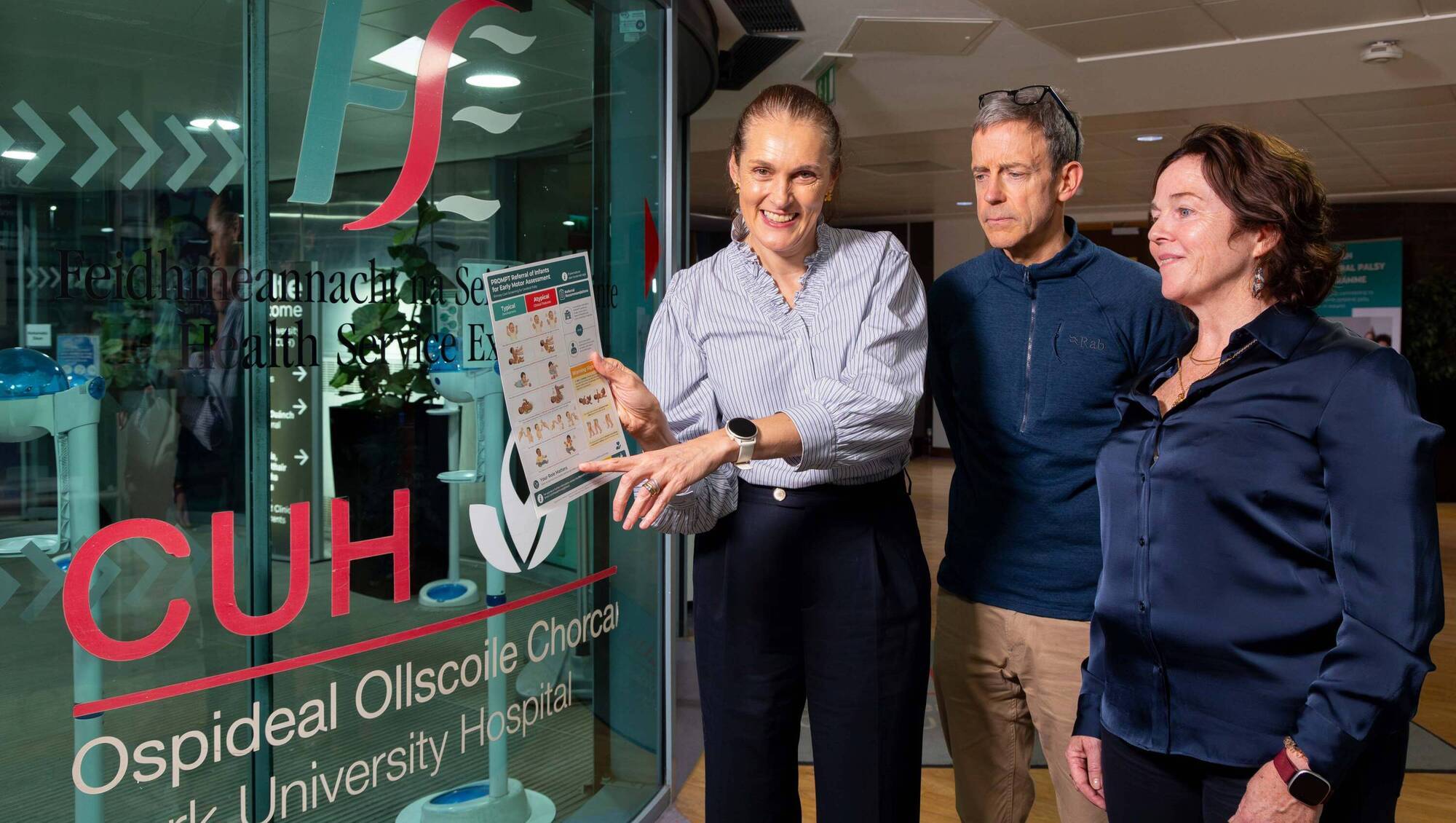
Professor Deirdre Murray, chair in early brain injury and cerebral palsy at UCC, pictured with GPs Dr Vivian Foley, and Dr Aideen Phelan, at Cork University Hospital for the introduction of a new guide to help GPs spot the early signs of cerebral palsy. CP PROMPT provides practical guidance to help GPs recognise possible early signs of cerebral palsy in babies under one and access a fast-track pathway to specialist assessment at Cork University Hospital. Picture: Michael O'Sullivan / OSM PHOTO
A new referral pathway could see babies in Cork showing early signs of cerebral palsy receive a specialist assessment and appropriate therapy sooner.
The new GP resource, launched by the Irish Cerebral Palsy Programme and the INFANT Research Centre at University College Cork, aims to reduce time between a parent or GP noticing a developmental concern and a baby receiving specialist care.
The referral pathway would mean appropriate therapy can begin while diagnostic investigations continue, helping children develop skills during an important period of brain development.
The resource, called the PROMPT pathway, was introduced to GPs at an educational event at Cork University Hospital (CUH) last week.
Read More
The Irish Cerebral Palsy Programme operates across UCC, Trinity College Dublin and the Royal College of Surgeons in Ireland.
Around half of babies who develop cerebral palsy have no obvious risk factors at birth and may not be included in established specialist follow-up programmes.
Parents may first notice differences in their baby’s movement or development in the months that follow.
The PROMPT pathway gives GPs illustrated guidance on signs that warrant further investigation, such as a baby consistently favouring one hand unusually early or showing differences in movement between the two sides of their body.
It connects these concerns with a clear, fast-track referral route to CUH’s specialist service for babies under one.
Professor Deirdre Murray, chair of early brain injury and cerebral palsy at UCC, said the PROMPT pathway provides "a clearer route from that first concern to specialist assessment and support".
“Research is changing how we identify and support babies with cerebral palsy," said Ms Murray.
“Earlier recognition gives us the opportunity to begin targeted therapy during an important period of development, helping children practise and build skills through play and everyday activities.
“We do not have to wait until all investigations are complete before appropriate therapy can begin.”
Research highlighted by Ms Murray shows that early, targeted therapy can improve movement and functional skills in children with cerebral palsy.
Activities are tailored to each child’s needs, with parents supported to build practice into everyday routines.
Babies referred through the CUH pathway will be assessed by a trained paediatrician and physiotherapist, with further investigations arranged where needed.
GPs are also encouraged to refer babies to their local primary care physiotherapy service so assessment and support can progress together.
General practitioner, Dr Vivian Foley said this pathway gives GPs a "clear route to specialist assessment when they have concerns about a baby’s development".
"For families, the aim is to reduce uncertainty and help babies access the right support as early as possible," said Dr Foley.
"It means acting on early signs, rather than waiting for difficulties to become more pronounced."
Dr Louise Gibson, consultant community paediatrician at CUH and senior lecturer at UCC said the pathway "offers direct access to expert paediatric and physiotherapy opinion in a rapid access clinic for babies under the age of one".
"This is a fantastic initiative to fast-track assessment and investigation of early motor delay to ensure intervention can start as early as possible," said Dr Gibson.
Not every baby referred will have cerebral palsy.
Assessment can also identify other developmental difficulties requiring support.
The PROMPT pathway is being introduced initially in the southwest, including Cork, with planned expansion to all health regions across Ireland by the end of 2027.

CONNECT WITH US TODAY



Be the first to know the latest news and updates