'It is hugely affirming': Palestinian author Tareq Baconi on solidarity from Irish people
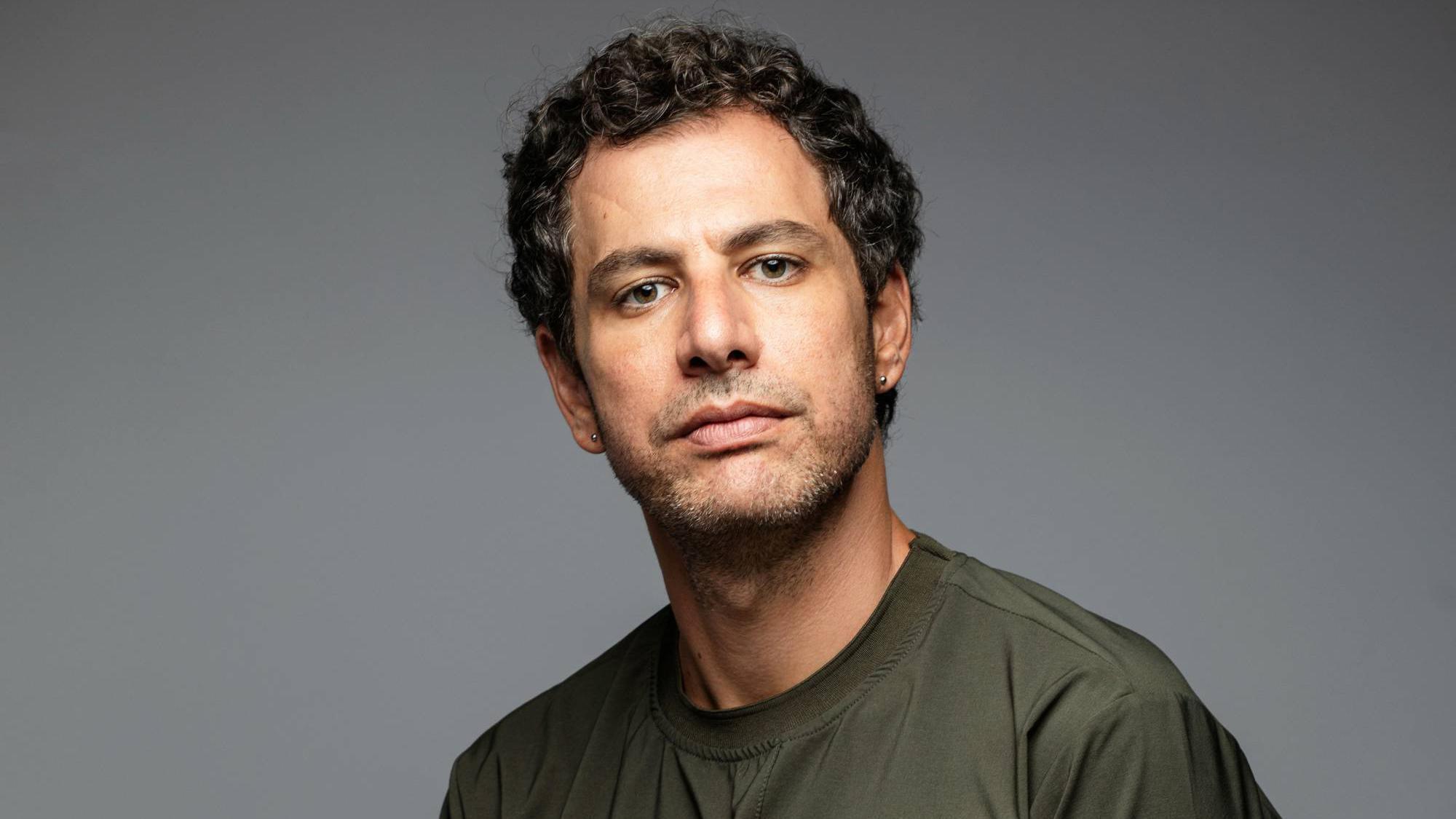
Tareq Baconi will discuss his work at West Cork Literature Festival in Bantry. Picture: Anastasia Casey
For Tareq Baconi, the personal became the political when what began as a book about his first love turned into a memoir exploring his heritage as the grandchild of Palestinian refugees. The writer, scholar and activist grew up in Jordan after his family was expelled first from Palestine, then Lebanon during the civil war; he is now based in London.
The displacement he experienced was more than geographical; it was only when he moved away from home that he also felt able to come to terms with his identity as a queer man.
Baconi’s book, which he will discuss at the upcoming West Cork Literary Festival, begins with him unpacking a box of letters from a childhood friend named Ramzi.
“The memoir came about accidentally. I wanted to write a book about the friendship between Ramzi and I. It was a friendship that was very important to me, and a friendship that developed into love, from my end at least. It was a kind of love that I couldn’t understand, and I couldn't articulate to anyone, including him, despite my best efforts. This book was initially written as a letter to Ramzi, trying to explain all of those years, and what they meant to me.
"But very quickly over the course of the writing, the text revealed itself to me, and certain questions started emerging, including, why are these two boys in Jordan — they’re both the descendants of Palestinian refugees, their homes are Palestinian home — and so political questions started intruding into the story,” he says.
To be allowed the right to live in Jordan, Baconi’s mother had to renounce all political activity, a restriction that reverberated throughout their lives.
“In the book, I trace her rage and diminishment to that moment, where she is told that to have a life and become a mother, she had to be essentially apolitical. So I grew up, as did most of my contemporaries, in a situation where I implicitly understood that one couldn’t be political if one wanted a certain safety or security, that one needed to be relatively benign. I don’t think I understood that consciously, it was just in the air around me.” It was also an imposed silence that was echoed in the secrecy and shame around his sexuality and falling in love with Ramzi.
“I didn’t quite understand what was happening. I write about the confusion around the fact that this couldn’t possibly be love because obviously love is between a man and a woman. It was a love that was very much grounded in shame, that this isn’t right, that it is sinful and something that must be resisted. I really didn’t think about queerness in that form until I left Jordan, it was completely absent from the world around me. There were no narratives or symbols or signs of homosexuality.”
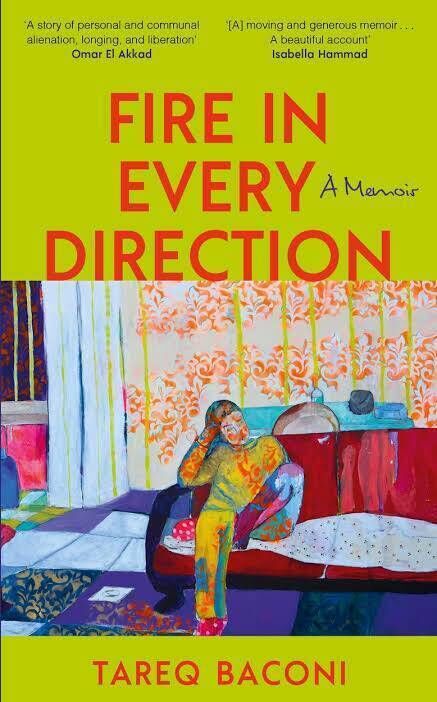
Baconi says that while writing the book was cathartic in some ways, it was also a confronting experience at times. “There were instances when I was writing it that it felt visceral still. It wasn’t lost on me that there is something masochistic in going to this place that, at least in my childhood, I thought was shameful and then owning it publicly. It is almost like I am wearing my shame for everyone to see. But that is where power lies for me. I can say, this has no longer has power over me, I have reclaimed it completely.”
Coming out was difficult for Baconi, and his father in particular was not receptive — he describes how his mother put sedatives in his father’s coffee to dampen any confrontation. However, his father, who has since passed away, eventually came to terms with his sexuality, embracing Baconi’s husband as his son-in-law.
“The fact that my father was able to move from quite stubborn rejection to a place of not just acceptance but love is something that I don’t take for granted. I feel very grateful that he was able to make that journey. But it was certainly a journey, he had to do the work and I had to do the work with him,” says Baconi.
He describes the reaction from the queer community, in Palestine and beyond, as one of the “greatest gifts” of the book, with many people reaching out to tell him how the book has resonated with them. He says life for queer people in Palestine in particular is especially difficult given the ongoing conflict there.
“If you are living in historic Palestine, there are really two things you're dealing with, the more important and the more profound of that is State violence and the colonial regime and how it's shaping your life,” he says.
Baconi struggles with going about his daily life in London while the war in Gaza continues and Palestinians live under Israeli occupation. “I carry a lot of grief and rage. Even if on the surface one might be going on with life as normal, there is a lot of pain. I have been reflecting a lot on how similar it is to my mom’s experience. The title is about how my mom’s rage was burning in every direction in unpredictable ways. That resonates a lot with how I feel today. There is a rage that can’t be harnessed and that is unpredictable and frightening.”
Baconi is looking forward to discovering West Cork on his visit to Ireland, and says he greatly appreciates the solidarity shown to the Palestinian people here.
“It is incredible, I really don’t have the words to describe how powerful it is and how grateful Palestinians are for it. When we see the Irish people taking it on as their struggle as well, it is hugely affirming. In a world that is gaslighting the Palestinian narrative, it is affirmation that we are seen and understood.”
He also takes hope from the great strides made in regards to LGBTQ rights in Ireland in recent decades. “For me, they are not separate struggles, they are intertwined and entangled. Ireland regained its sovereignty and its decision-making power and was able to confront colonialism and find its own voice as a country. In many ways, it is the same in Palestine, the struggle for queer rights goes hand in hand with the struggle to dismantle Zionism and the apartheid regime that is controlling every aspect of our lives, including who we love and how we love.”
- Tareq Baconi will be discussing at noon, Weds, Jul 15, in Marino Church, Bantry, as part of the West Cork Literary Festival. www.westcorkmusic.ie