Ian Rankin: The Rebus author on ageing, West Cork and Rory Gallagher

A chance encounter on a cruise ship led Ian Rankin to taking part in West Cork Literary Festival. Picture: Louise Mather
Ian Rankin is returning to West Cork in July because of a chance encounter. Last year, Rankin and his wife went on a cruise ship around Ireland, circumnavigating the island. Their ship docked in Bantry. A woman welcoming the passengers ashore recognised Rankin, who was knighted in 2023 and has sold more than 35 million copies of his Inspector Rebus novels.
“After we had our day out, we came back to go on the boat,” says Rankin. “She pressed into my hand the programme for the West Cork Literary Festival and the business card for the person who runs it. I got in touch and I said, ‘Look, do you fancy me coming back and talking?’ She went, ‘Oh yeah, absolutely.’ So, it was just because our ship docked there and we had a lovely day out.”
West Cork isn’t a part of Ireland that Rankin knows well, although his friend Dónal Gallagher – the brother of legendary guitarist Rory Gallagher – has a house in the county. Rankin sailed by his house when on the cruise. They’ll try to meet up at the literary festival in July. They collaborated in 2013 on a Rory Gallagher concept album in which a Rankin short story was put to Gallagher’s music, which included artwork by cult American illustrator Timothy Truman and narration by Aidan Quinn.
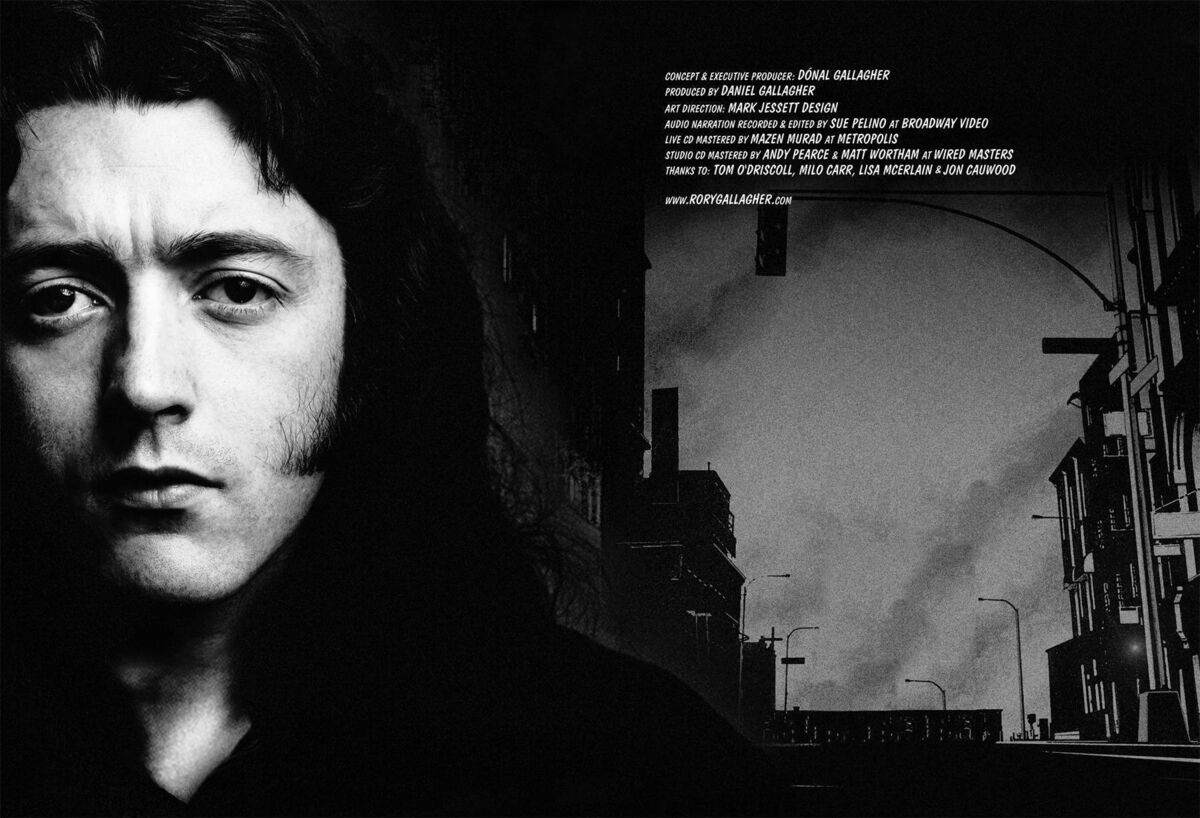
“Dónal got in touch,” says Rankin. “He said Rory was a huge fan of crime fiction, especially American hard-boiled crime fiction. He used to take a suitcase full of books with him on tour. Dónal said, ‘We're doing an album of Rory's songs that reference crime fiction. Would you do a short story to go with it?’ So, I wrote it and it was illustrated as a booklet to go along with the album. It was like a proper comic book, really well done. A great regret of my life is that I never saw Rory Gallagher play live.”
One of Rory Gallagher’s tracks, , is named after a private investigator from a Dashiell Hammett novel. Rankin’s Inspector John Rebus novels are, of course, peppered with music references. the 25th in the Rebus series, cites Rory Gallagher’s Johnny Cash and Fairport Convention, amongst other musicians and lyrics.
In a daring plot device, Rankin puts Rebus behind bars, banged up for the murder of “Big Ger” Cafferty, his old nemesis. When there’s a murder in prison, he’s the best man to solve it. Finding himself in Edinburgh’s prison, though, isn’t ideal for Rebus given he’s surrounded by people who he put in prison and inmates who hate him because he’s from “the filth”. Not that Rebus takes a step backwards. He’s as flinty as ever.
“When I first started writing these books in the mid-’80s, it was a very macho world,” says Rankin. “There were no female chief constables in Scotland. There are still precious few. The stories I was being told by serving male police officers were sexist and occasionally racist. It was a very hard, brutalizing world. But things changed rapidly.
“Rebus became a dinosaur. He's the last of that breed of police officer who could not exist anymore. He wouldn't last five minutes on the force these days. He'd be sent for retraining, or he'd be kicked off the force [for breaking rules]. But he's on ‘the side of good’ in that he wants to get a result. He will do whatever it takes to get that result. That's where he often crosses the line.
“He's long retired. Because I aged him in real time, he's not got the heft he used to have. He used to be an intimidating character. He's in his 70s so he can't intimidate people anymore. He’s having to live with that. I've enjoyed that journey he's gone on – where he's trying to find out if he still has a useful role to play in society. The only thing he's got is detective skills.”
The aging process is something Rankin, 66, also wrestles with: “Mostly what makes my books hard to write is about me getting old. I can't concentrate for the length of time I used to. I don't do a lot of plotting before I start a book. The book tells me where it wants to go once I start writing. I used to write for 10-12 hours at a stretch, seven days a week. Now if I write for half an hour, I'm knackered. I've got to step away, have a walk, clear my head and come back. The aging, the brain cells deteriorating – that's the biggest stumbling block to writing.”
Rankin went to great lengths to get the detail right in the novel, visiting HMP Edinburgh prison in Stenhouse for a day; conferring with staff such as the prison librarian; chatting with prisoners (having given a literary talk to them); and corresponding with the prison’s governor. In one email exchange, Rankin asked him about the prisoners’ uniform.
“I emailed the boss of the prison and he said, ‘Well, on the wing, they can wear whatever they like. Off the wing, they're colour-coded so we know what kind of prisoners we're dealing with.’ There are about six different colours they use for their tops. He said, ‘Lifers, the most serious prisoners, wear green and sex offenders wear maroon.’
“This is in Edinburgh where the two football clubs are green [Hibernian] and maroon [Hearts]. And the prison is in the part of Edinburgh where the team in maroon play. I said, ‘What’s going on? Why are the sex offenders all wearing maroon?’ He said: ‘The previous governor came up with that colour scheme. He was a Hibs fan.’”
- Ian Rankin will discuss Midnight and Blue at the West Cork Literary Festival, Bantry’s Maritime Hotel, 8.30pm, Monday, July 13. See: www.westcorkmusic.ie
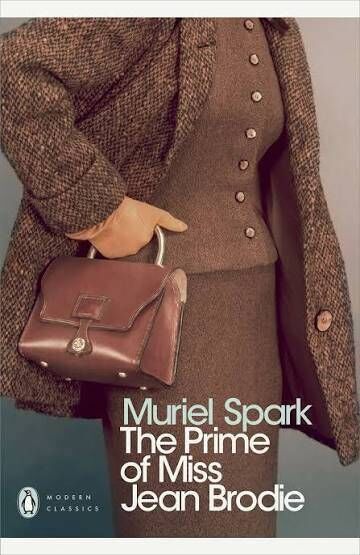
The Prime of Miss Jean Brodie, by Muriel Spark: My favourite book – it's the great 20th century Edinburgh novel. It's short, but very complicated, funny, serious, and clever.
Ulysses, by James Joyce: I studied Ulysses at uni. I read it recently for about the fifth time. It's one of these books, you keep going back to, getting a bit more out of it every time. I like playful language – and Joyce is great at playful language. He was an interesting guy with a complicated life.
The Strange Case of Dr Jekyll and Mr Hyde, by Robert Louis Stevenson: He’s the great Edinburgh novelist who set his best book in London for some bizarre reason. I’ve spent my life trying to bring that theme back to Edinburgh – a lot of Rebus novels start off as a Jekyll and Hyde exploration of an individual or the city itself.
Rivals, by Jilly Cooper: My wife and I were snowed up one winter in the middle of France. The only book in the house I hadn't read was Rivals. I read it. I loved it. It's sheer escapism – ridiculous, funny and about a bunch of people you wouldn’t hang out with for long.
Laidlaw, by William McIlvanney : Willie is my writing hero. He wrote three crime novels set in Glasgow featuring a detective called Laidlaw. He was a big inspiration for the early Rebus books. I got him to sign one of his books early in my career. I'm not even sure I'd been published, but I'd written the first Rebus book. He said, “Good luck with the Edinburgh Laidlaw.”