Book review: Britain’s implausible deniability
The tactics of the British army, MI5, and the RUC over the entire span of the Troubles, reached depths that were only thought possible in countries such as Chile, Uganda, and the pre-1989 communist bloc
John Ware’s Neither Confirm Nor Deny will remain the definitive account of the sordid and evil work of the paramilitaries and the crown forces in Northern Ireland during this the 1970s, ’80s and ’90s.

John Ware’s Neither Confirm Nor Deny will remain the definitive account of the sordid and evil work of the paramilitaries and the crown forces in Northern Ireland during this the 1970s, ’80s and ’90s.

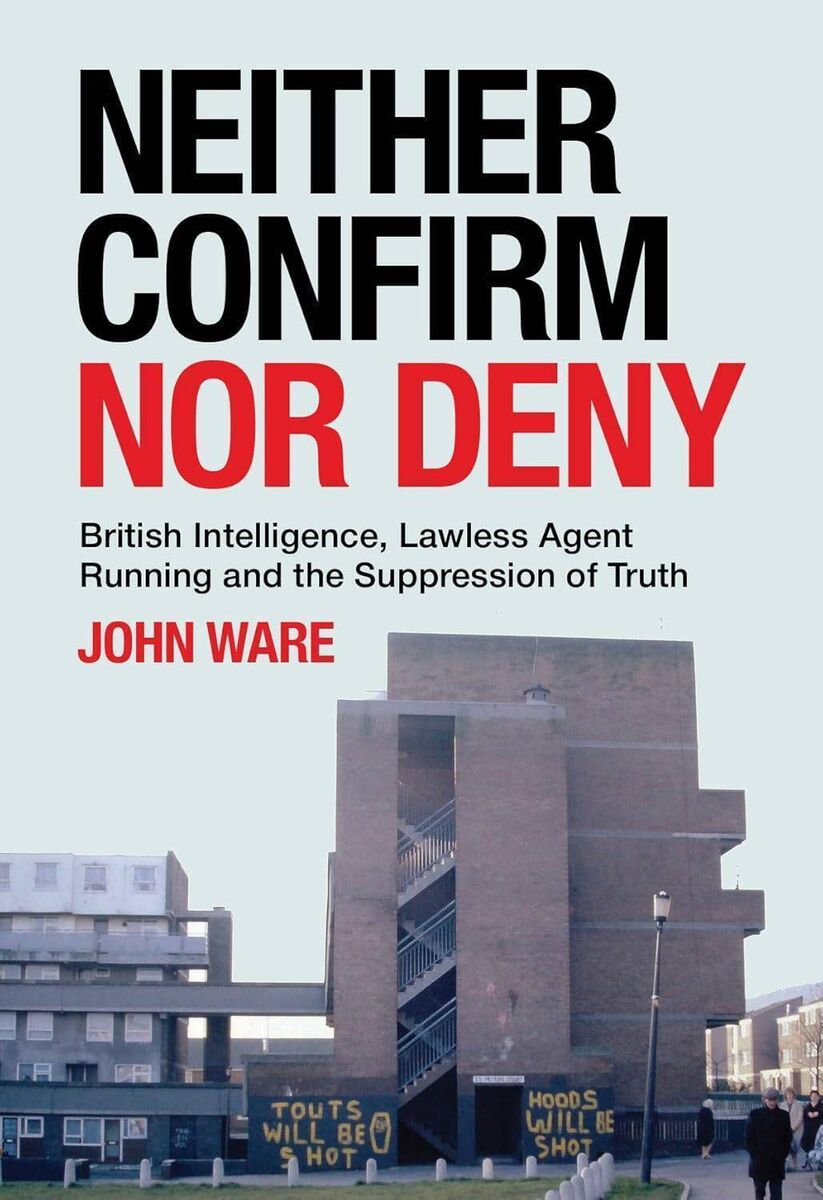
  • Neither Confirm Nor Deny: British Intelligence, Lawless Agent Running and the Suppression of Truth 
  • John Ware 
  • Merrion Press, €19.99

Shortly after John Stevens was appointed as deputy chief constable of Cambridgeshire in 1990, he was asked to head up an enquiry into the collusion between the British intelligence forces and the UDA.

On Stevens’s first day in Belfast, the then chief constable Hugh Annesley, informed him that “the job should not take more than a month”.

Thirteen years later, John Stevens was still in Northern Ireland and completing his third report.

He first assessed that collusion was “neither widespread nor institutionalised”. In his third report, published in 2003, he had radically changed that assessment.

The circumstances that led to all three Stevens reports, and to the Kenova report published in 2025, are the subject of John Ware’s new book Neither Confirm Nor Deny

The subtitle, “British intelligence, lawless agent running, and the suppression of truth”, sums up this intriguing but tragic tale.

Ware is an award-winning TV journalist who worked principally for the BBC. His BBC Panorama programmes and various documentaries over many years, have helped to expose the seedy underbelly of the Troubles in Northern Ireland.

Ware begins this book by acknowledging that counter intelligence in war or civil unrest is a difficult matter. 

It is practically impossible for a government to manage an effective intelligence mission without bending the legal and moral standards of peacetime.

However, he goes on to show that the tactics of the British army, MI5, and the RUC over the entire span of the Troubles, reached depths that were only thought possible in countries such as Chile, Uganda, and the pre-1989 communist bloc.

Freddie Scappaticci, aka Stakeknife, and Brian Nelson

There are many evil characters in this book; Ware’s primary focus is on just two of these: Freddie Scappaticci, known by his code name Stakeknife, a senior IRA operator who was spying for the British army, and Brian Nelson, a member of the UDA who was also spying for the British army.

We learn that there were three forces involved in intelligence gathering: The army, MI5, and the RUC. These three arms of the state had different agendas and each one saw the other two as threats.

Consequently they did not share information; if they had, more lives would have been saved.

Scappaticci was working for the IRA’s security unit. His role was to identify spies within the IRA and arrange for their kidnap, torture, and murder. 

While he was doing this he was also informing the British army intelligence unit of what was going to happen. 

In most cases, the army sat on their hands and let it happen.

Nelson was working for the UDA identifying Catholic victims for assassination. 

His information to the UDA murder unit was often incorrect, resulting in innocent victims sometimes being murdered in front of their children.

Nelson was dealing primarily with the British army although the RUC and MI5 were involved with him also.

Scappaticci and Nelson were despicable individuals yet they were aided and abetted by the crown forces in carrying out murders, often of people who were simply going about their daily business.

Neither Confirm Nor Deny remains the policy of the British government to this day on the actions of Scappaticci and Nelson. 

The British government has never confirmed that Scappaticci was Stakeknife. Ware makes it very clear that “the world and his wife knows that he was”.

John Ware is passionate about the tragedy of the Troubles, and this book is a compilation of a lifetime’s work. 

He knows his subject probably better than any other person alive.

Last year, the supreme court in Britain reinforced the neither confirm nor deny policy. 

Until the various intelligence arms of Britain release the hundreds of documents they hold on their intelligence from the 1970s, ’80s and ’90s in Northern Ireland, Ware’s Neither Confirm Nor Deny will remain the definitive account of the sordid and evil work of the paramilitaries and the crown forces during this time.

x

BOOKS & MORE

Check out our Books Hub where you will find the latest news, reviews, features, opinions and analysis on all things books from the Irish Examiner's team of specialist writers, columnists and contributors.


More in this section

Scene & Heard

Newsletter

From music and film to books and visual art, explore the best of culture in Munster and beyond. Selected by our Arts Editor and delivered weekly.

Cookie Policy Privacy Policy Brand Safety FAQ Help Contact Us Terms and Conditions

© Examiner Echo Group Limited